Impossible Triangle
Three bars meet at right angles to form a triangle that cannot exist.
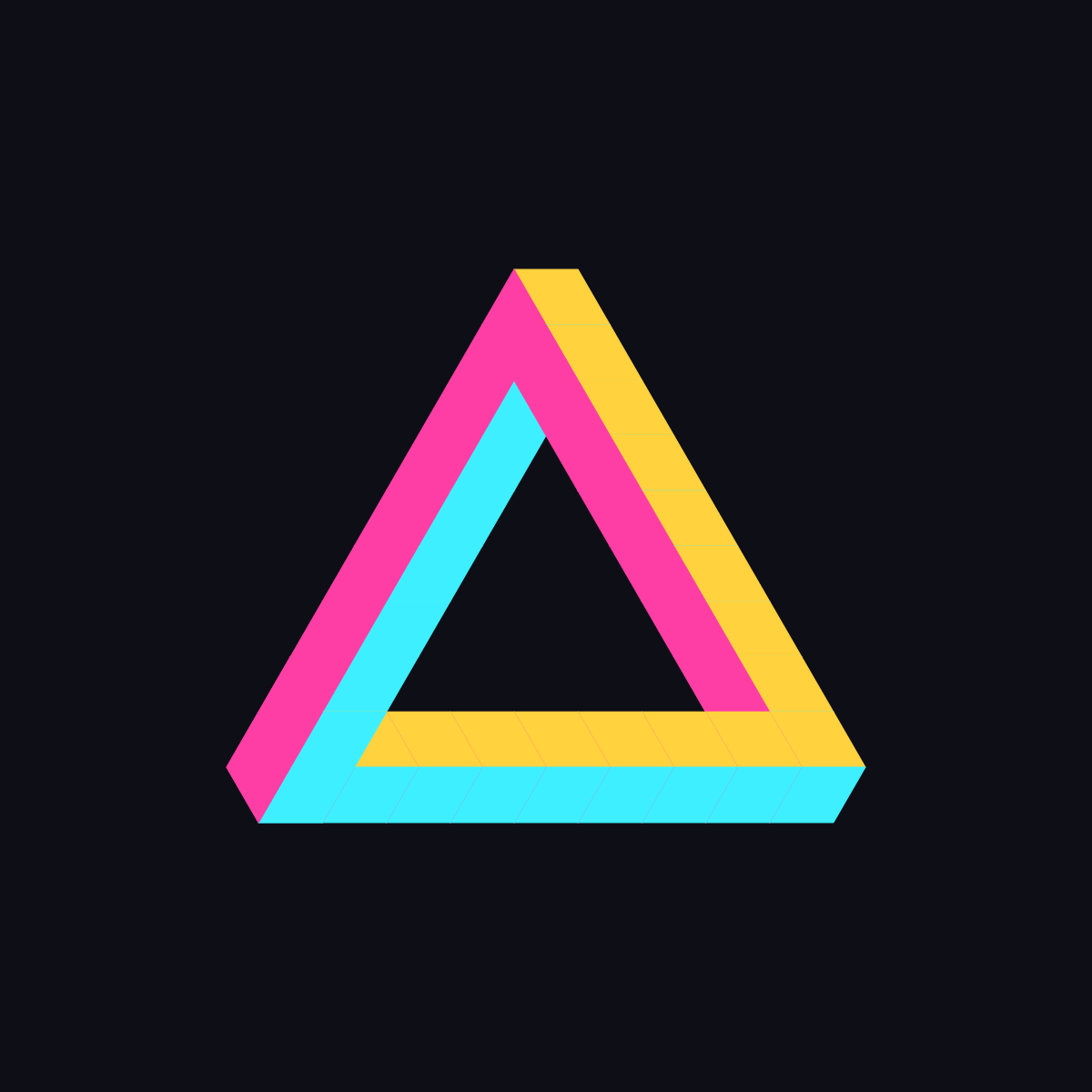
What do you see?
A solid triangle made of three square bars in bold colours. Each corner looks like two bars joined at a right angle. Follow the bars around and something goes wrong: a bar that seems to be at the front turns into one at the back, and the three right angles somehow close up into a triangle. As a real object in three dimensions, it cannot exist.
Get Impossible Triangle on a tee, mug or blanket
Printed to order with the OpticalIllusions.com wordmark.
How it works
The impossible triangle, also called the Penrose triangle or tribar, is a picture that contains contradictory depth information. Each part of the picture is a perfectly reasonable drawing of a three-dimensional object. The contradiction appears only when you try to combine the parts into one consistent whole.
When you look at a corner, your visual system interprets the lines and shading as a right-angle joint between two bars. It uses cues such as parallel edges, consistent shading and the way faces meet. These cues are strong, and the interpretation at each corner is stable. But the visual system interprets small regions quickly and locally before checking the overall structure, and it does not insist that every local interpretation agrees with every other. The result is a picture that looks solid even though it cannot be built.
This drawing uses the same isometric projection used in technical drawing and many video games. In isometric projection, lines that are parallel in three dimensions remain parallel on the page, and there is no perspective shrinking with distance. That means an object can be drawn so that a bar that is far away has exactly the same size and position as a bar that is close. The two ends of the triangle can be made to meet on the page even though they would be at completely different depths in real space.
In fact, it is possible to build a real object that looks like an impossible triangle from one exact viewpoint. Sculptures in Perth, Australia, and elsewhere use bars that do not actually meet: one bar is much closer to the viewer, and from one spot its end lines up perfectly with another bar. Move a step to the side and the illusion collapses, revealing the gap.
Impossible figures show that perception is a process of constructing an interpretation, not passively recording the world. The brain builds a three-dimensional model from local clues and is happy to show you a coherent-looking object even when the model is impossible as a whole.
History
Swedish artist Oscar Reutersvärd drew the first known impossible triangle in 1934 using a series of cubes. Psychiatrist Lionel Penrose and his son, mathematician Roger Penrose, independently devised and popularised the tribar in a 1958 article in the British Journal of Psychology. Their work inspired M. C. Escher, whose 1961 print Waterfall uses linked impossible triangles. This drawing was built from cubes in code for OpticalIllusions.com.
Try it
- Cover any one corner with your thumb: the remaining shape looks possible.
- Follow one colour all the way around with your finger.
- Try building one from paper or blocks and photograph it from the one angle that works.
- Look for impossible figures in Escher prints and puzzle games.
Written by K.R. for OpticalIllusions.com · Updated . Illusion artwork © The Wizard Of Sales, LLC. Feel free to share a link; see our terms for reuse.
Related illusions
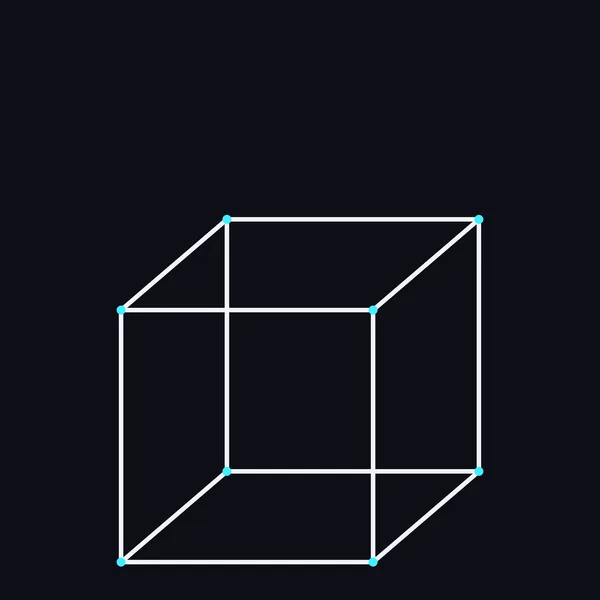 Impossible & ambiguous figuresNecker CubeA wireframe cube that flips between two orientations.
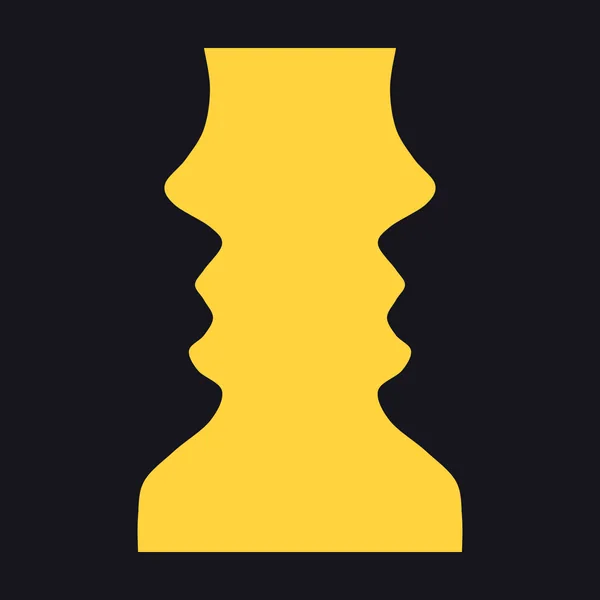 Impossible & ambiguous figuresRubin VaseA golden vase, or two dark profiles facing each other.
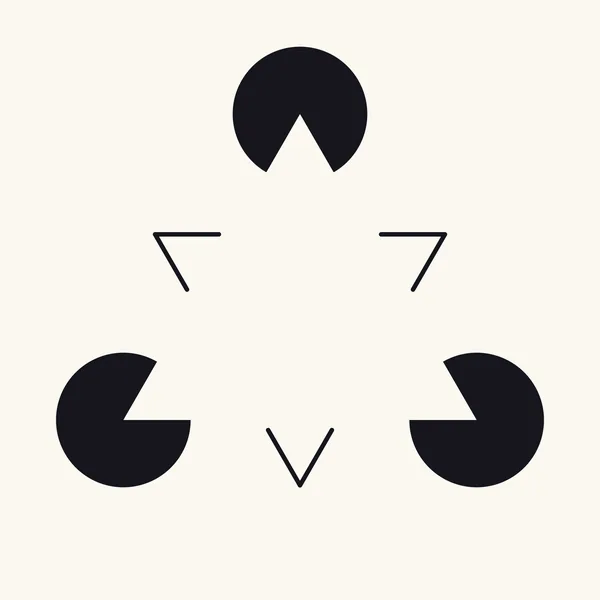 Geometric illusionsKanizsa TriangleA bright white triangle appears from nothing but three cut-out discs.
 InteractiveMotion illusionsStereokinetic RingsTurning flat circles that suddenly pop out as a cone or tunnel.