Rotating Snakes
Discs that turn on their own, even though nothing moves.
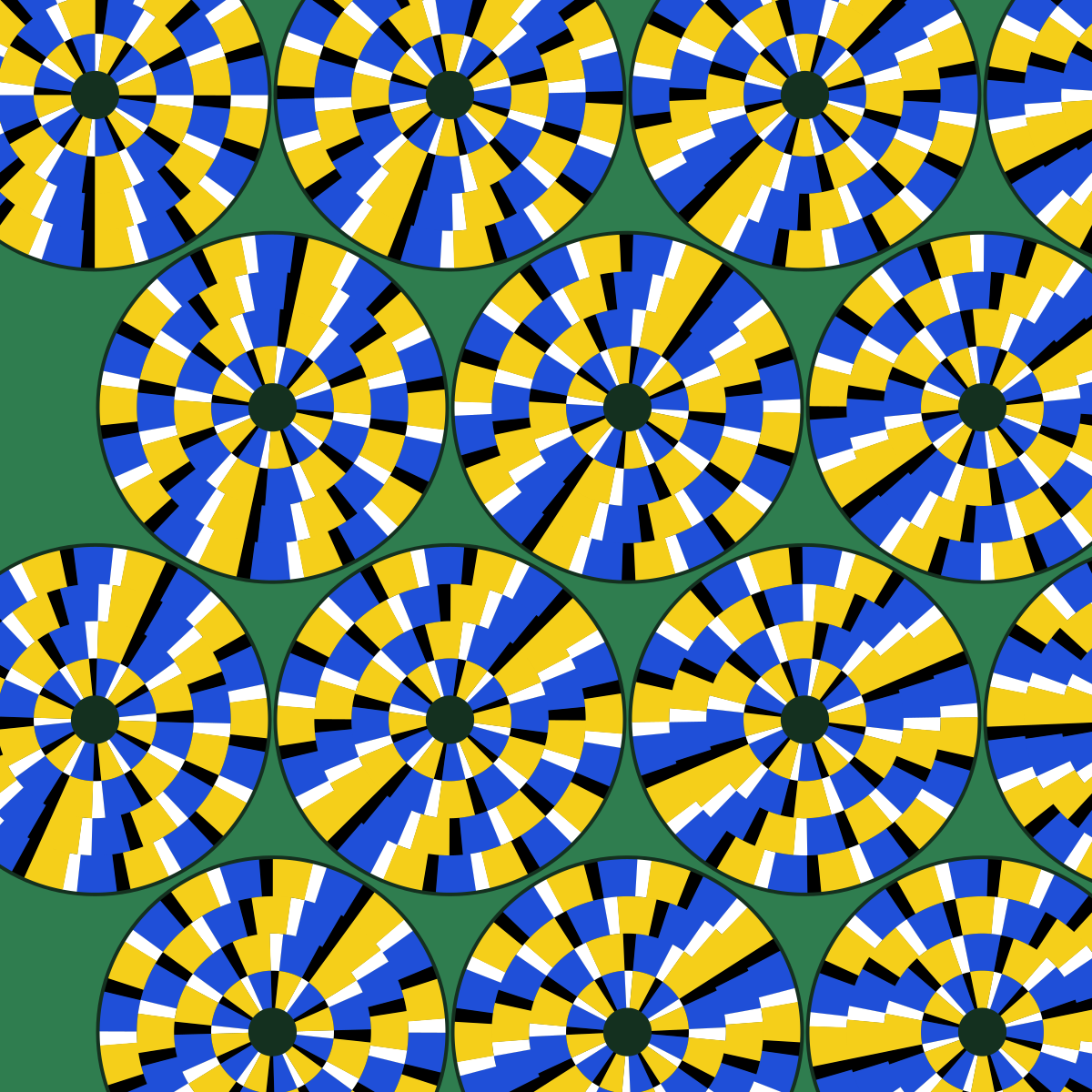
What do you see?
Let your eyes wander across the picture without settling on one spot. The discs at the edge of your vision seem to turn slowly, some clockwise and some counter-clockwise, like wheels in a lazy gear train. Now stare hard at the centre of a single disc. That disc stops dead, while the others keep drifting. Nothing in the image is animated: it is a flat, still picture.
Get Rotating Snakes on a tee, mug or blanket
Printed to order with the OpticalIllusions.com wordmark.
How it works
This is a peripheral drift illusion, and the secret is in the order of the colours. Every disc is built from repeating units that step through four brightness levels in the same sequence: black, then a dark blue, then white, then a light yellow. Read around any ring and that sequence never changes direction. Neighbouring discs simply run the sequence the other way, which is why they appear to turn against each other.
The leading explanation is about timing. Your visual system does not process every contrast at the same speed. High-contrast edges, such as black against light, get signalled slightly faster than low-contrast edges, such as dark blue against black. When a stepped pattern like this lands on your retina, the fast and slow signals arrive a fraction of a second apart, and motion detectors in the brain read that small delay the same way they read real movement from one spot to the next. The result is a motion signal pointing from black toward dark, and from white toward light.
Why only in the corner of your eye? Your central vision is very good at spotting that nothing has actually moved, so it vetoes the false signal. Peripheral vision is coarser and more motion-hungry, so the drift survives there. The effect also needs a trigger. Each time you blink, shift your gaze or make one of the tiny jerky eye movements called saccades, the image is effectively refreshed on the retina and the timing mismatch replays. That is why the motion comes in nudges rather than a smooth, endless spin, and why steady fixation kills it.
Brightness matters more than hue. If you converted this picture to grey, it would still move, because the four steps keep their order of lightness. Recordings from monkey visual cortex have found motion-sensitive neurons that respond to these stepped patterns as if they were really moving, which supports the idea that the illusion starts early in visual processing rather than in conscious judgement.
Not everyone sees it equally strongly. Some people report fast spinning, a few see almost nothing, and the effect is usually weaker when you are tired or viewing on a very dim screen.
History
Drifting motion in still pictures was first studied in the late 1970s, when Alex Fraser and Kimerley Wilcox described a sawtooth pattern that seemed to rotate in peripheral vision. In 1999 Jocelyn Faubert and Andrew Herbert showed that the effect depends on luminance gradients and eye movements. In 2003 Japanese psychologist Akiyoshi Kitaoka designed his famous Rotating Snakes using the black, dark, white, light sequence, and it became one of the most shared illusions in the world. The version on this page is an original arrangement drawn for OpticalIllusions.com using the same principle.
Try it
- View the image large, ideally full screen, and let your gaze roam.
- Fix on one disc's centre: watch it freeze while the others keep moving.
- Blink deliberately a few times and notice the discs lurch forward with each blink.
- Try it on a bright screen: low brightness weakens the timing difference.
Written by K.R. for OpticalIllusions.com · Updated . Illusion artwork © The Wizard Of Sales, LLC. Feel free to share a link; see our terms for reuse.
Related illusions
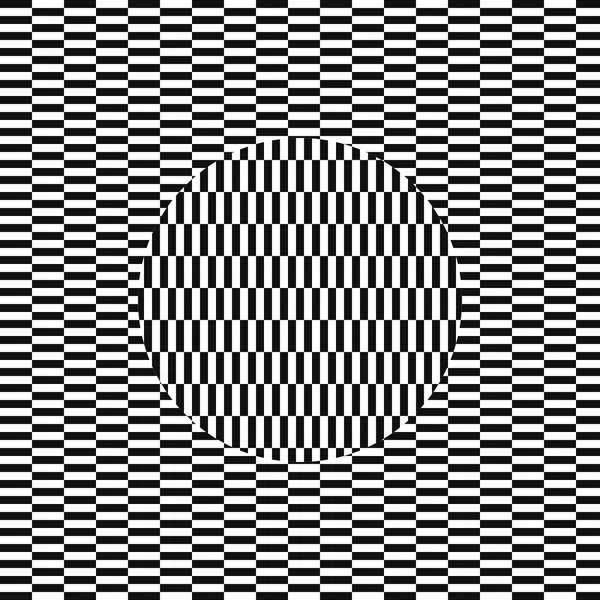 Motion illusionsOuchi IllusionA checkered disc that seems to float and slide over its background.
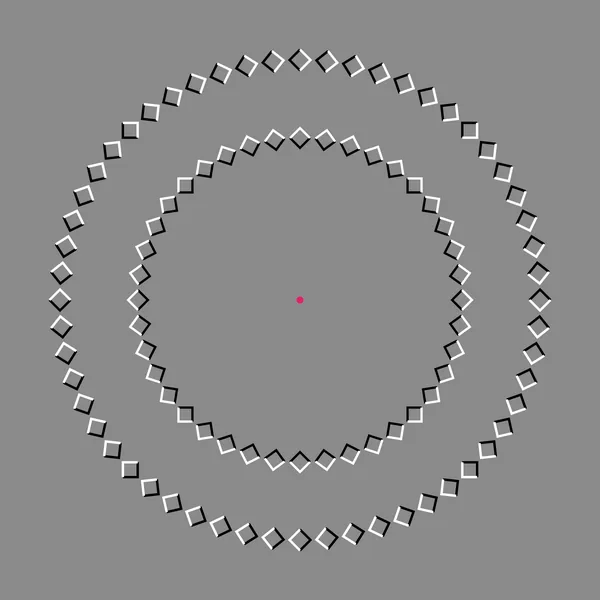 Motion illusionsPinna-Brelstaff RingsMove your head toward the dot and the two rings turn opposite ways.
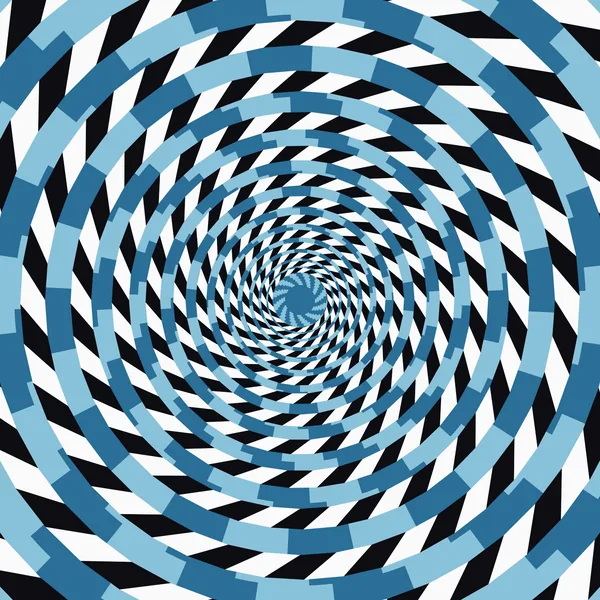 Geometric illusionsFraser SpiralConcentric circles of twisted cord that look like one big spiral.
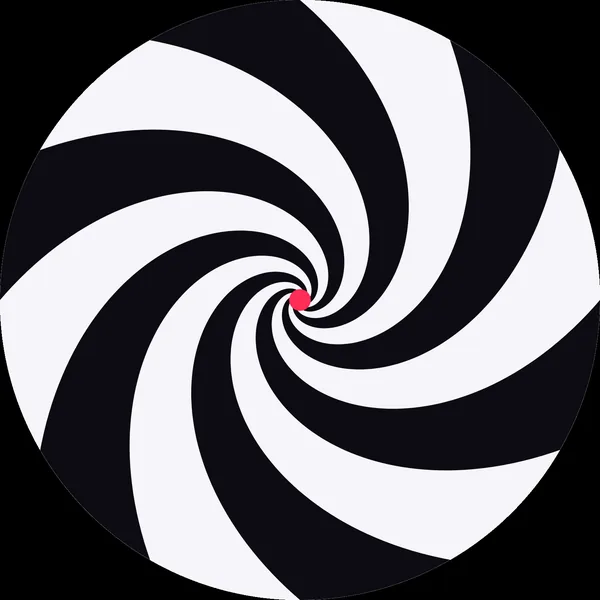 InteractiveMotion illusionsMotion Aftereffect SpiralWatch a spinning spiral for 30 seconds and still things start to move.