Afterimage Flag
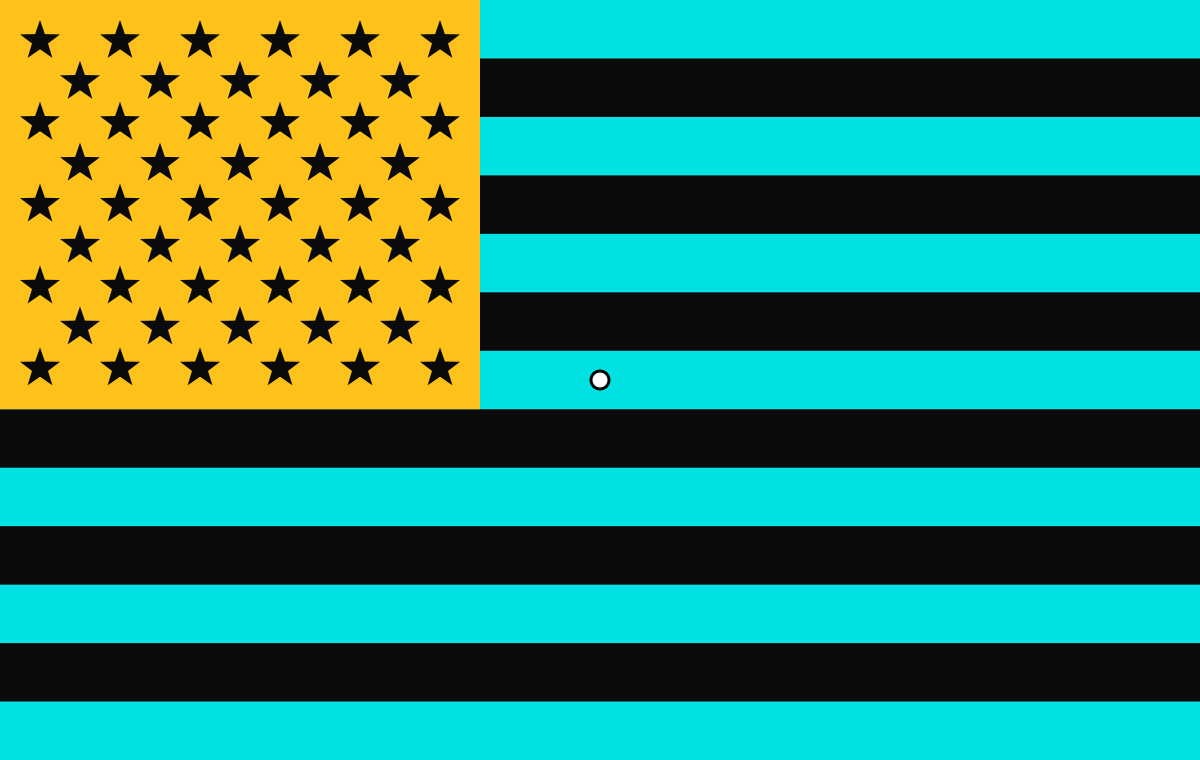
Stare at a cyan, black and yellow flag and a red, white and blue one appears.

What do you see?
A flag in the wrong colours: cyan and black stripes, with black stars on a yellow field. Press start, keep your eyes on the small white dot in the middle for thirty seconds, and wait for the flag to vanish. On the blank white panel, a ghostly flag appears in red, white and blue, the familiar colours, floating where the strange flag was.
How it works
This is a negative afterimage, and it reveals how your eyes code colour in pairs of opposites.
Colour vision starts with three types of cone cells in the retina, sensitive to long, medium and short wavelengths of light. Their signals are then combined into opponent channels: one compares red against green, another blue against yellow, and a third compares light against dark. This opponent coding was proposed by Ewald Hering in the nineteenth century and is now well established. It explains why we never see a colour that is reddish-green or bluish-yellow: those pairs are opposite ends of the same channel.
When you stare at the cyan stripes, the cones and opponent cells that respond to cyan become adapted. Their response weakens because they have been stimulated for a long time. When you then look at a white surface, which contains all wavelengths, the adapted cells respond less than normal, while the cells for the opposite colour respond at full strength. The balance tips toward the opposite colour, so the cyan stripes leave a red afterimage.
The same thing happens throughout the flag. Black stripes leave a white afterimage, because the cells signalling dark are adapted and the light signal dominates. The yellow field becomes blue, and the black stars become white. The result is a flag in its normal colours.
The afterimage moves with your eyes because it is a property of the adapted cells, not of the screen. Look at a near wall and the flag looks small; look at a far wall and it looks large, because the brain scales the same retinal image according to distance. Afterimages fade within seconds to a minute as the cells recover, and blinking can make them flicker on and off.
This is why staring at a bright light leaves a dark spot, and why surgeons often wear green or blue scrubs: green reduces distracting red afterimages after looking at blood under bright lights.
History
Afterimages have been described since ancient times. Johann Wolfgang von Goethe wrote about coloured afterimages in his 1810 Theory of Colours, and Hering used them to support his opponent-process theory. Reversed-colour flags have long been a popular classroom demonstration. This flag and the interactive timer were made for OpticalIllusions.com.
Try it
- Press start and keep your eyes on the white dot until the flag disappears.
- Blink a few times while looking at the white panel to refresh the afterimage.
- Look at a wall farther away and notice the afterimage get bigger.
- Try it in a bright room: strong light makes the effect more vivid.
Written by K.R. for OpticalIllusions.com · Updated . Illusion artwork © The Wizard Of Sales, LLC. Feel free to share a link; see our terms for reuse.
Related illusions
 InteractiveMotion illusionsTroxler FadingStare at the cross and the soft colour spots vanish into grey.
 InteractiveMotion illusionsMotion Aftereffect SpiralWatch a spinning spiral for 30 seconds and still things start to move.
 Colour illusionsMunker-White IllusionThe same pink looks like two colours on blue and yellow stripes.
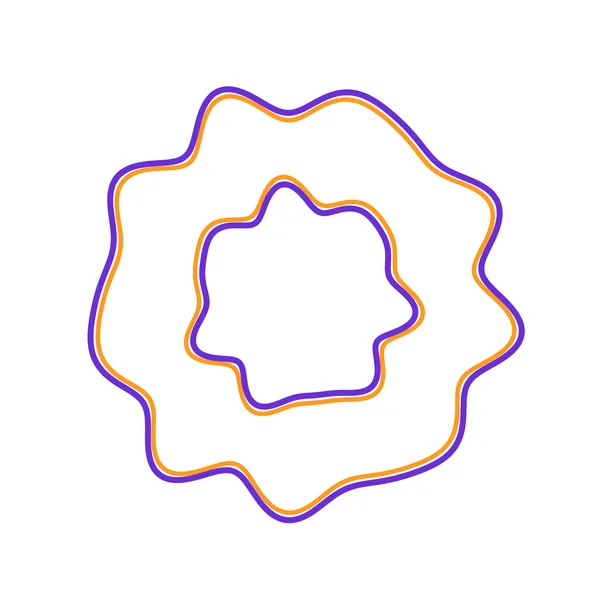 Colour illusionsWatercolour IllusionA thin orange edge tints a whole white region pale orange.