Hering Illusion
Two straight red lines bulge apart over a burst of rays.
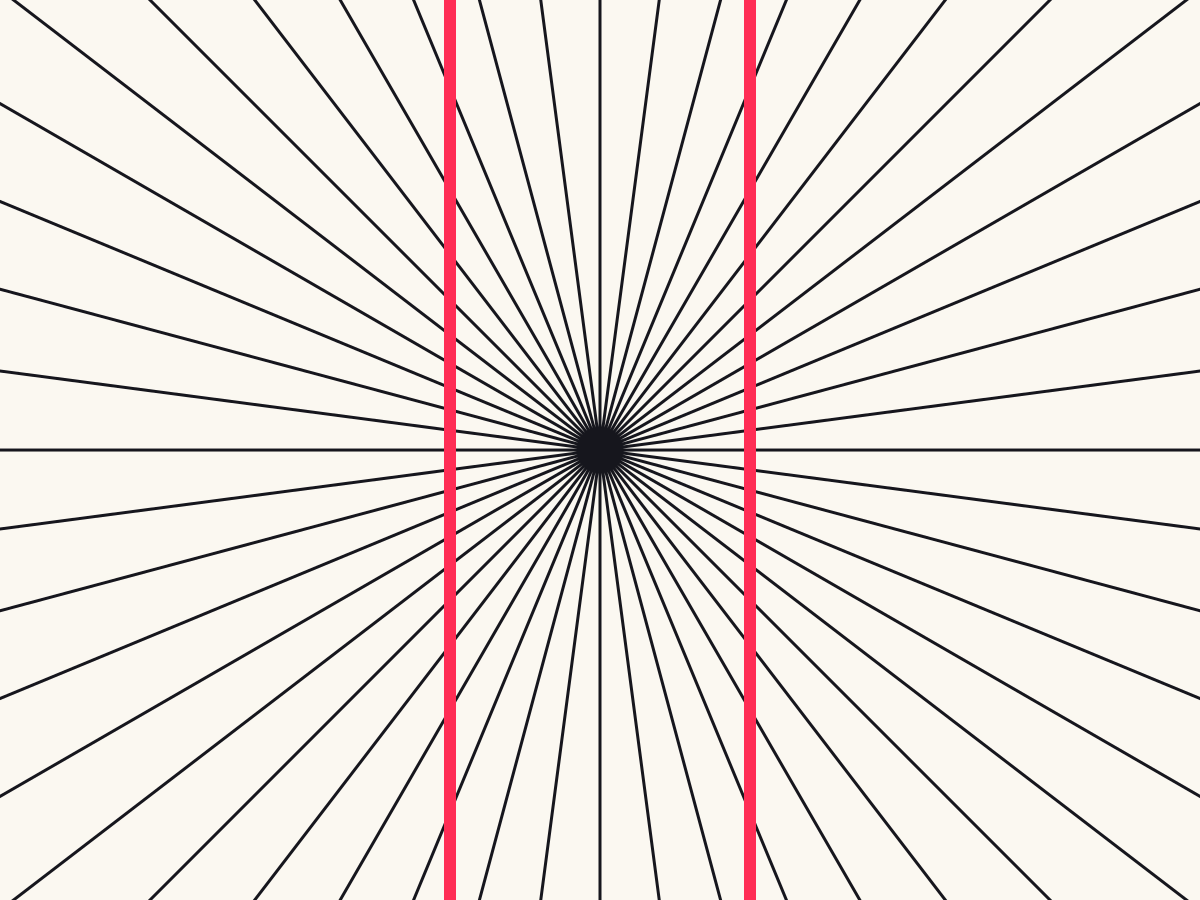
What do you see?
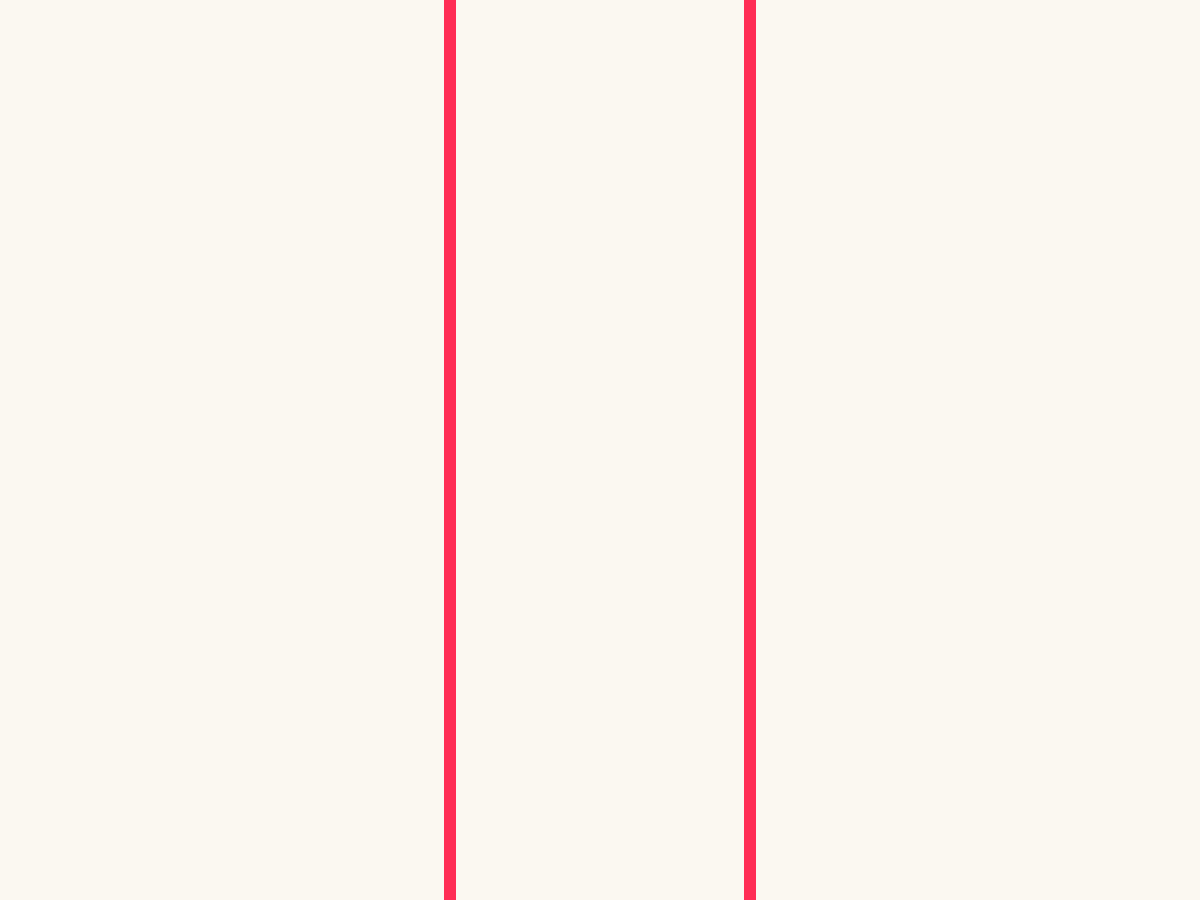
Two red vertical lines stand on a background of rays bursting from a central point. The lines seem to bow outward in the middle, like the sides of a barrel. Press Reveal and remove the rays: the red lines are perfectly straight and parallel.
How it works
The Hering illusion is related to the Zöllner illusion. Where each ray crosses a red line it forms a sharp angle, and our visual system tends to overestimate acute angles. Each small segment of the red line is pushed away from the direction of the ray crossing it. Near the centre the rays cross at steep angles and push the line outward strongly; near the top and bottom the angles are different and the push is weaker. Added up along the line, these local distortions give the impression of a smooth outward curve.
That angle-based account explains a lot, but there is a second, intriguing idea. Mark Changizi and colleagues have proposed that this illusion reflects the brain predicting the near future. Visual signals take roughly a tenth of a second to travel from the eye to the cortex and be processed. To act in real time, the visual system may anticipate what the world will look like by the time the signal is processed. The radiating rays in the Hering figure resemble the pattern of motion you see when moving forward, with everything streaming outward from a vanishing point. If you were really travelling toward that point, straight lines near the centre would, a fraction of a second later, bow outward in your view. On this view, the brain is partly showing you that predicted scene.
Whether or not the prediction theory is correct, it points to an important truth: illusions often reveal the assumptions the visual system has learned from the real world. Radiating lines usually mean depth and forward motion, and the brain responds accordingly.
There is a mirror-image figure known as the Wundt illusion, in which lines converging toward the sides make straight lines appear to bend inward. Together, the two figures show that the direction of the distortion depends entirely on the pattern around the line.
The effect is easy to see on screen and on paper, and it is used in design and architecture. Classical Greek builders gave columns a slight outward swell called entasis, partly to counter the impression that straight columns look thin or concave against the sky.
History
German physiologist Ewald Hering described the illusion in 1861. Hering is also known for the opponent-process theory of colour vision, which explains afterimages such as the one in our afterimage flag. The figure here was drawn for OpticalIllusions.com.
Try it
- Press Reveal to remove the rays.
- Hold a ruler or a straight card along one red line.
- Move your eyes to the centre point: the bowing usually gets stronger.
- Try covering the centre of the rays with your thumb and see what happens.
Written by K.R. for OpticalIllusions.com · Updated . Illusion artwork © The Wizard Of Sales, LLC. Feel free to share a link; see our terms for reuse.
Related illusions
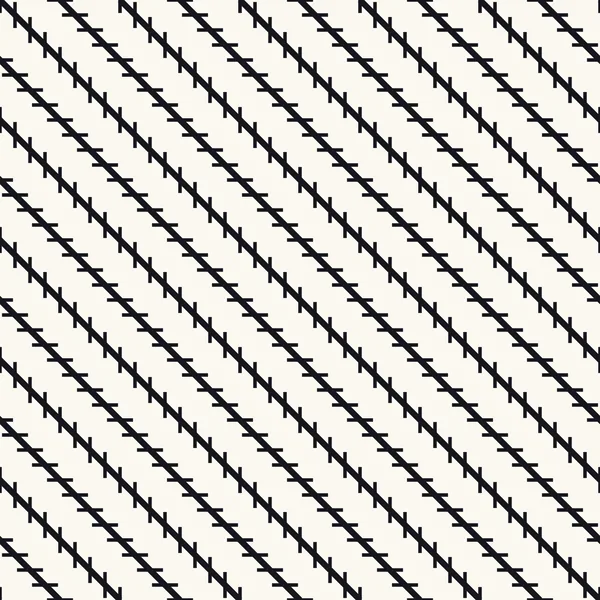 Geometric illusionsZöllner IllusionShort hatches make long parallel lines seem to tilt toward each other.
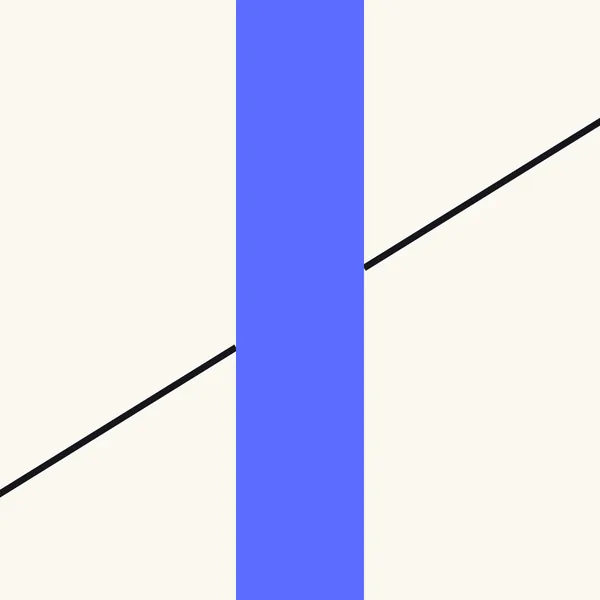 Geometric illusionsPoggendorff IllusionA straight diagonal looks misaligned where a bar crosses it.
 Geometric illusionsCafé Wall IllusionPerfectly parallel rows of tiles that seem to tilt into wedges.
 Geometric illusionsPonzo IllusionTwo equal bars on converging rails look like different lengths.