
Chanukah Menorah Illusion
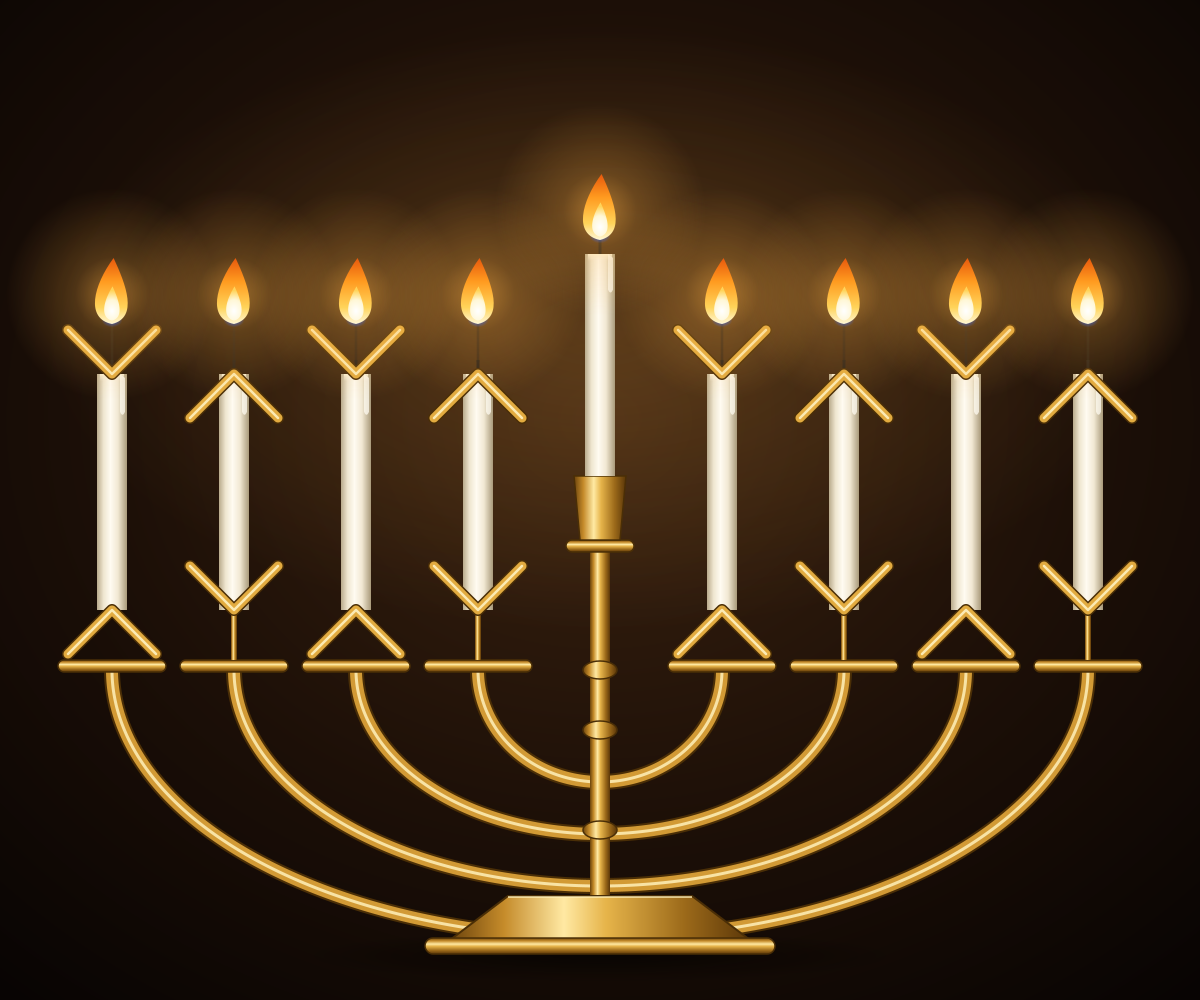
Eight Chanukah candles that look tall, short, tall, short. Every one is the same height.

Get Chanukah Menorah on a tee, mug or poster
Printed to order with the Opticalillusions.com wordmark.
What do you see?
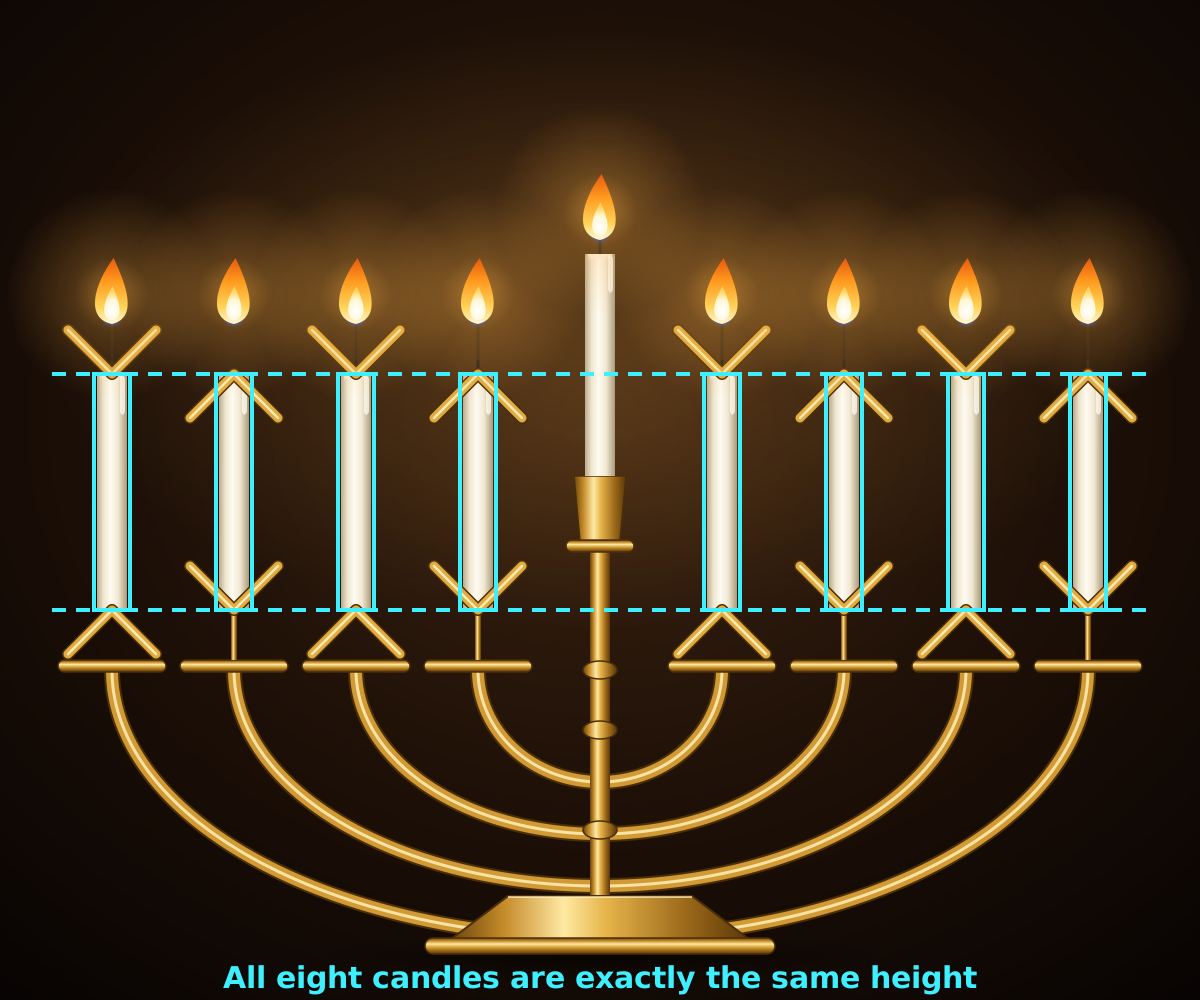
A golden Chanukah menorah on the eighth night, with all eight candles burning and the shamash, the helper candle, standing raised in the middle. Look along the row. Some candles seem taller and slimmer, framed by little rays above and a splayed stand below. Their neighbors, tucked into pointed cups with pointed caps, look shorter and stubbier. Press "Measure the candles" and two guide lines appear: every one of the eight candles starts and ends at exactly the same height, and the shamash candle is the same length too, just set higher on its own stand.
How it works
This is the Müller-Lyer illusion dressed for Chanukah. In the classic version, a line with arrowheads pointing outward at both ends looks shorter than an identical line with tails, or fins, that open away from the ends. Here the golden chevrons do the job. Candles with V-shaped rays above them and a stand that spreads out below have tails at both ends, so they look longer. Candles held in a V-shaped cup with a pointed cap on top have arrowheads at both ends, so they look shorter. The wax is identical in every case.
Nobody is completely sure why the effect happens, and there are two leading ideas. Richard Gregory argued that the chevrons look like corners in a three-dimensional scene. Arrowheads resemble the outside corner of a building pointing toward you, while tails resemble the inside corner of a room, which is farther away. Your brain automatically enlarges things it thinks are farther away to keep sizes stable, so the candles with tails get a boost they do not deserve. Critics point out that the illusion survives when the fins are replaced by circles or dots, which do not suggest corners. That supports a second explanation: your visual system averages the position of each end with the shapes attached to it, so the perceived endpoints slide outward with the tails and inward with the arrowheads.
Standing the candles side by side makes the trick fairer than it sounds. Their tops and bottoms are level, which is something you can check, yet most people still judge them unequal. The judgment of length is made quickly and locally, before careful comparison has a chance to correct it.
The effect is also not identical for everyone. Studies since the 1960s have found that people raised among straight walls and right angles tend to be fooled more, which fits Gregory's corner idea, although later research suggests eyesight and age play a part as well.
History
Franz Carl Müller-Lyer published the figure in 1889, and it has become one of the most studied illusions in psychology. The cross-cultural research by Marshall Segall, Donald Campbell and Melville Herskovits appeared in 1966. On Chanukah, which in 2026 begins at sundown on Friday, December 4, families light one more candle each night for eight nights, using the shamash to light the others. Tradition places the eight lights in a straight row at the same height, with the shamash set apart, which is exactly how this original menorah is drawn for Opticalillusions.com.
Try it
- Hold a ruler or the edge of a piece of paper across the tops of the candles, then across the bottoms.
- Cover the golden chevrons with two fingers: without them, the candles instantly look equal.
- Ask someone to point to the tallest candle before you press the reveal button.
- Compare the shamash in the middle: it looks taller only because it stands higher, not because it is longer.
Frequently asked questions
Are the menorah candles really the same length?
Yes. Every one of the eight candles starts and ends at exactly the same height, and the shamash candle is the same length too, just set higher. Press Measure the candles to check.
Why do some candles look taller?
This is the Müller-Lyer illusion. Candles with rays above and a spreading stand below have tails at both ends, so they look longer, while candles in pointed cups with pointed caps look shorter.
Who discovered the illusion behind this menorah?
Franz Carl Müller-Lyer published the figure in 1889, and it has become one of the most studied illusions in psychology.
Why is the shamash set higher?
Tradition places the eight lights in a straight row at the same height, with the shamash set apart. That is exactly how this original menorah is drawn for Opticalillusions.com.
Sources & credits
Based on the Müller-Lyer illusion, published by Franz Carl Müller-Lyer (1889). The menorah artwork is an original drawing.
- Müller-Lyer, F. C. (1889). Optische Urteilstäuschungen. Archiv für Physiologie, Supplement.
- Gregory, R. L. (1963). Distortion of visual space as inappropriate constancy scaling. Nature, 199.
- Segall, M. H., Campbell, D. T. & Herskovits, M. J. (1966). The Influence of Culture on Visual Perception. Bobbs-Merrill.
- Müller-Lyer illusion — overview Read →
Further reading: The Illusions Index (University of Glasgow) and Michael Bach’s Optical Illusions & Visual Phenomena.
Written by K.R. for Opticalillusions.com · Updated . Illusion artwork © The Wizard Of Sales, LLC. Feel free to share a link; see our terms for reuse.
Related illusions
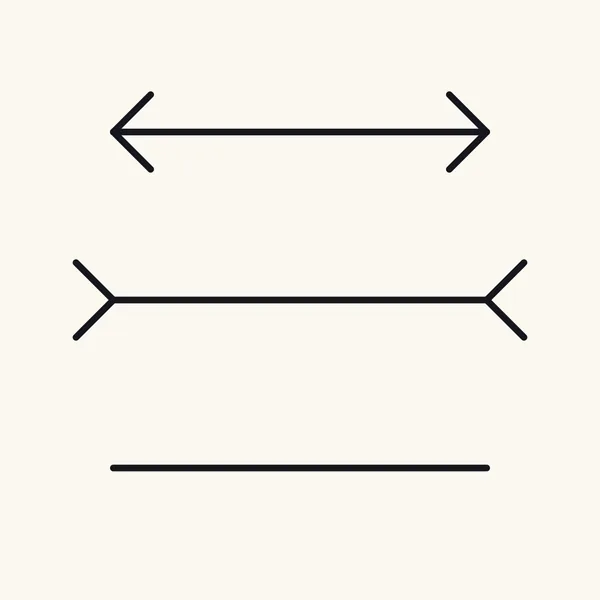 InteractiveGeometric illusionsMüller-Lyer IllusionThree identical lines that look clearly different in length.
 InteractiveHoliday illusionsSpinning Dreidel IllusionA dreidel at rest inside rings that seem to turn on their own. Nothing in the picture moves.
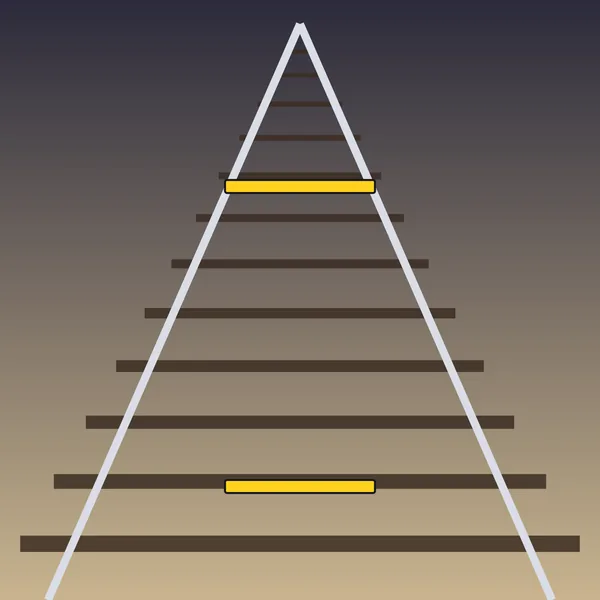 Geometric illusionsPonzo IllusionTwo equal bars on converging rails look like different lengths.
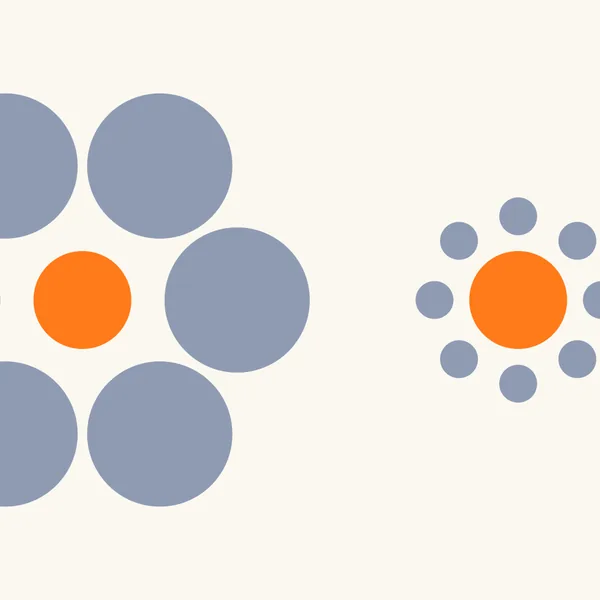 Geometric illusionsEbbinghaus IllusionA circle among giants looks small; among dwarfs it looks big.