
Spinning Dreidel Illusion
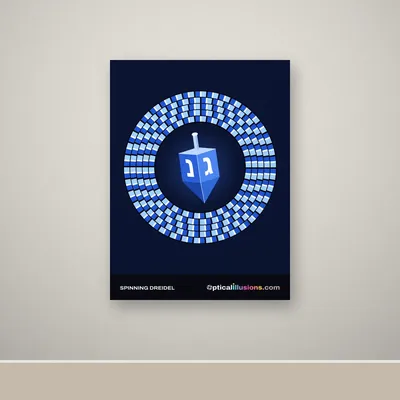
A dreidel at rest inside rings that seem to turn on their own. Nothing in the picture moves.




Get Spinning Dreidel on a tee, mug or poster
Printed to order with the Opticalillusions.com wordmark.
What do you see?
A blue and white dreidel with the Hebrew letters nun and gimel on the two faces you can see, surrounded by rings of small blue, white and black tiles. Look at the dreidel, then let your eyes wander to different spots on the rings, or blink. For most people the rings start to creep around, as if the whole dreidel had just been spun and the picture were still turning. Look straight at one part of a ring and it stops. Press "Flatten the colors" and the same rings, painted in a single blue, sit perfectly still.
How it works
This is a peripheral drift illusion. Every tile in the rings steps through the same four shades in the same order: black, a dark blue, white, then a light blue. The black and white strips are narrow and the two blues are wide. Because every tile repeats that sequence in the same direction around the circle, the rings look as if they are drifting, in this picture usually clockwise.
The leading explanation is about timing. Your eyes do not process every part of an image at the same speed. Strong, high-contrast edges, such as black against white, are signaled slightly faster than weak, low-contrast ones. When the image refreshes on your retina, which happens every time you move your eyes, blink or make the tiny jumps your eyes make all the time, the fast and slow signals arrive at motion detectors a fraction of a second apart. That small delay looks to the brain exactly like movement in one direction, from the dark shades toward the light ones. Experiments by Akiyoshi Kitaoka and Hiroshi Ashida showed that this four-step order (black, dark, white, light) gives some of the strongest drift.
The effect is much stronger in peripheral vision than in the center of your gaze. Your central vision is very good at fine detail and quickly decides that nothing is moving, while the periphery is more sensitive to motion and less careful about detail. That is why the part you stare at seems frozen while the rest keeps sliding.
Some people see very little drift, and that is normal. Strength varies with age, screen size and brightness, and the illusion is usually weaker on small phone screens.
The reveal shows that the shades, not the shapes, do the work. With every tile in one flat blue there is no fast edge and no slow edge, so there is no timing difference for the motion detectors to misread, and the rings stay put.
History
Alex Fraser and Kimerly Wilcox reported in 1979 that still circular gradients can appear to rotate, and that viewers disagreed about the direction. Jocelyn Faubert and Andrew Herbert named the peripheral drift illusion in 1999, and Kitaoka and Ashida's 2003 work made it famous. The dreidel game is a Chanukah tradition: the four letters, nun, gimel, hei and shin, stand for "Nes gadol hayah sham," "a great miracle happened there." In Israel, a pe replaces the shin for "po," "here." This dreidel and its rings are an original design for Opticalillusions.com.
Try it
- Look at the dreidel's handle, then slowly move your gaze around the outer ring.
- Blink a few times while looking just beside the rings.
- View the picture larger, or in full screen, for a stronger effect.
- Press the reveal button and compare: the same rings without the stepped shades stay still.
Frequently asked questions
Is the dreidel picture really moving?
No. It is a still picture. Press Flatten the colors and the same rings, painted in a single blue, sit perfectly still.
Why do the rings around the dreidel seem to spin?
Each tile steps through the same four shades in order. High-contrast edges are signaled slightly faster than low-contrast ones, and your brain reads that tiny delay as movement.
Why does the part I stare at stop moving?
Your central vision quickly decides nothing is moving. The edges of your vision are more sensitive to motion, so the rest keeps sliding.
What do the letters on a dreidel mean?
The four letters, nun, gimel, hei and shin, stand for Nes gadol hayah sham, a great miracle happened there. In Israel, a pe replaces the shin for po, here.
Sources & credits
Peripheral drift was first described by Fraser and Wilcox (1979) and named by Faubert and Herbert (1999); the four-step luminance order follows Kitaoka and Ashida (2003). The dreidel and ring pattern are an original design.
- Fraser, A. & Wilcox, K. J. (1979). Perception of illusory movement. Nature, 281.
- Faubert, J. & Herbert, A. M. (1999). The peripheral drift illusion: a motion illusion in the visual periphery. Perception, 28.
- Kitaoka, A. & Ashida, H. (2003). Phenomenal characteristics of the peripheral drift illusion. Vision, 15.
- Peripheral drift illusion — overview Read →
- Dreidel — overview Read →
Further reading: The Illusions Index (University of Glasgow) and Michael Bach’s Optical Illusions & Visual Phenomena.
Written by K.R. for Opticalillusions.com · Updated . Illusion artwork © The Wizard Of Sales, LLC. Feel free to share a link; see our terms for reuse.
Related illusions
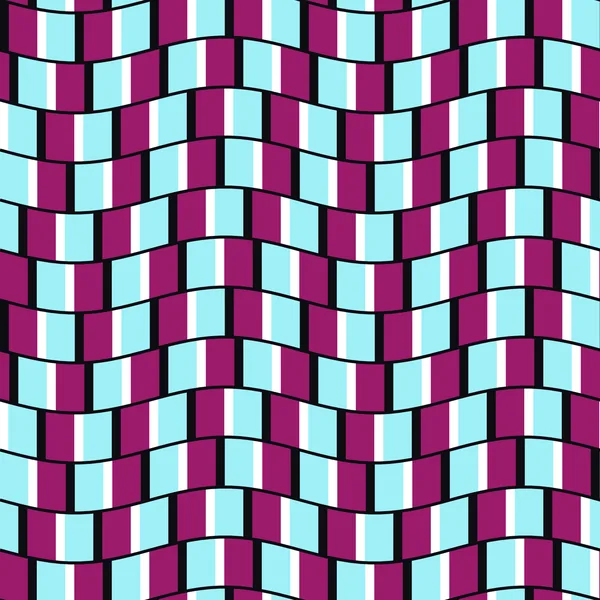 Motion illusionsPeripheral Drift IllusionWavy bands that slide sideways in the corner of your eye, even though nothing moves.
 InteractiveHoliday illusionsChanukah Menorah IllusionEight Chanukah candles that look tall, short, tall, short. Every one is the same height.
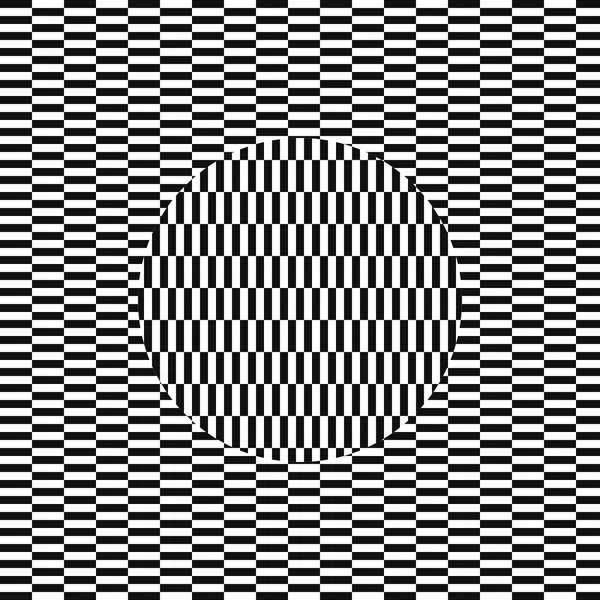 Motion illusionsOuchi IllusionA checkered disc that seems to float and slide over its background.
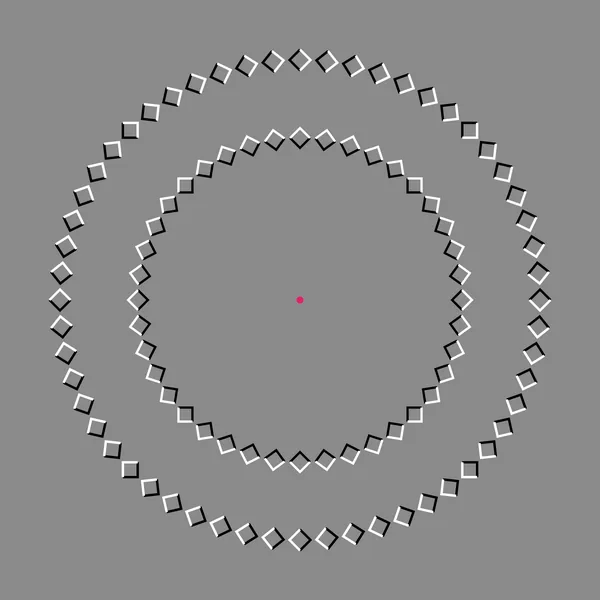 Motion illusionsPinna-Brelstaff RingsMove your head toward the dot and the two rings turn opposite ways.