
Optical illusions for kids
Fifteen easy illusions that make kids gasp, simple explanations of what their brains are doing, a free printable worksheet pack and projects to make at home or in class.
Optical illusions worksheet pack
Guess-then-measure puzzles, a “what do you see first?” class survey, how to draw an impossible triangle, a thaumatrope to cut out and an afterimage experiment, plus an answer page for grown-ups. Free for home and classroom use.
What is an optical illusion?
An optical illusion is a picture that tricks your brain into seeing something that is not quite true: lines that look bent but are straight, circles that look different sizes but are the same, or a drawing that can be two animals at once. Your eyes are working perfectly. The trick happens in your brain, which uses clever shortcuts to make sense of the world quickly. Illusions catch those shortcuts in action, which is why scientists love them.
15 easy illusions to start with
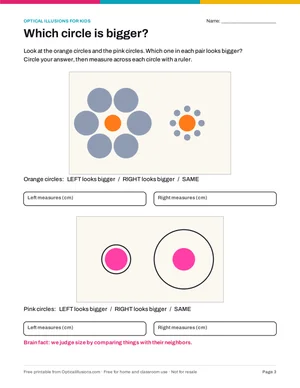
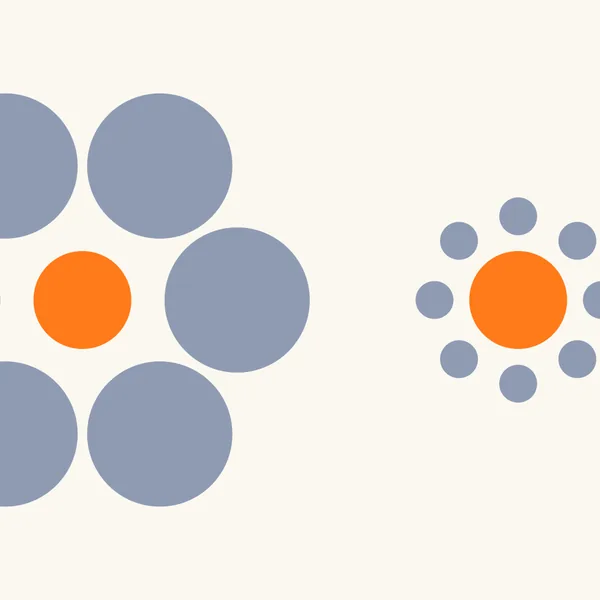 Geometric illusionsEbbinghaus IllusionA circle among giants looks small; among dwarfs it looks big.
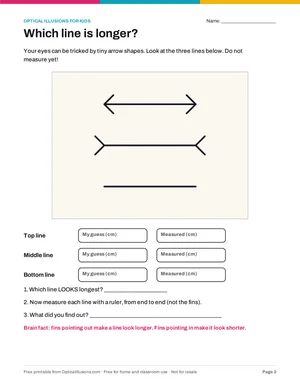
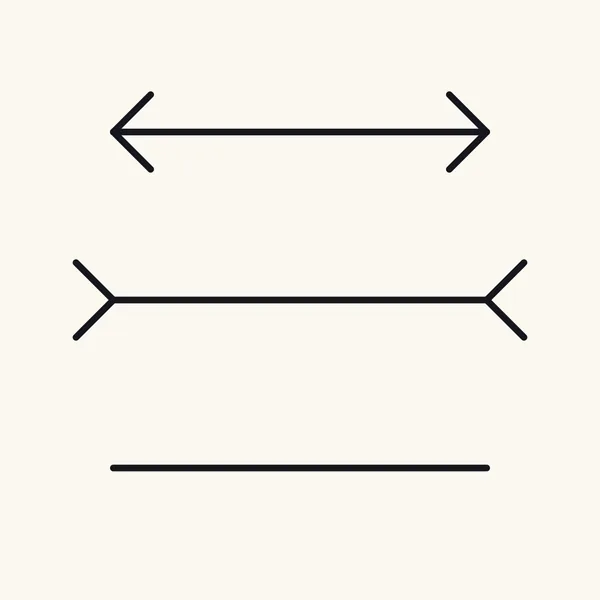 InteractiveGeometric illusionsMüller-Lyer IllusionThree identical lines that look clearly different in length.
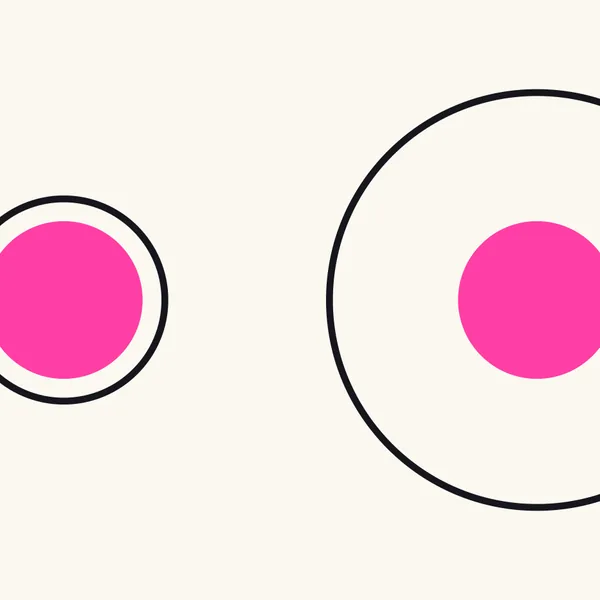 InteractiveGeometric illusionsDelboeuf IllusionTwo identical pink circles: a close ring makes one look bigger.
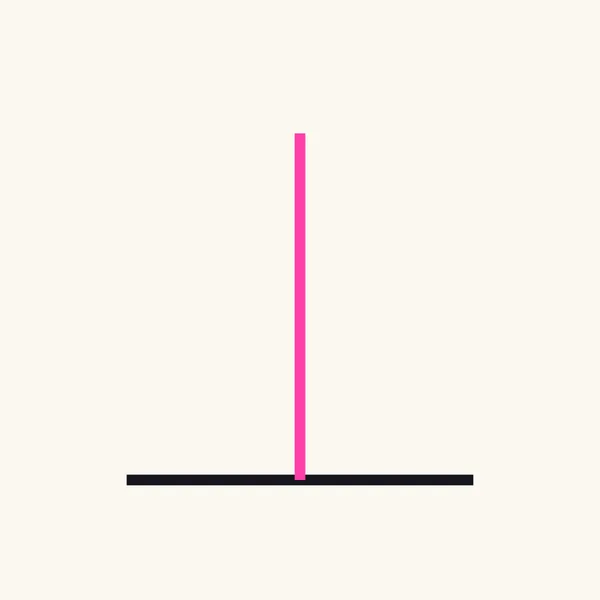 InteractiveGeometric illusionsVertical-Horizontal IllusionAn upside-down T whose two lines are the same length.
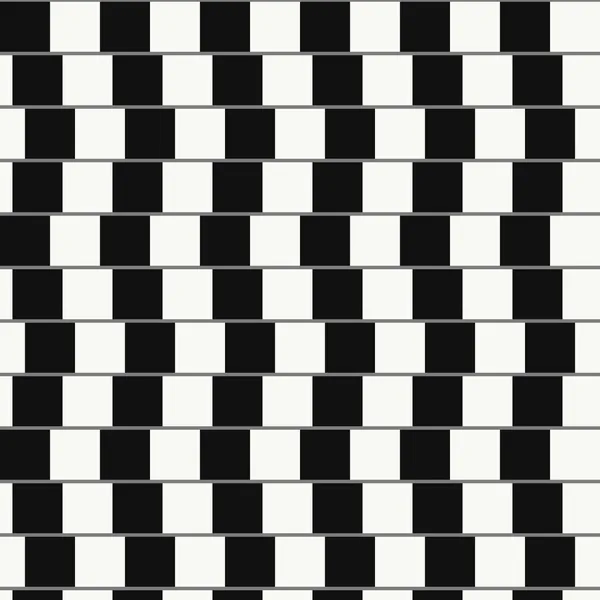 Geometric illusionsCafé Wall IllusionPerfectly parallel rows of tiles that seem to tilt into wedges.
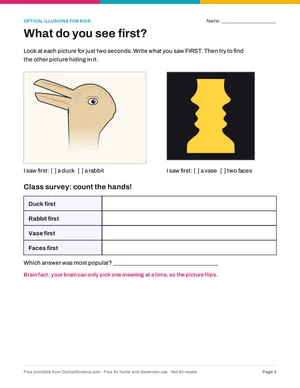
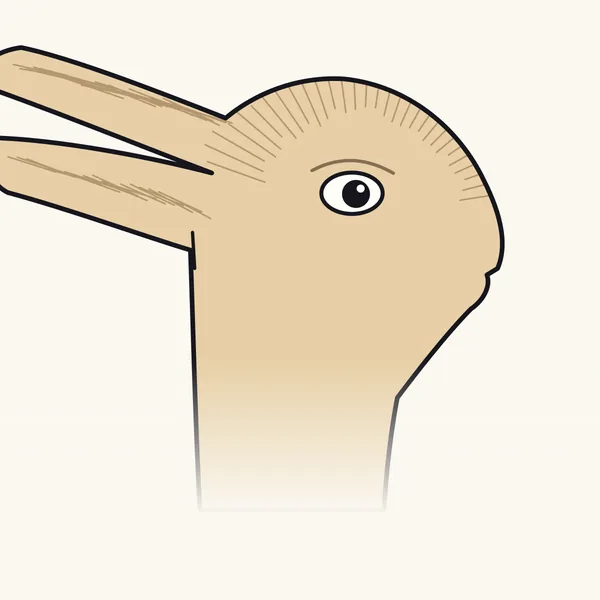 InteractiveImpossible & ambiguous figuresRabbit-Duck IllusionOne drawing, two animals: a duck facing left or a rabbit facing right.
 Impossible & ambiguous figuresRubin VaseA golden vase, or two dark profiles facing each other.
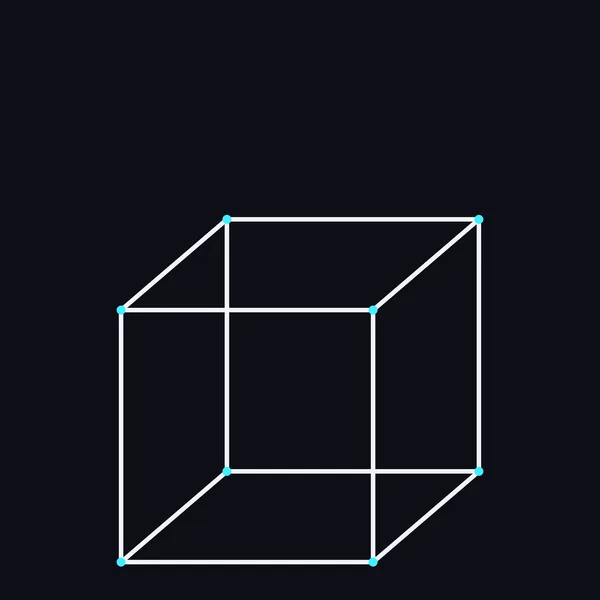 Impossible & ambiguous figuresNecker CubeA wireframe cube that flips between two orientations.
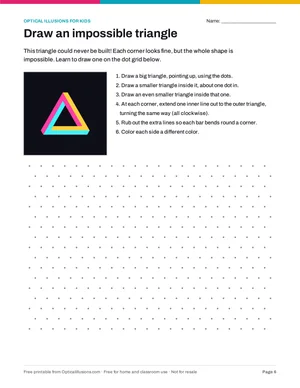
 Impossible & ambiguous figuresImpossible TriangleThree bars meet at right angles to form a triangle that cannot exist.
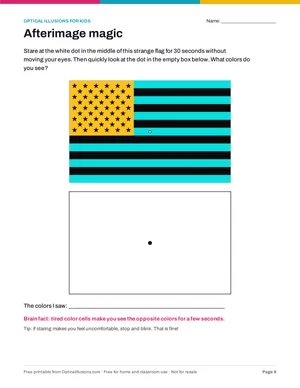
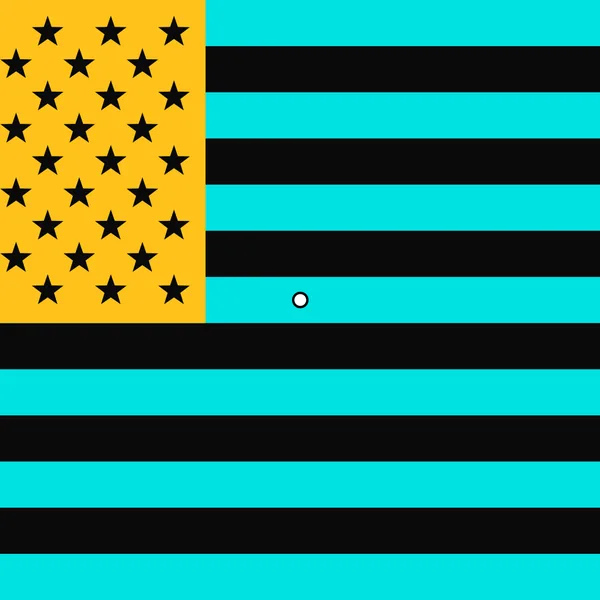 InteractiveColor illusionsAfterimage FlagStare at a cyan, black and yellow flag and a red, white and blue one appears.
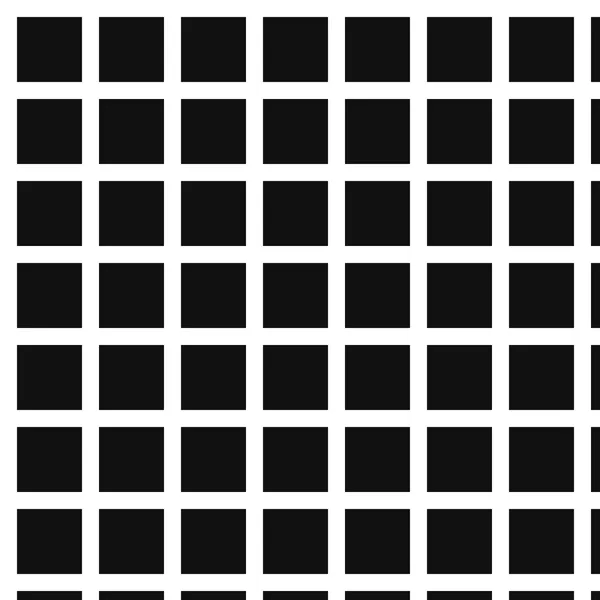 Brightness illusionsHermann GridGray smudges flicker at the crossings of a black-and-white grid.
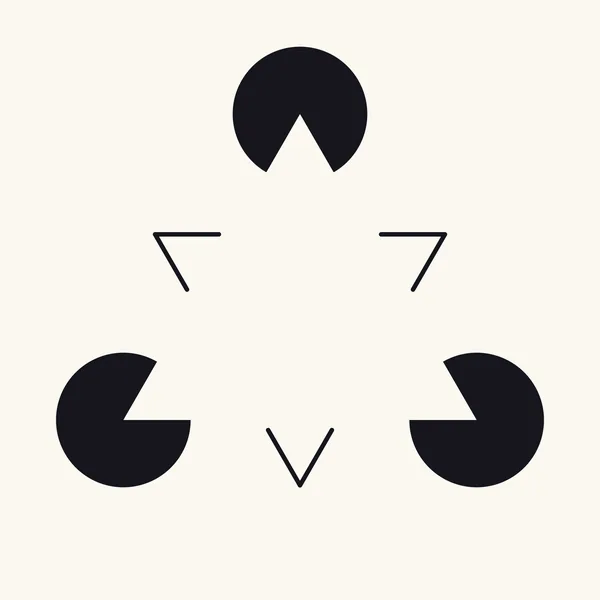 Geometric illusionsKanizsa TriangleA bright white triangle appears from nothing but three cut-out discs.
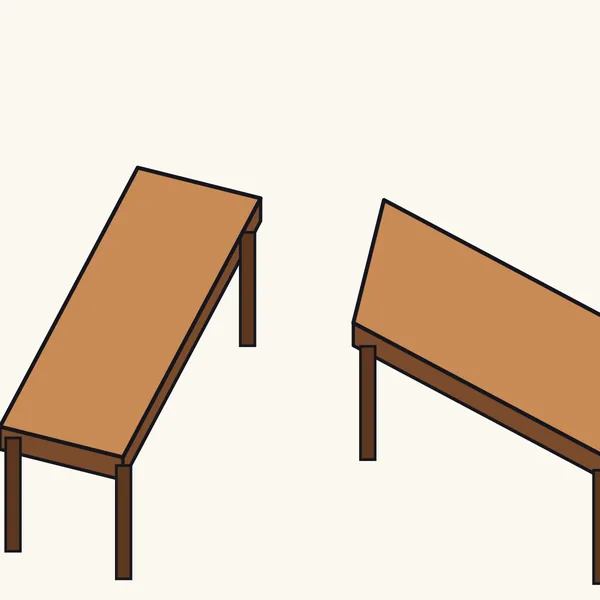 InteractiveGeometric illusionsShepard TablesA long table and a wide table with exactly the same tabletop.
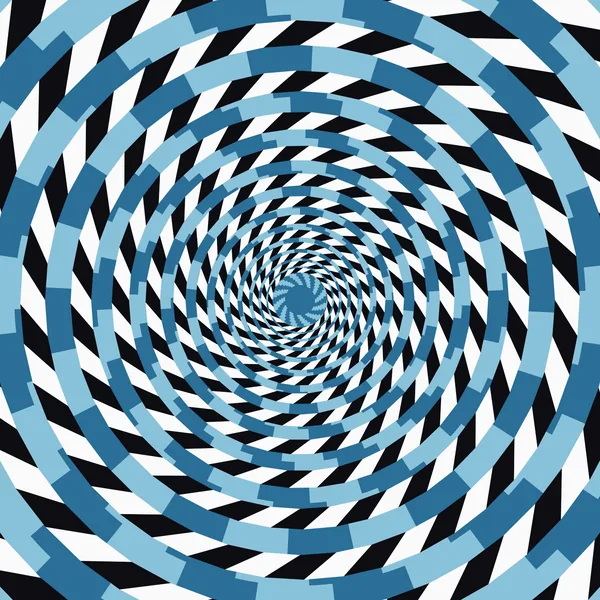 Geometric illusionsFraser SpiralConcentric circles of twisted cord that look like one big spiral.
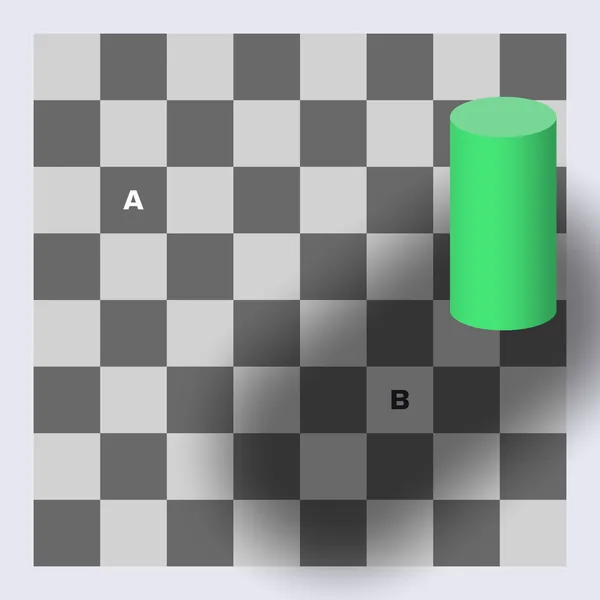 InteractiveBrightness illusionsCheckerboard Shadow IllusionA dark square in light and a light square in shadow are the same gray.
Make your own illusions
The hole in your hand
Roll a sheet of paper into a tube. Hold it up to your right eye like a telescope and put your left hand, palm facing you, beside the far end of the tube. Keep both eyes open and look at something across the room. A hole appears in your hand! Each eye sends a different picture, and your brain blends them.
The floating finger sausage
Point your two index fingers at each other, almost touching, about 20 cm in front of your nose. Look past them at a far wall. A little “sausage” appears floating between your fingertips. Pull your fingers apart slowly and watch it shrink.
A thaumatrope
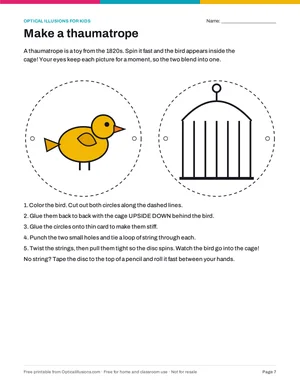
Draw a bird on one side of a paper circle and an empty cage, upside down, on the other. Tape it to a pencil and spin it between your hands: the bird lands in the cage. There is a ready-to-cut template in the worksheet pack.
An impossible triangle
Use the triangle dot grid in the worksheet pack to draw a Penrose triangle step by step, then color each side differently.
A color afterimage
Stare at the white dot on our afterimage flag for 30 seconds, then look at a white wall. The flag appears in its real colors.
Tips for teachers and parents
- Guess, then test. Ask children to predict before they measure. The surprise is what makes the lesson stick.
- Survey the class. Ambiguous pictures like the rabbit-duck make great tally charts and a first lesson in data.
- Use the reveal buttons. Every illusion page has a reveal or interactive tool that shows the truth on a big screen.
- Twenty-minute lesson: 5 minutes of “what do you see?”, 10 minutes on one worksheet, 5 minutes on why it happens using the simple explanation on each page.
- Comfort first. Skip moving illusions for children who feel dizzy or have photosensitive epilepsy, and take breaks from long stares.
Older kids who want a challenge can try the 20-question optical illusion test or the what do you see first? picture test.
What age are these optical illusions for?
The 15 illusions and the worksheet pack suit children from about 6 to 12, and older kids and adults enjoy them too. Younger children may need help reading the instructions and using a ruler.
Are the worksheets really free?
Yes. The PDF is free for home and classroom use. Please do not resell it or post the file elsewhere; link to this page instead.
Are optical illusions safe for children?
Still illusions are safe for almost everyone. Some moving or flickering illusions can make sensitive people feel dizzy, and children with photosensitive epilepsy should skip animated illusions. Every page on our site carries a comfort or motion note.
Written by K.R. for Opticalillusions.com · Updated .