
Delboeuf Illusion
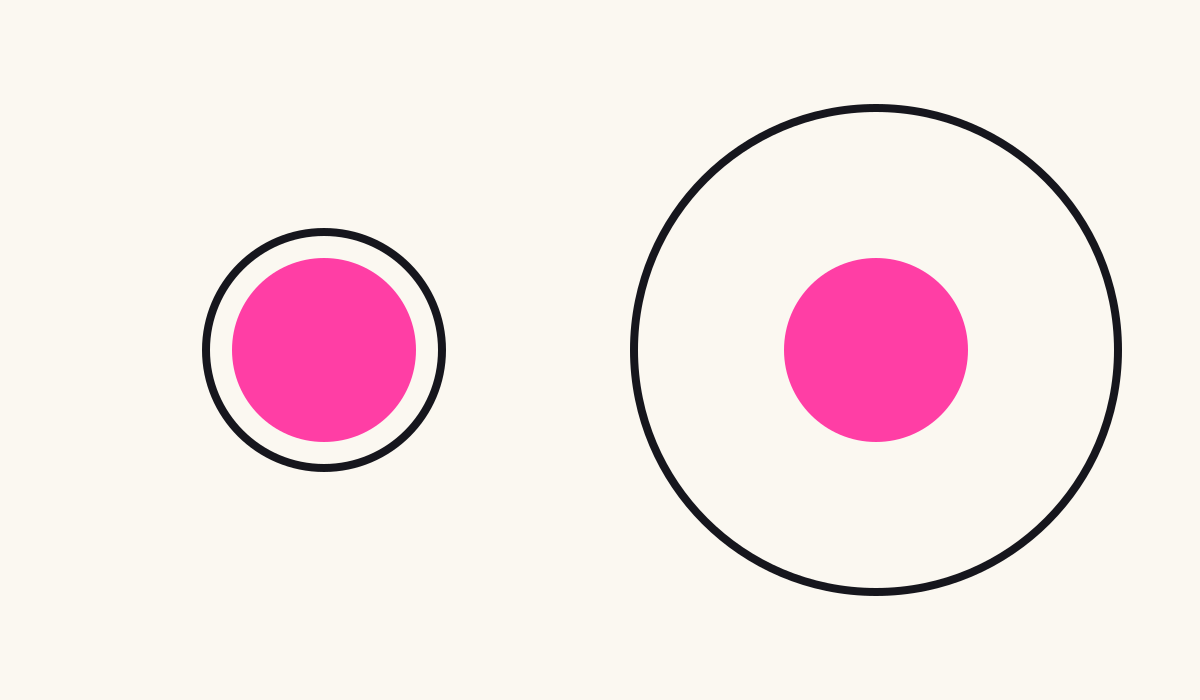
Two identical pink circles: a close ring makes one look bigger.
What do you see?
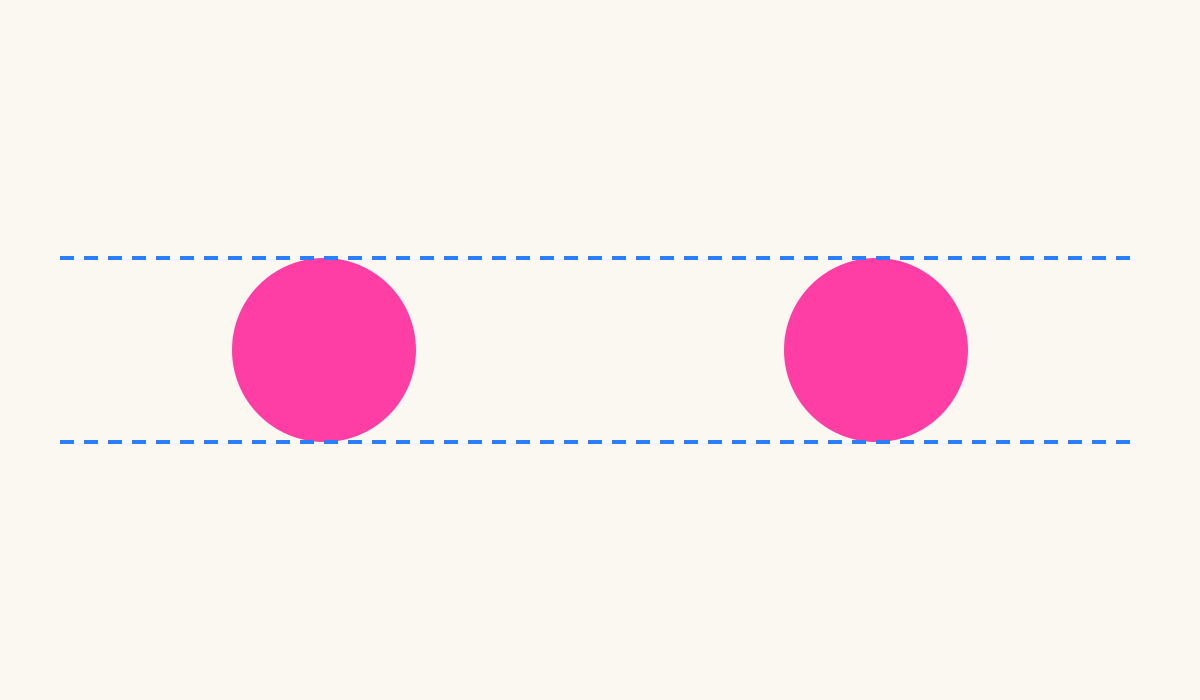
Two pink circles, each inside a black ring. The circle with the close-fitting ring on the left looks larger than the circle floating inside the big ring on the right. In fact the two pink circles are exactly the same size. Press the reveal button and the rings disappear, leaving two identical circles between the same pair of guide lines.
How it works
The Delboeuf illusion shows that we do not judge size in isolation. Your visual system compares the size of an object with the things around it. A ring that sits close to the inner circle seems to merge with it, so the circle borrows some of the ring's size and looks bigger. A ring that is far away emphasizes the empty space around the circle, and the circle looks smaller by contrast.
Two processes are often used to explain it. The first is assimilation: when outlines are close together, the brain tends to treat them as one shape and averages their sizes. The second is contrast: when the outer ring is much larger, the inner circle is judged against it and seems small. Which effect wins depends on the ratio between the ring and the circle. Studies have found that the inner circle looks largest when the outer ring is only a little bigger, roughly in a ratio of three to two, and that the effect reverses when the ring becomes very large.
The illusion is closely related to the Ebbinghaus illusion, in which a circle surrounded by small circles looks bigger than the same circle surrounded by large ones. Both show that perceived size depends on context.
The Delboeuf illusion has a famous everyday application. Food placed on a large plate leaves a wide empty rim, like the circle in the big ring, so the portion looks smaller. The same food on a small plate fills it, so the portion looks larger. Some studies have suggested that this can influence how much people serve themselves, although later research has found the effect on eating to be smaller and less consistent than early reports claimed.
Designers use the same principle when they choose margins around logos, photos and buttons. Generous space can make an element look smaller and more refined, while a tight frame can make it feel bigger and more crowded.
History
The illusion is named after the Belgian philosopher and mathematician Franz Joseph Delboeuf, who described it in 1865. He was interested in measuring how strongly context changes perception, and he also used variants of the figure to study size judgements. The drawing on this page was made for Opticalillusions.com with both pink circles drawn at exactly the same radius.
Try it
- Measure both pink circles on your screen with a ruler or a strip of paper.
- Press reveal and back again a few times while keeping your eyes on one circle.
- Put the same snack on a large plate and a small plate and compare how much it looks like.
- Draw your own with a ring just a little bigger than the circle, then with a huge ring.
Frequently asked questions
Are the two pink circles the same size?
Yes. The two pink circles are exactly the same size. Press the reveal button to remove the rings and compare.
Why does the circle in the tight ring look bigger?
A ring close to the circle seems to merge with it, so the circle borrows some of the ring's size. A ring far away makes the empty space stand out, so that circle looks smaller.
Who discovered the Delboeuf illusion?
Belgian philosopher and mathematician Franz Joseph Delboeuf described it in 1865.
How is it related to the Ebbinghaus illusion?
They are closely related. Both show that the size you see depends on what surrounds an object.
Sources & credits
Described by Belgian philosopher Franz Joseph Delboeuf (1865).
- Delboeuf, F. J. (1865). Note sur certaines illusions d'optique. Bulletins de l'Académie royale des sciences, des lettres et des beaux-arts de Belgique, 19.
- Van Ittersum, K. & Wansink, B. (2012). Plate size and color suggestibility: the Delboeuf illusion's bias on serving and eating behavior. Journal of Consumer Research, 39.
- Delboeuf illusion — overview Read →
Further reading: The Illusions Index (University of Glasgow) and Michael Bach’s Optical Illusions & Visual Phenomena.
Written by K.R. for Opticalillusions.com · Updated . Illusion artwork © The Wizard Of Sales, LLC. Feel free to share a link; see our terms for reuse.
Related illusions
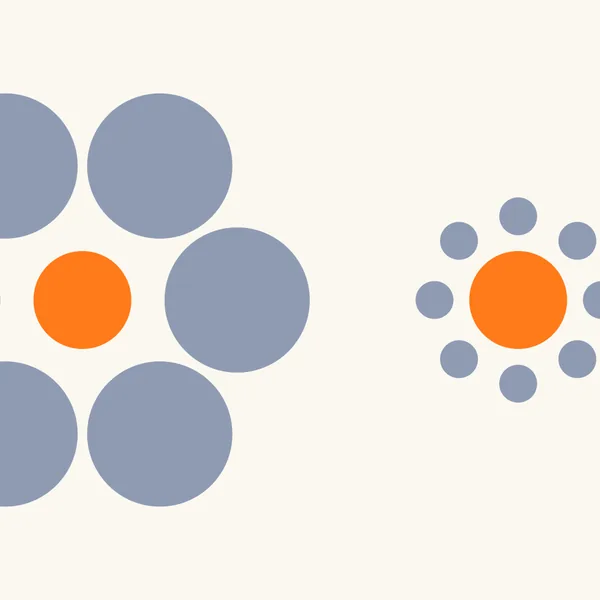 Geometric illusionsEbbinghaus IllusionA circle among giants looks small; among dwarfs it looks big.
 Geometric illusionsJastrow IllusionTwo identical arcs, but the lower one always looks bigger.
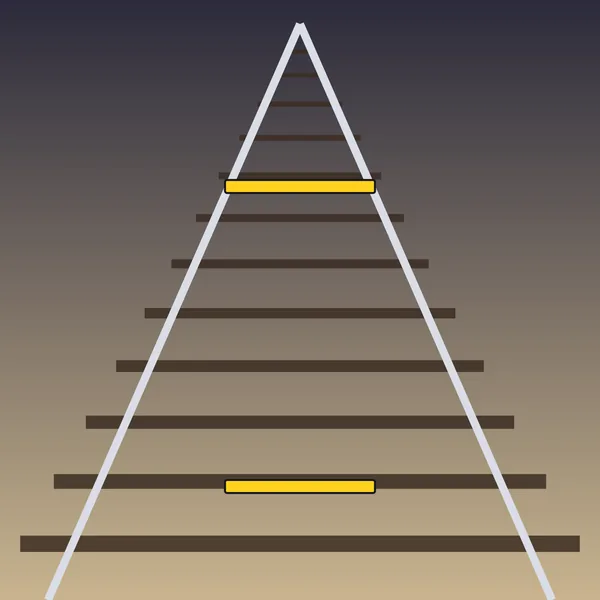 Geometric illusionsPonzo IllusionTwo equal bars on converging rails look like different lengths.
 InteractiveGeometric illusionsVertical-Horizontal IllusionAn upside-down T whose two lines are the same length.