
Ehrenstein Illusion
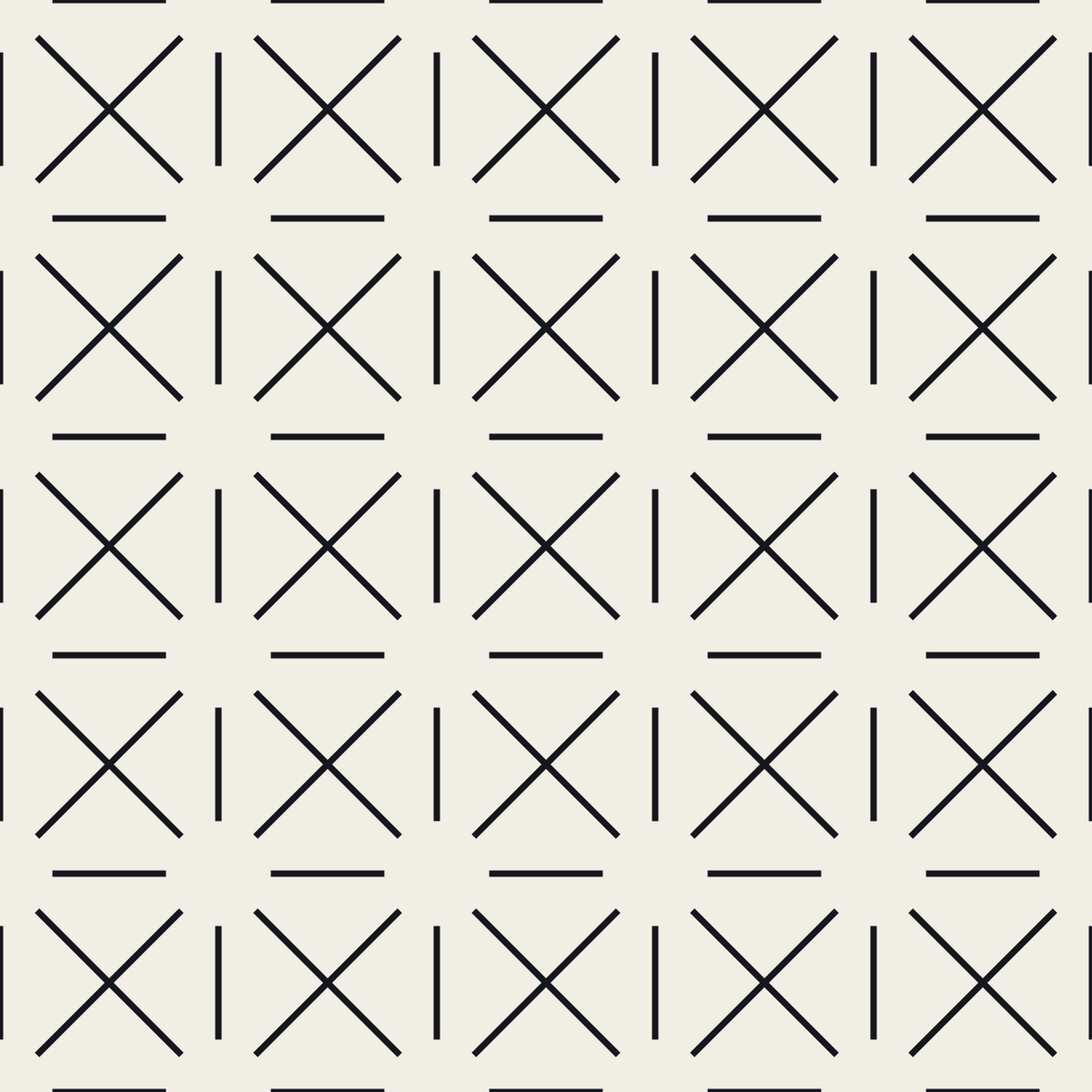
Gaps in a pattern of lines look like glowing white discs.

Get this illusion on a hoodie, mug or poster
Ehrenstein Illusion, printed to order with the Opticalillusions.com wordmark.
What do you see?
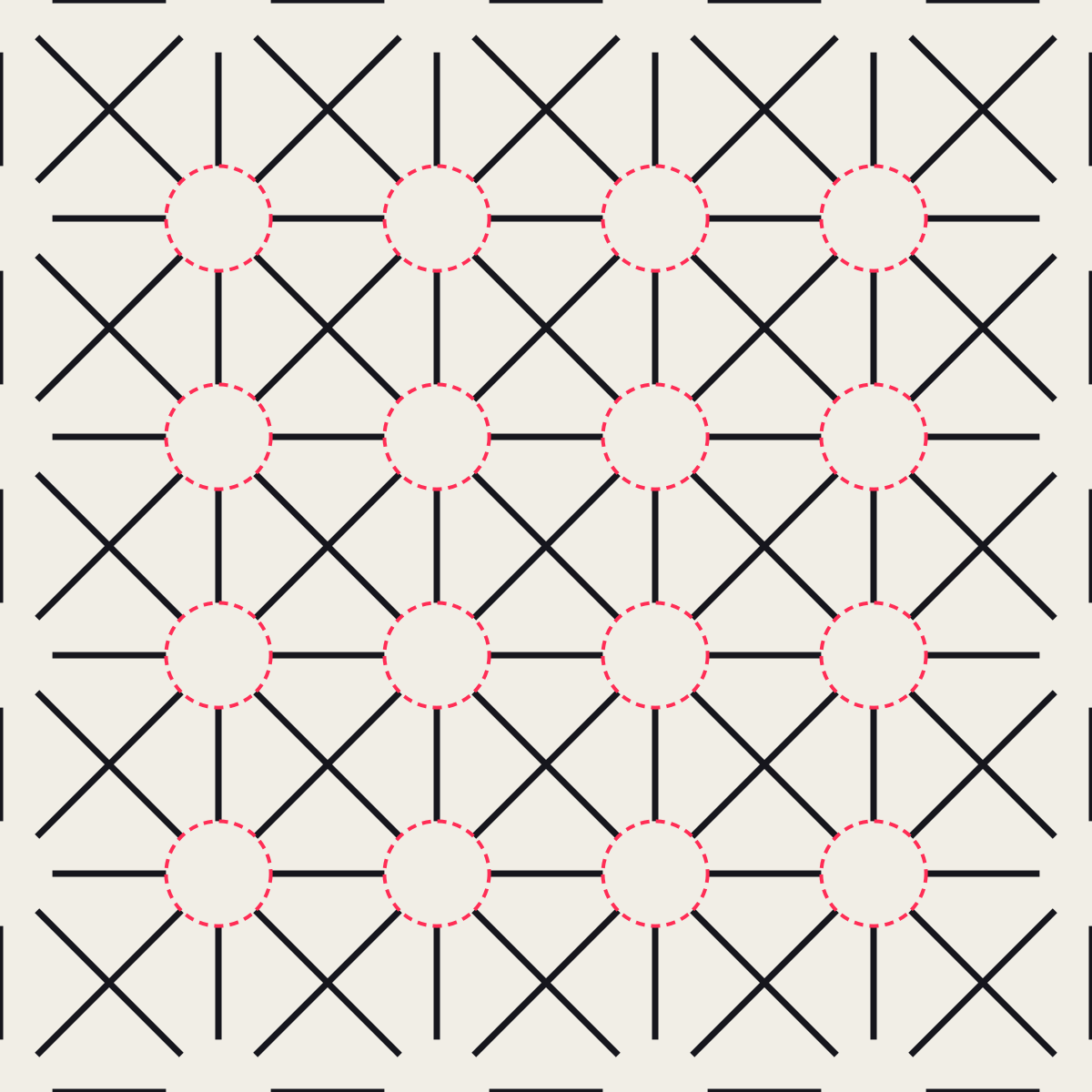
A lattice of black lines with gaps where they would meet. In each gap you may see a small round disc that looks brighter than the paper around it, as if a white coin had been laid over the crossing. Some people also see a faint edge around each disc. The paper inside the gaps is exactly the same color as the rest of the background. Press the reveal button to mark the gaps with dashed circles.
How it works
The Ehrenstein illusion is an example of illusory contours, edges and surfaces that your visual system constructs even though nothing is drawn. The lines in the figure all end at the same distance from the crossing point. The simplest explanation for so many lines ending in a neat circle is that something round is lying on top of them, hiding their ends. Your brain adopts that explanation and creates the disc.
Once the disc exists in your perception, it gets a surface and a brightness. The brain tends to see an occluding surface as slightly brighter than the background, so the disc seems to glow. This is closely related to the Kanizsa triangle, where cut-out circles suggest a bright triangle lying on top.
Neurons in the early visual cortex respond to these invisible edges. Studies in monkeys by Rüdiger von der Heydt and colleagues in 1984 found cells in area V2 that responded to illusory contours almost as if a real edge were present. This suggests that filling in edges is a basic part of vision, not a late, conscious guess.
Line ends play a special role. The visual system has cells that respond strongly to the end of a line, known as end-stopped cells. When many line ends line up, their responses can be combined into a contour. That is why the illusion depends on the lines stopping neatly. If the ends are ragged, or if a thin circle is actually drawn around the gap, the bright disc becomes weaker or vanishes.
Brightness contrast contributes too. The dense black lines around each gap make the bare paper inside look lighter by comparison, much as a gray patch looks lighter on a black background. Illusory contour and brightness contrast work together to make the discs stand out.
The illusion is strongest when the lines are thin and dark and the gaps are small compared with the length of the lines. Viewing the figure from a little further away can make the discs more vivid.
History
The illusion is named after the German psychologist Walter Ehrenstein, who described it in 1941. It was studied alongside the Kanizsa triangle, published in 1955 by the Italian psychologist Gaetano Kanizsa, as a key example of illusory contours. The lattice on this page was drawn for Opticalillusions.com.
Try it
- Step back from the screen and see whether the discs get brighter.
- Press reveal: the dashed circles show the discs were only empty paper.
- Cover all but one gap with paper and notice the disc fade.
- Draw your own with a ruler: several lines that stop the same distance from a center point.
Frequently asked questions
Are there really white discs in the gaps?
No. The paper inside the gaps is exactly the same color as the rest of the background. Press the reveal button to mark the gaps.
Why do I see bright circles that aren't drawn?
All the lines end at the same distance from each crossing. The simplest explanation is that something round is lying on top of them, so your brain creates a disc.
Who discovered the Ehrenstein illusion?
German psychologist Walter Ehrenstein described it in 1941.
Is it like the Kanizsa triangle?
Yes. Both are examples of illusory contours, edges your visual system builds even though nothing is drawn.
Sources & credits
Described by German psychologist Walter Ehrenstein (1941).
- Ehrenstein, W. (1941). Über Abwandlungen der L. Hermannschen Helligkeitserscheinung. Zeitschrift für Psychologie, 150.
- von der Heydt, R., Peterhans, E. & Baumgartner, G. (1984). Illusory contours and cortical neuron responses. Science, 224.
- Ehrenstein illusion — overview Read →
Further reading: The Illusions Index (University of Glasgow) and Michael Bach’s Optical Illusions & Visual Phenomena.
Written by K.R. for Opticalillusions.com · Updated . Illusion artwork © The Wizard Of Sales, LLC. Feel free to share a link; see our terms for reuse.
Related illusions
 Geometric illusionsKanizsa TriangleA bright white triangle appears from nothing but three cut-out discs.
 Brightness illusionsHermann GridGray smudges flicker at the crossings of a black-and-white grid.
 Brightness illusionsScintillating GridWhite dots on a gray grid seem to flash with black spots.
 Color illusionsWatercolor IllusionA thin orange edge tints a whole white region pale orange.