
Hidden Christmas Tree Illusion
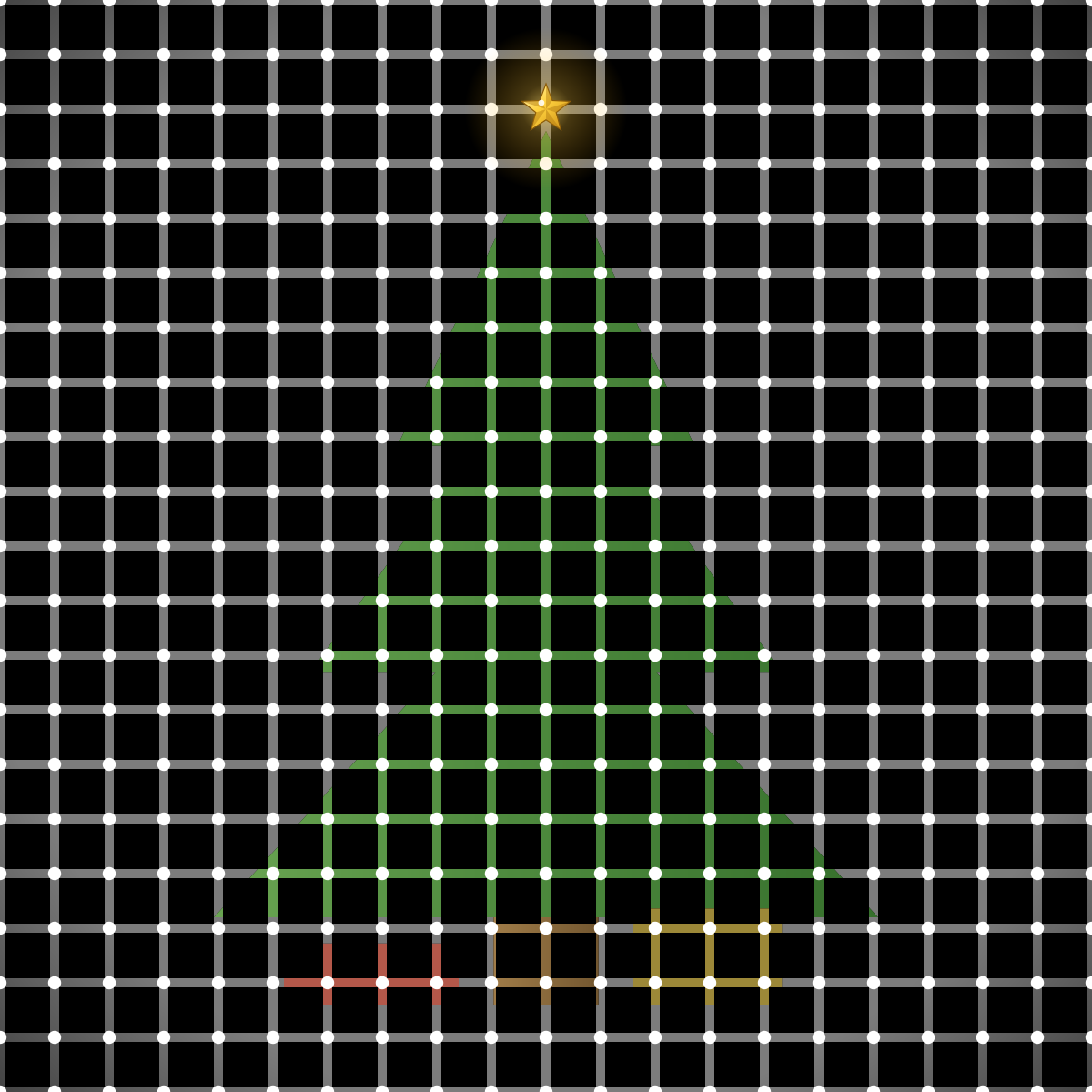
A grid full of flashing dark dots, with a Christmas tree hiding in it. Can you spot it?
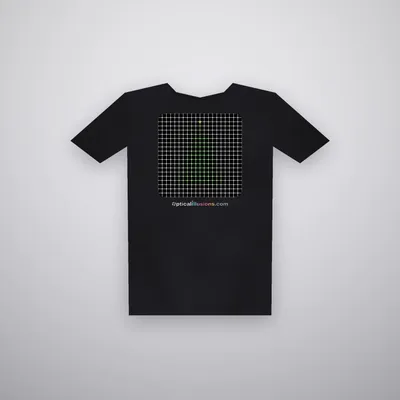
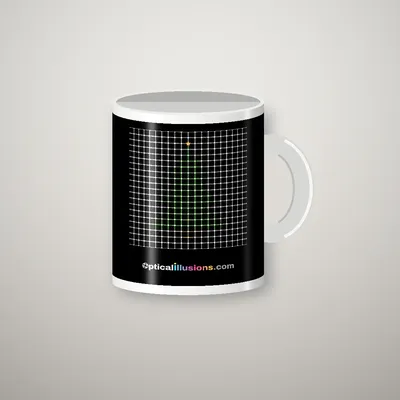
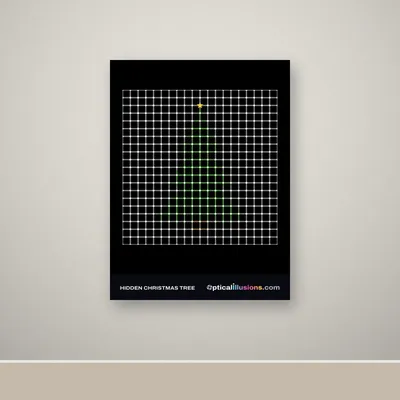
Get Hidden Christmas Tree on a tee, mug or poster
Printed to order with the Opticalillusions.com wordmark.
What do you see?
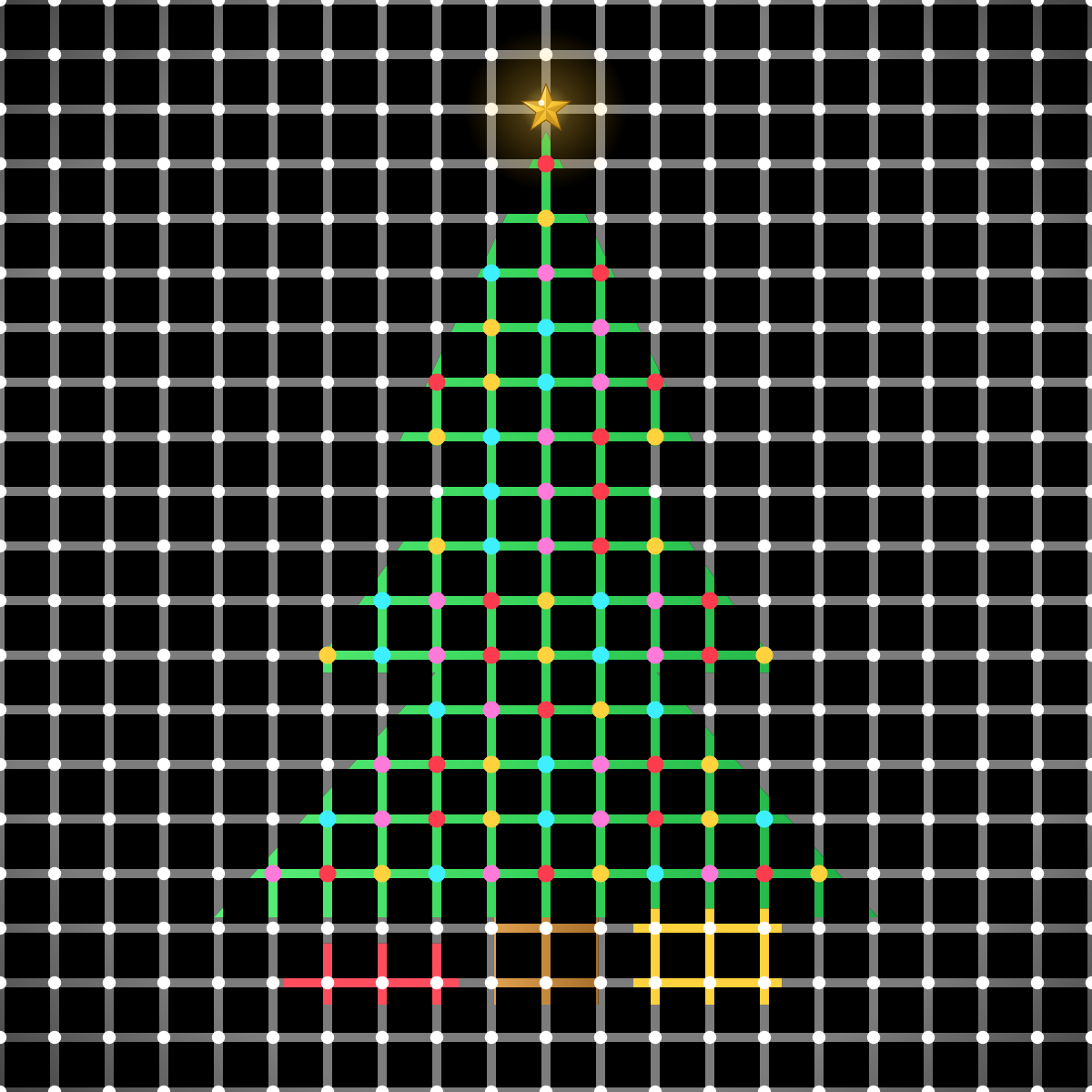
A black square crossed by a grid of thin bars, with a white disc at every crossing. As your eyes move over it, dark dots seem to flash inside the white discs, appearing wherever you are not looking and vanishing the moment you look straight at one. Somewhere in the grid is a Christmas tree with a gold star on top. Some people see it at once; others need a minute. Press "Light up the tree" to make it obvious, complete with ornaments.
How it works
Two different tricks are working here, and they work against each other.
The flashing dots come from the scintillating grid, a stronger cousin of the Hermann grid. There are no black dots anywhere in the picture: every disc is plain white. Yet when a disc sits away from the center of your gaze, a dark spot seems to fill it. The older explanation pointed to cells in the eye that compare a small spot with its surroundings, so that a crossing, surrounded by more light than a stretch of bar, gets a darker signal. That idea cannot explain everything, because the effect weakens sharply when the bars are curved or the discs are moved, and it is strongest just after the eyes jump. Researchers now think the visual cortex and eye movements play a big part as well.
The hidden tree comes from color. Inside the tree, the bars are green instead of gray, and the trunk is brown, but both colors were chosen to be about as light as the gray. Much of the brain's fast processing of shapes and edges runs mainly on differences in lightness, not color. A thin colored line that is just as light as its neighbor makes a weak edge, especially in the corner of your eye, where color vision is poorer. So the tree's outline barely registers, while the high-contrast flashing grid grabs all your attention.
Once you have found the tree, try to lose it again. Most people cannot, because knowing where to look lets slower, more careful processing, including color, take over. That shift from not seeing to not being able to stop seeing is a small taste of how much of vision is guided by expectation.
The gold star is the one part drawn in a clearly different lightness, which is why it is usually the first thing people notice. Use it as a clue, and the rest of the tree tends to follow.
History
Ludimar Hermann described gray spots in a white grid in 1870. Elke Lingelbach found in 1994 that adding white discs at the crossings produces the much stronger flashing effect, published with Michael Schrauf and Eugene Wist in 1997. The use of equally light colors to hide shapes draws on research by Margaret Livingstone and David Hubel in the 1980s. Christmas falls on Friday, December 25, 2026, and this tree grid is original artwork for Opticalillusions.com.
Try it
- Let your eyes roam over the grid and count how many black dots you can catch. There are none.
- Look for the gold star first, then follow the green bars down.
- Step back from the screen, then come close again: does the tree get easier or harder to see?
- Show it to a friend without telling them about the tree and time how long they take to find it.
Frequently asked questions
Where is the Christmas tree hidden?
It is in the grid, with green bars, a brown trunk and a gold star on top. Press Light up the tree to make it obvious.
Why is the tree so hard to see?
The green and brown were chosen to be about as light as the gray. Much of the brain's fast shape processing runs on differences in lightness, not color, so the tree's outline barely registers.
Are there really black dots in the grid?
No. Every disc is plain white. The flashing dots come from the scintillating grid effect.
Who discovered the flashing grid effect?
Ludimar Hermann described gray spots in a white grid in 1870. Elke Lingelbach found in 1994 that adding white discs at the crossings makes the much stronger flashing effect.
Sources & credits
Built on the scintillating grid discovered by Elke Lingelbach (1994) and the Hermann grid (1870). The hidden tree is an original design.
- Schrauf, M., Lingelbach, B. & Wist, E. R. (1997). The scintillating grid illusion. Vision Research, 37.
- Hermann, L. (1870). Eine Erscheinung simultanen Contrastes. Pflügers Archiv, 3.
- Livingstone, M. & Hubel, D. (1988). Segregation of form, color, movement, and depth: anatomy, physiology, and perception. Science, 240.
- Grid illusion — overview Read →
Further reading: The Illusions Index (University of Glasgow) and Michael Bach’s Optical Illusions & Visual Phenomena.
Written by K.R. for Opticalillusions.com · Updated . Illusion artwork © The Wizard Of Sales, LLC. Feel free to share a link; see our terms for reuse.
Related illusions
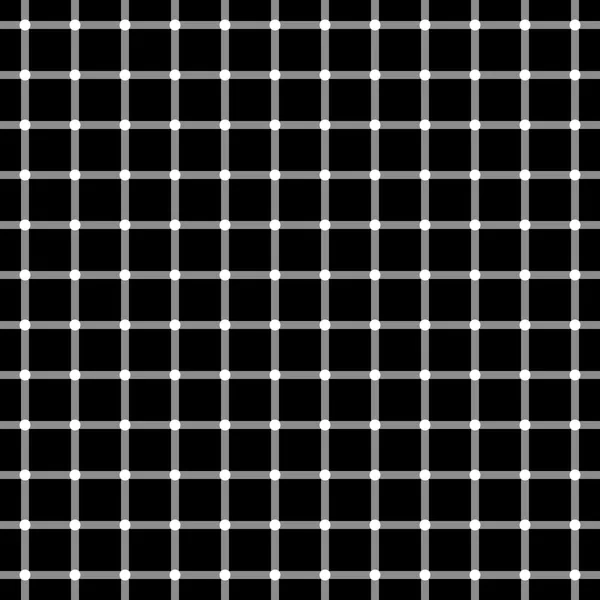 Brightness illusionsScintillating GridWhite dots on a gray grid seem to flash with black spots.
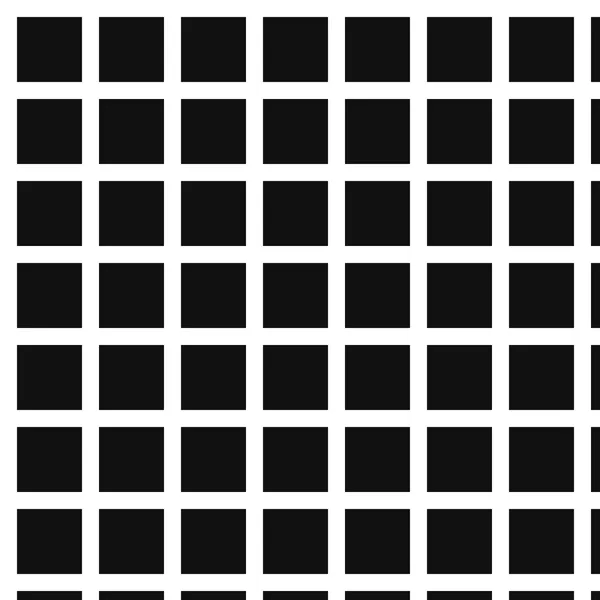 Brightness illusionsHermann GridGray smudges flicker at the crossings of a black-and-white grid.
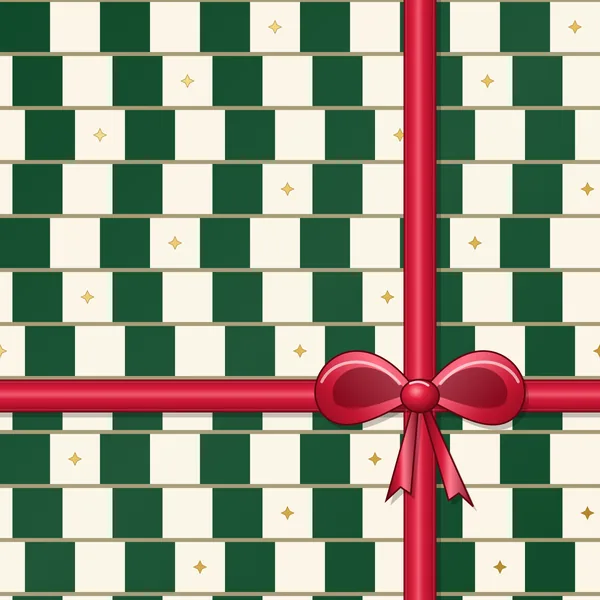 InteractiveHoliday illusionsChristmas Wrapping Paper IllusionGreen and cream checks on wrapping paper that seem to slope. Every line is perfectly straight.
 InteractiveMotion illusionsTroxler FadingStare at the cross and the soft color spots vanish into gray.