
Christmas Wrapping Paper Illusion
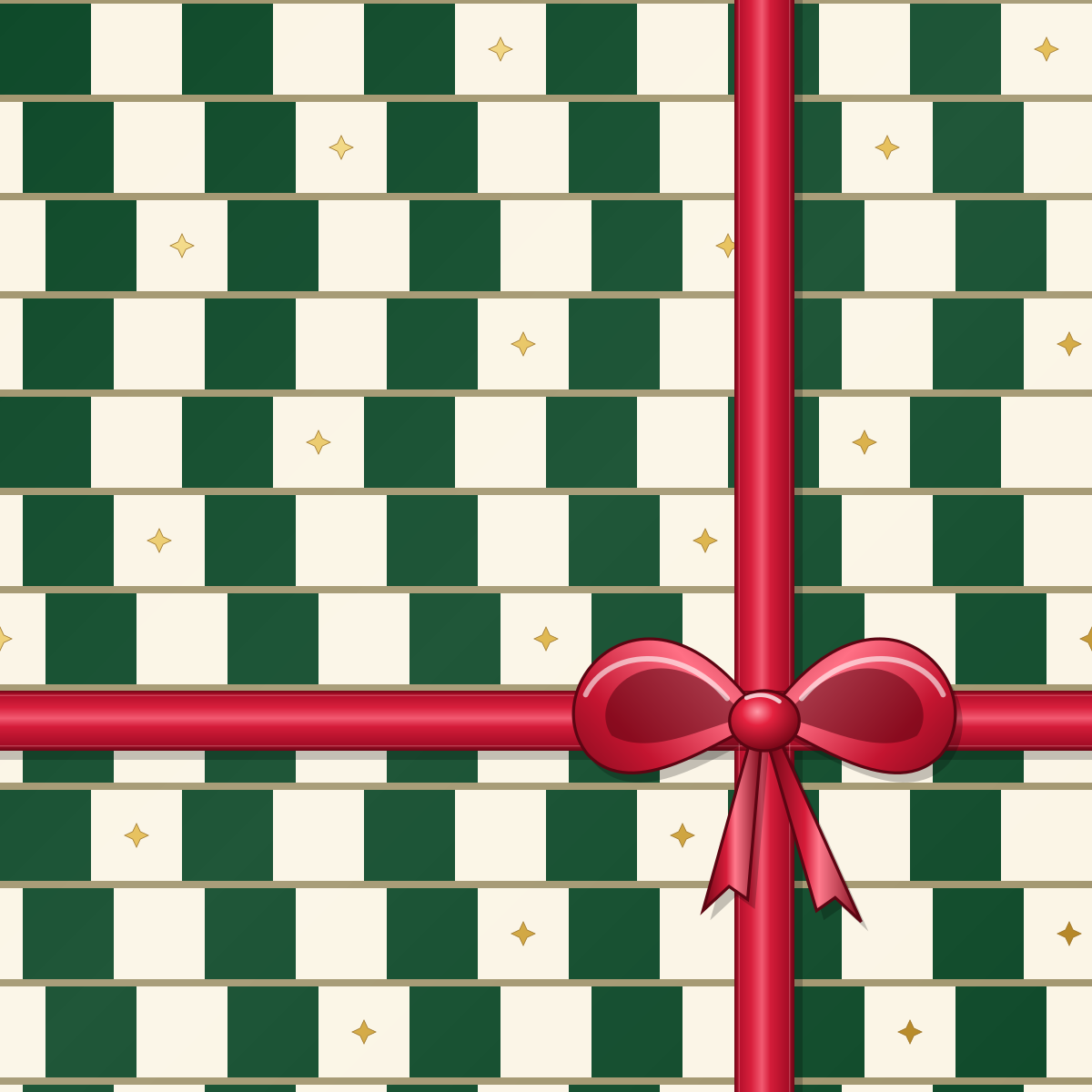
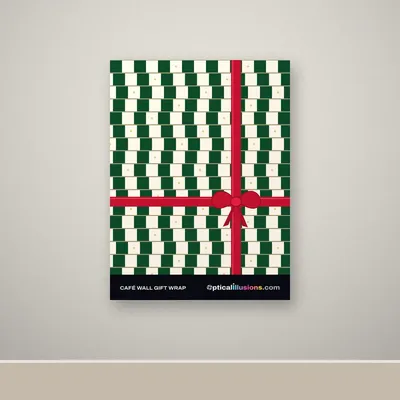
Green and cream checks on wrapping paper that seem to slope. Every line is perfectly straight.
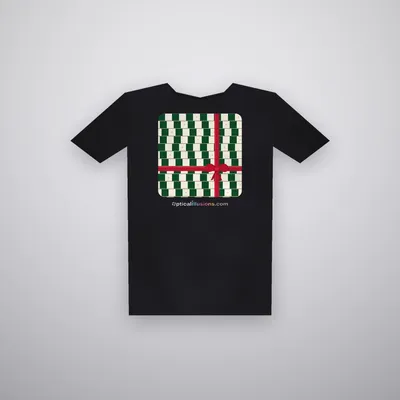
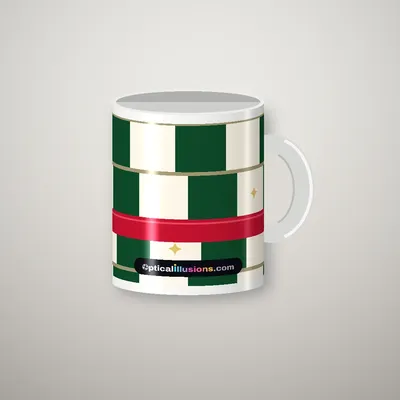
Get Café Wall Gift Wrap on a tee, mug or poster
Printed to order with the Opticalillusions.com wordmark.
What do you see?
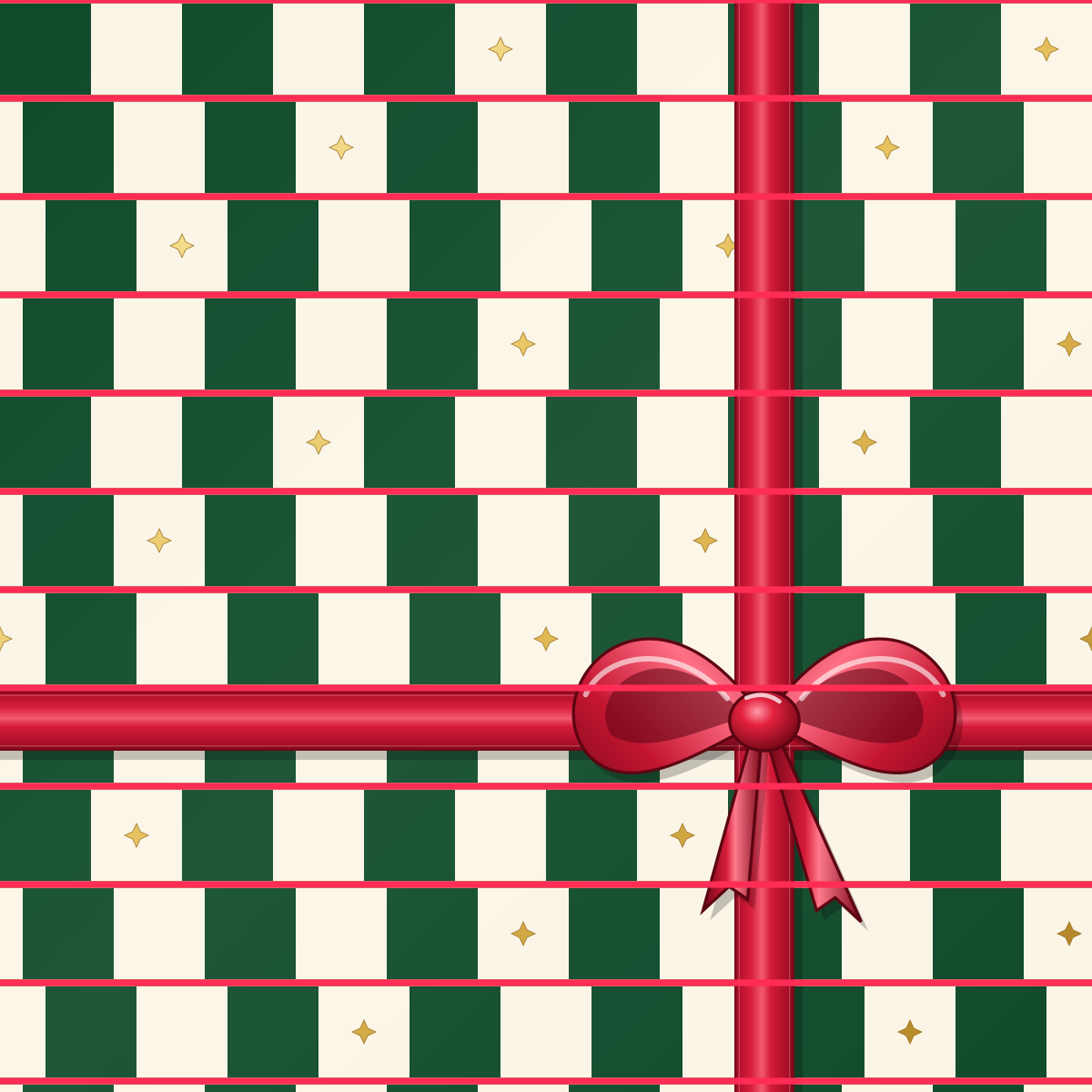
A sheet of festive wrapping paper with rows of dark green and cream squares, a few gold sparkles and a red ribbon tied in a bow. The rows look as if they are tilting, some sloping one way and some the other, so that the paper seems to be made of long tapering wedges. Press "Show the straight lines" and red lines are traced exactly along the thin gold-gray gaps between the rows. Every gap is perfectly straight, perfectly horizontal and parallel to the others.
How it works
This is the café wall illusion in holiday colors. Three things are needed. The squares must alternate between dark and light. Each row must be shifted sideways relative to the row above, here by a quarter of a square at a time. And the thin line between the rows, called the mortar after the brick wall where the effect was noticed, must be a shade in between the dark and light squares. Take away any one of these and the tilt disappears.
The effect starts with how the earliest stages of vision handle edges. Neurons in the visual cortex respond to small edges at particular angles and look at a patch of the image, not a single point. Where a dark square meets the mortar, the mortar looks a little lighter; where a light square meets it, the mortar looks a little darker. Because the squares are staggered, each short stretch of mortar has dark above and light below, or the reverse, in a pattern that shifts along the row. An edge detector looking at one of these patches responds as if it saw a short line sloping slightly, and the brain stitches all those little sloped pieces together into a long wedge.
Richard Gregory and Priscilla Heard called this border locking: the mortar seems to lock onto the edges of the squares above and below it, pulling it out of line. Akiyoshi Kitaoka later showed that many tilt illusions share the same building block, a small element that combines a light edge and a dark edge offset from each other.
The ribbon helps the illusion a little. Our eyes expect wrapping paper to be laid straight, so the tilt feels even more wrong.
The gold sparkles sit in the middle of the cream squares, well away from the edges, so they leave the important dark and light borders along the mortar untouched. Move them onto the edges and the wedges would start to break up.
History
The café wall illusion was named by Richard Gregory and Priscilla Heard in 1979 after the tiled wall of a café in Bristol, England, although Hugo Münsterberg had drawn a similar figure in 1897. This original wrapping paper was designed for Opticalillusions.com for Christmas, which falls on Friday, December 25, 2026.
Try it
- Hold the edge of a sheet of paper along one of the gold-gray lines.
- Compare a small view with full screen: notice whether the wedges look stronger at one size.
- Look along the ribbon, which is truly straight, and compare it with the rows.
- Try printing a pattern like this yourself: if the gaps are pure black or pure white, the tilt vanishes.
Frequently asked questions
Are the lines on the wrapping paper really straight?
Yes. Every gap between the rows is perfectly straight, perfectly horizontal and parallel to the others. Press Show the straight lines to see.
Why do the rows look tilted?
This is the café wall illusion. Dark and light squares, rows shifted sideways, and a thin in-between line make edge detectors see tiny slopes that the brain joins into long wedges.
What is border locking?
It is the name Richard Gregory and Priscilla Heard gave to this effect. The thin line seems to lock onto the edges of the squares above and below it, pulling it out of line.
Where does the café wall illusion come from?
Richard Gregory and Priscilla Heard named it in 1979 after the tiled wall of a café in Bristol, England. Hugo Münsterberg had drawn a similar figure in 1897.
Sources & credits
Based on the café wall illusion, named by Richard Gregory and Priscilla Heard (1979). The wrapping paper is an original design.
- Gregory, R. L. & Heard, P. (1979). Border locking and the Café Wall illusion. Perception, 8.
- Kitaoka, A., Pinna, B. & Brelstaff, G. (2004). Contrast polarities determine the direction of Café Wall tilts. Perception, 33.
- Café wall illusion — overview Read →
Further reading: The Illusions Index (University of Glasgow) and Michael Bach’s Optical Illusions & Visual Phenomena.
Written by K.R. for Opticalillusions.com · Updated . Illusion artwork © The Wizard Of Sales, LLC. Feel free to share a link; see our terms for reuse.
Related illusions
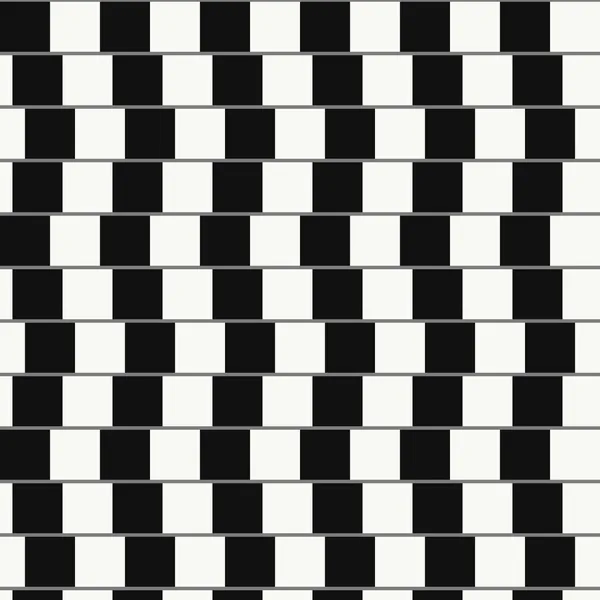 Geometric illusionsCafé Wall IllusionPerfectly parallel rows of tiles that seem to tilt into wedges.
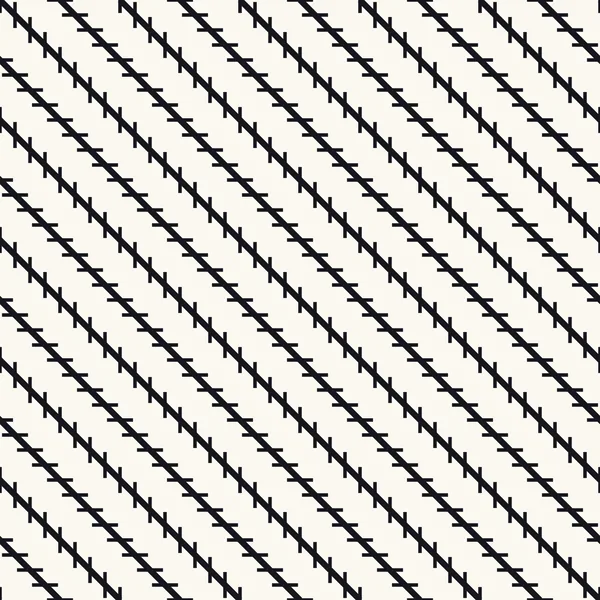 Geometric illusionsZöllner IllusionShort hatches make long parallel lines seem to tilt toward each other.
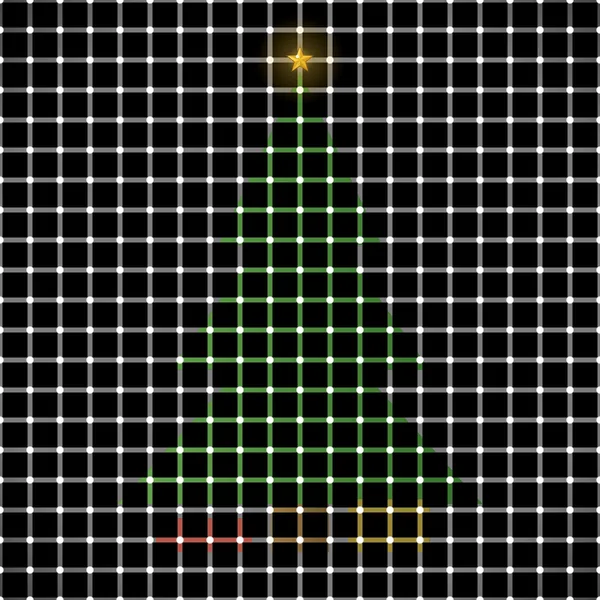 InteractiveHoliday illusionsHidden Christmas Tree IllusionA grid full of flashing dark dots, with a Christmas tree hiding in it. Can you spot it?
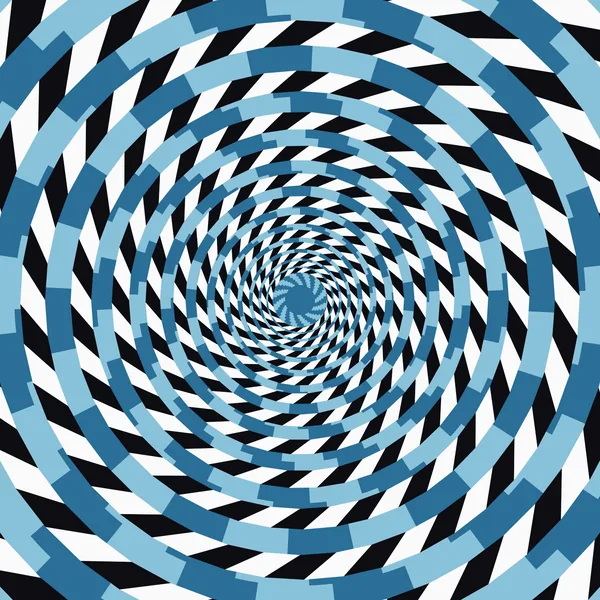 Geometric illusionsFraser SpiralConcentric circles of twisted cord that look like one big spiral.