
Thanksgiving Turkey Afterimage
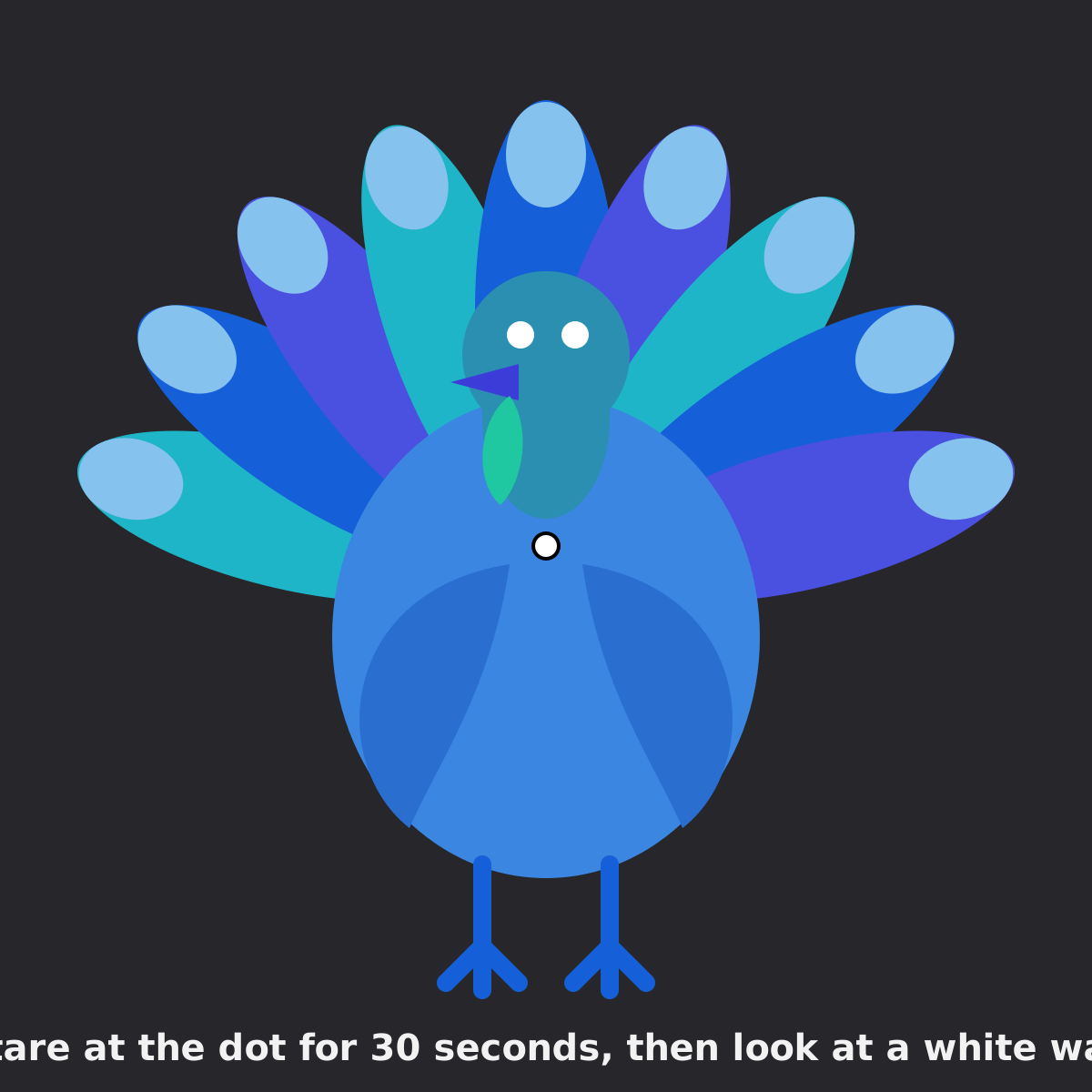
Stare at a blue turkey for 30 seconds and a warm brown turkey with a red, orange and gold tail appears.

What do you see?
A very cold-looking turkey: a blue body, a fanned tail of cyan, blue and indigo feathers with pale blue tips, a teal head and a green wattle. Press start and keep your eyes on the small white dot on the turkey's chest for thirty seconds. When the picture changes to a blank white panel, keep looking at the dot. A ghostly turkey appears on the white, and this time it looks like Thanksgiving: a warm brown body, a tail of red, orange and gold feathers and a reddish wattle. Hold still and it lingers for a few seconds before it melts away.
How it works
What you see is a negative afterimage. Every color in the drawing was picked as the opposite of the color you are meant to see afterward.
Your eyes have three kinds of cone cells that respond best to long, medium and short wavelengths of light, roughly red, green and blue. Their signals are then combined into opposing pairs: blue against yellow, red against green and light against dark. Scientists call this opponent processing, and it explains why you can picture a yellowish green or a bluish red but never a bluish yellow.
While you stare at the blue body, the blue side of the blue-yellow pair works hard and slowly becomes less responsive. When the white panel appears, it sends the same light to every cone, but the tired blue signal answers weakly, so the balance tips toward yellow and orange. The body was drawn in a fairly deep blue, so its ghost comes out as a darker, browner orange. The cyan feathers tire the green and blue signals and leave red feathers behind, the indigo feathers leave gold, and the green wattle leaves a red one. The white eyes did the opposite: those cells were flooded with light, so on the white panel they answer weakly and the eyes look dark.
Keeping your eyes still is the key. The afterimage is tied to the patch of retina that got tired, so if your gaze wanders the ghost turkey wanders with it, and blinking makes it fade sooner. Thirty seconds is usually enough; forty-five gives a stronger, longer ghost. A dim room helps too, and a plain white wall or a sheet of paper works just as well as the panel on the screen.
The effect is completely normal and harmless. It is the same process that leaves a spot in your vision after a camera flash, and within a few seconds your cells recover and the white looks white again.
History
Afterimages were described by Aristotle and studied scientifically by Johann Wolfgang von Goethe in his 1810 Theory of Colors. Ewald Hering proposed opponent colors in the 1870s, and Leo Hurvich and Dorothea Jameson measured the opponent channels in the 1950s. The blue turkey is original artwork for Opticalillusions.com, made for Thanksgiving, which falls on Thursday, November 26, 2026.
Try it
- Stare for thirty seconds without moving your eyes, then look at a white wall, a napkin or a sheet of paper.
- Try it at the Thanksgiving table: show it to the family without saying what color the turkey will turn.
- Count the tail feathers in the ghost turkey. Does it still have nine?
- Look at a light gray surface instead of white and see how the ghost turkey changes.
Frequently asked questions
How do I see the Thanksgiving turkey afterimage?
Press start and keep your eyes on the small white dot on the turkey's chest for thirty seconds. When the white panel appears, keep looking and a warm brown turkey appears.
Why does the blue turkey turn brown?
Staring at blue tires the blue side of the blue-yellow pair, so the white panel looks yellow and orange there. The body was a fairly deep blue, so its ghost comes out a darker, browner orange.
Why do the eyes look dark in the afterimage?
The white eyes flooded those cells with light, so on the white panel they answer weakly and the eyes look dark.
Who studied afterimages?
Aristotle described them, and Johann Wolfgang von Goethe studied them in his 1810 Theory of Colors. Leo Hurvich and Dorothea Jameson measured the opponent channels in the 1950s.
Sources & credits
Negative afterimages and opponent colors were described by Goethe (1810) and Ewald Hering (1870s). The turkey is an original drawing.
- Hurvich, L. M. & Jameson, D. (1957). An opponent-process theory of color vision. Psychological Review, 64.
- Afterimage — overview Read →
- Thanksgiving (United States) — overview Read →
Further reading: The Illusions Index (University of Glasgow) and Michael Bach’s Optical Illusions & Visual Phenomena.
Written by K.R. for Opticalillusions.com · Updated . Illusion artwork © The Wizard Of Sales, LLC. Feel free to share a link; see our terms for reuse.
Related illusions
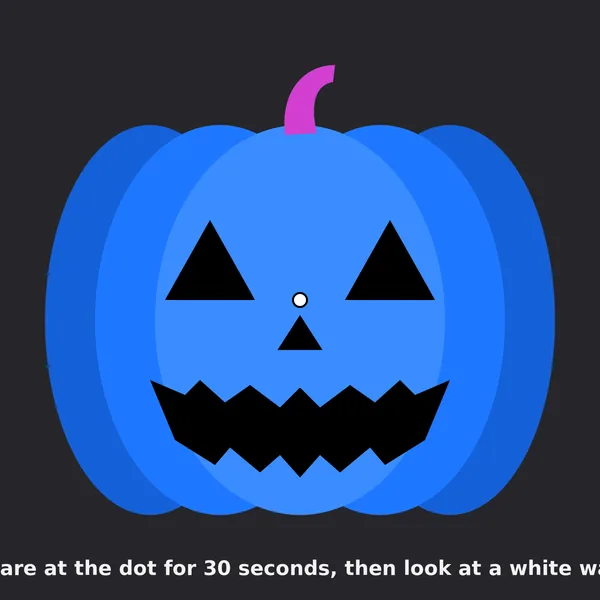 InteractiveHoliday illusionsJack-o'-Lantern AfterimageStare at a blue pumpkin for 30 seconds and an orange jack-o'-lantern with a glowing face appears.
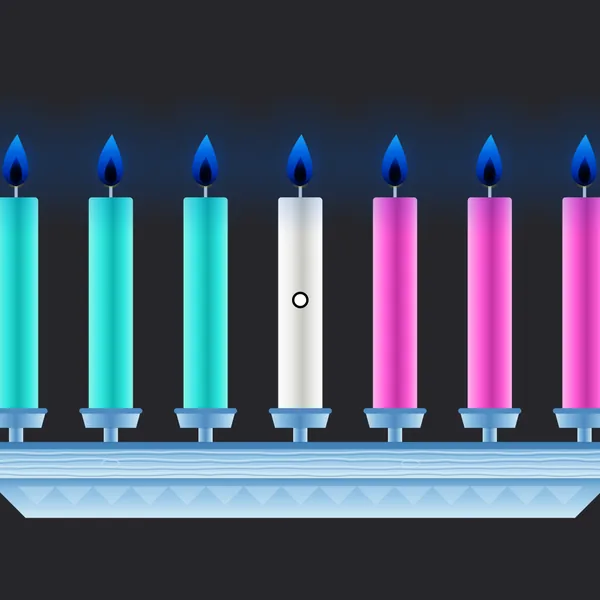 InteractiveHoliday illusionsKwanzaa Kinara AfterimageStare at a cyan, white and pink kinara, then see red, black and green candles appear.
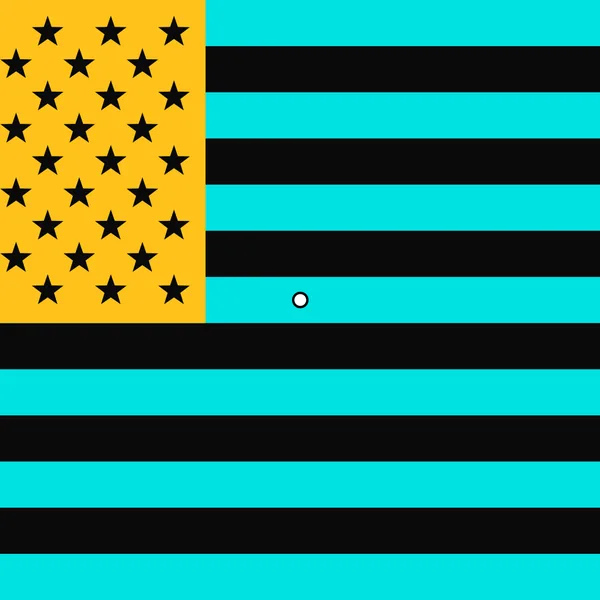 InteractiveColor illusionsAfterimage FlagStare at a cyan, black and yellow flag and a red, white and blue one appears.
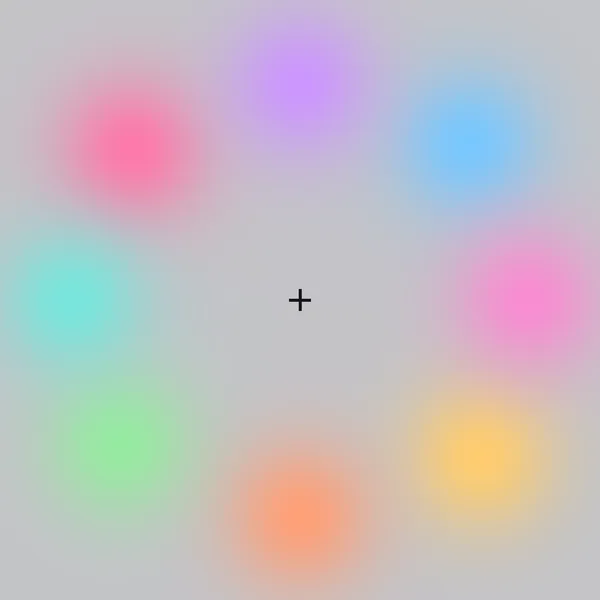 InteractiveMotion illusionsTroxler FadingStare at the cross and the soft color spots vanish into gray.