
Twin Bowls of Toldot Illusion
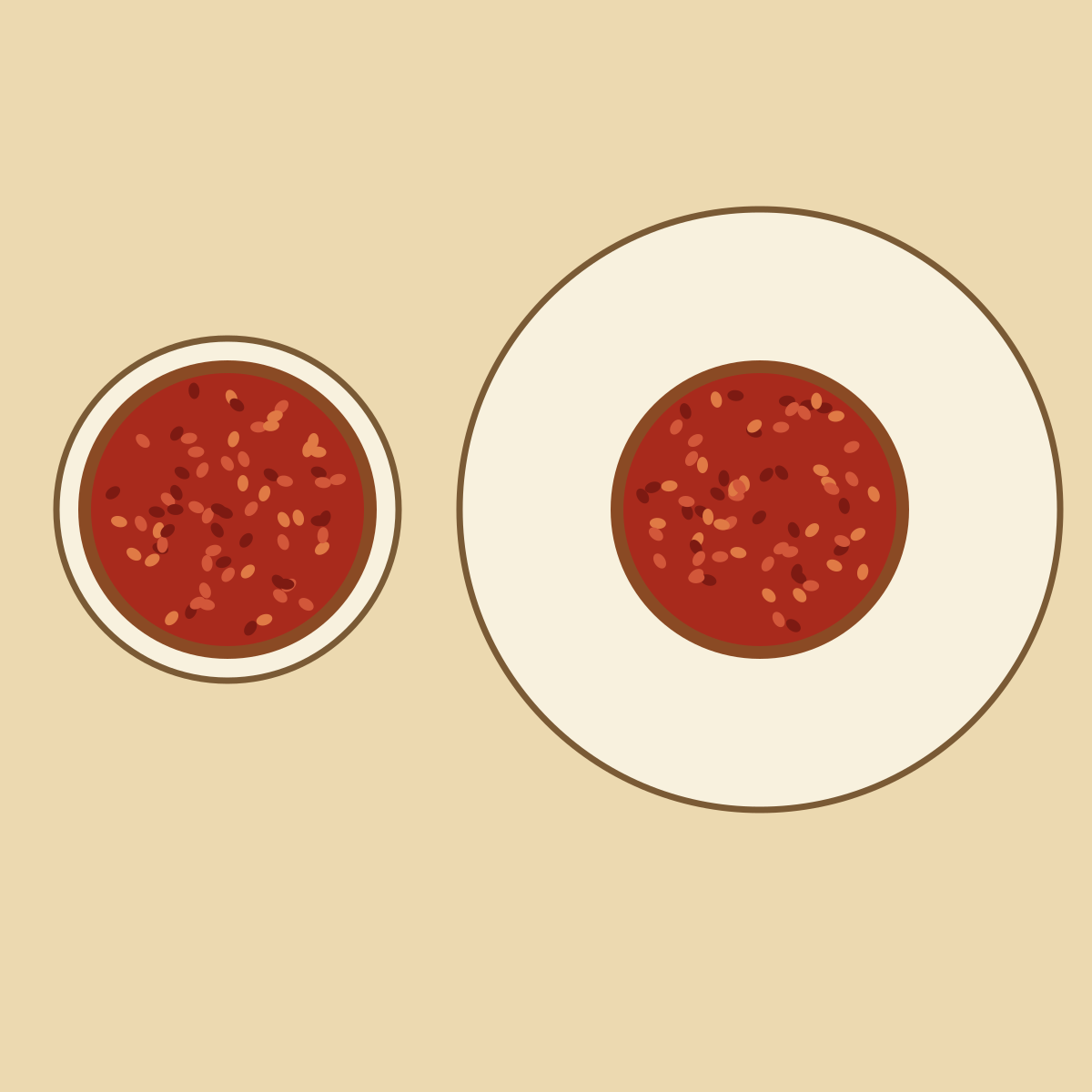
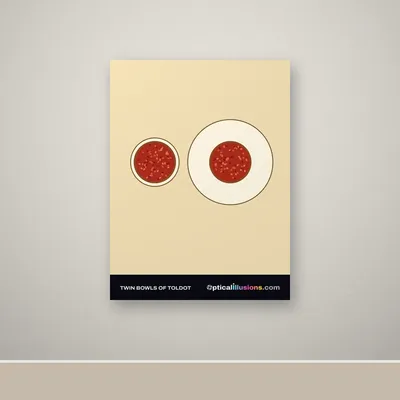
Two bowls of red lentil stew, one in a snug plate and one in a wide plate. They look different, but they are exactly the same size.
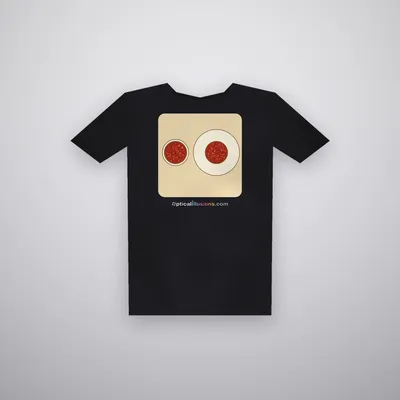
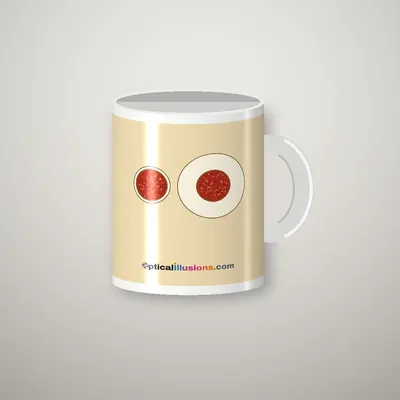
Get Twin Bowls of Toldot on a tee, mug or poster
Printed to order with the Opticalillusions.com wordmark. Or cover the challot with it this Shabbos.
What do you see?
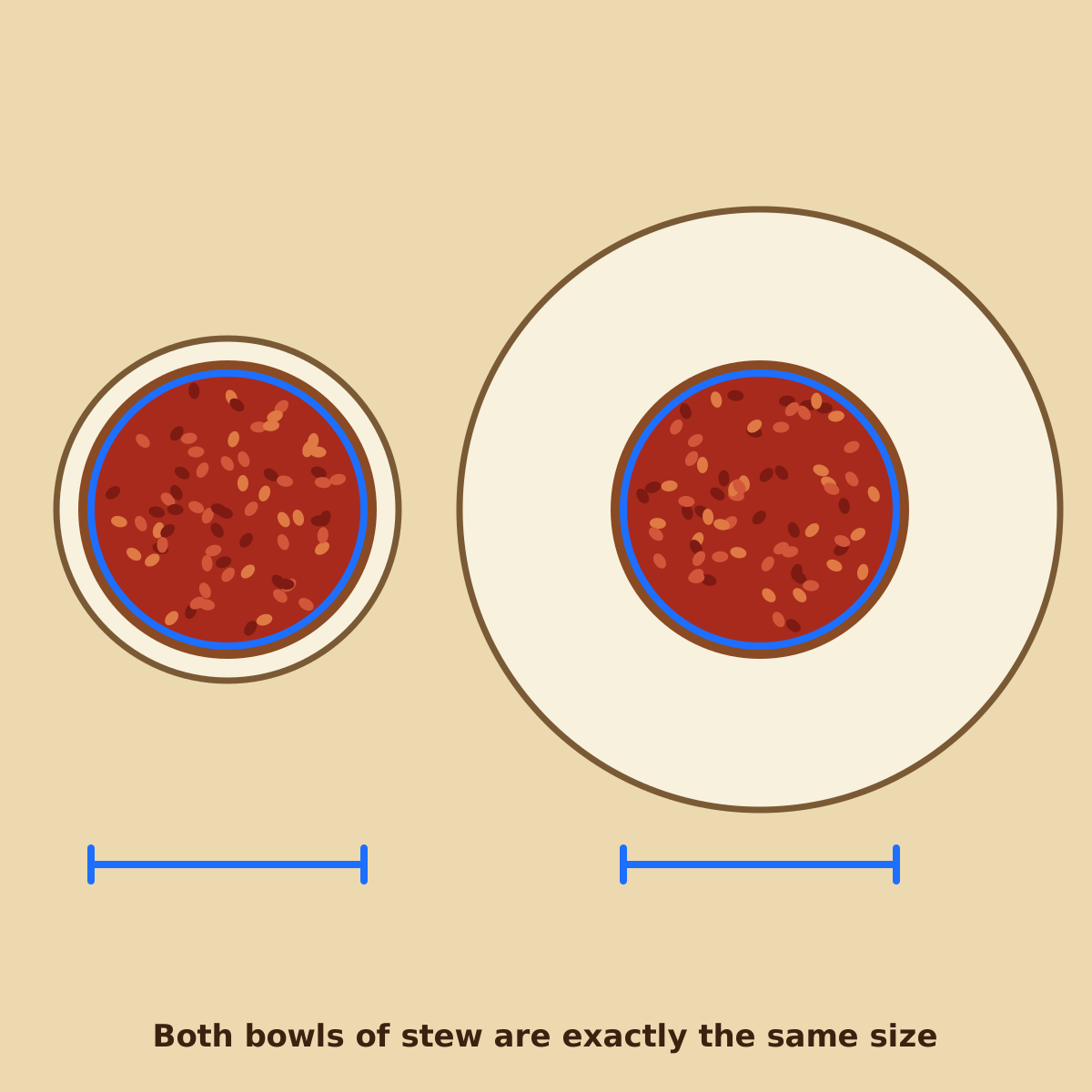
Two plates sit side by side on a table, each holding a round bowl of red lentil stew. The bowl on the right, sitting in a huge plate with lots of empty space around it, looks small. The bowl on the left, snug inside a narrow plate, looks noticeably bigger. Most people are sure the left stew is larger. Press "Measure the bowls" to outline both in blue with a bar of the same length under each. They match exactly.
How it works
This is the Delboeuf illusion, described by the Belgian scientist Joseph Delboeuf in 1865. A circle surrounded by a second circle is judged against that surrounding circle. When the outer ring is close, the inner circle seems to fill its space and looks bigger. When the outer ring is far away, the inner circle seems to float in a large empty field and looks smaller.
The brain rarely measures size in isolation. It judges size by comparison with whatever is nearby: the walls of a room, the frame of a picture, the edge of a plate. In daily life that works well, because a thing next to something huge usually is small by comparison. The illusion borrows that habit and turns it against you, because here the plates were changed and the stew was not.
A second effect helps. The bowls and the stew are drawn with the same brown rim and the same red color, so nothing in the picture tells you they differ. Your visual system fills in the story that the bowl with the bigger plate must be the smaller one.
Delboeuf circles are closely related to the Ebbinghaus illusion, where a center circle changes size when it is surrounded by small or large circles. Both show that perceived size depends on context. Researchers have also found that the effect changes with age and between individual people, so some people feel it more strongly than others.
You can test it yourself: hold a strip of paper against each stew in turn, or cover the plates with your hands so only the stew shows. The difference disappears the moment the context is gone.
History
Joseph Delboeuf published this illusion in 1865 while studying how we judge sizes of circles. Parashat Toldot (Genesis 25:19 to 28:9) is read on Shabbat, November 14, 2026. Esav comes in from the field exhausted and begs Yaakov for some of the red stew he is cooking, the "red, red stuff" (Genesis 25:29 to 34). The two twin brothers are as alike in some ways as the two bowls here, yet the surroundings change how each one is seen. This picture is original artwork for Opticalillusions.com.
Try it
- Look at both bowls and decide which is bigger before you press the button.
- Press the reveal button: both stews have the same blue outline and the same bar.
- Cover the plates with paper so only the stew shows. Do the bowls look equal now?
- At the Shabbos table, ask everyone to guess first. Who was fooled?
Sources & credits
Based on the Delboeuf illusion (Joseph Delboeuf, 1865). The bowls and plates are an original drawing.
- Delboeuf, J. (1865). Note sur certaines illusions d'optique. Bulletins de l'Académie Royale de Belgique, 19.
- Delboeuf illusion — overview Read →
- Toldot — overview Read →
Further reading: The Illusions Index (University of Glasgow) and Michael Bach’s Optical Illusions & Visual Phenomena.
Written by K.R. for Opticalillusions.com · Updated . Illusion artwork © The Wizard Of Sales, LLC. Feel free to share a link; see our terms for reuse.
Related illusions
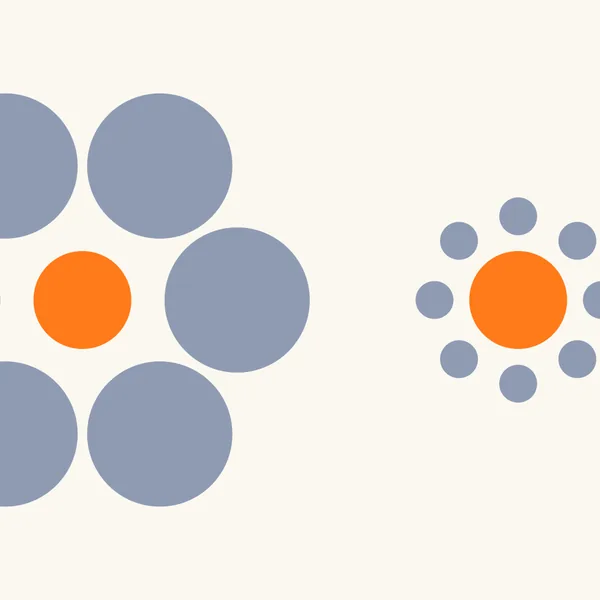 Geometric illusionsEbbinghaus IllusionA circle among giants looks small; among dwarfs it looks big.
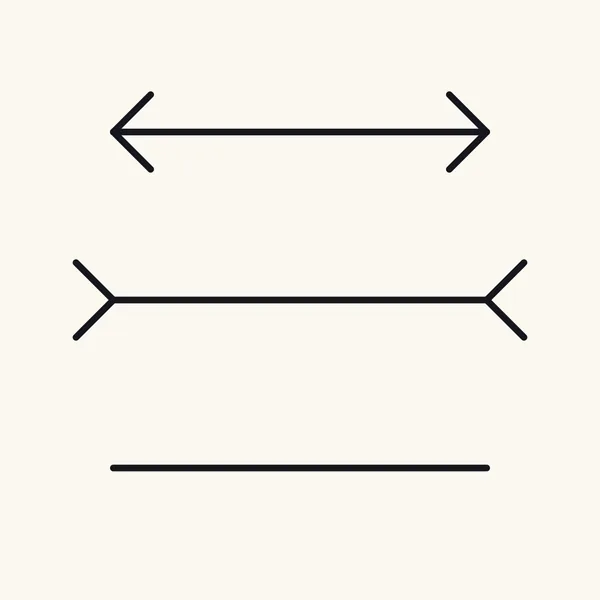 InteractiveGeometric illusionsMüller-Lyer IllusionThree identical lines that look clearly different in length.
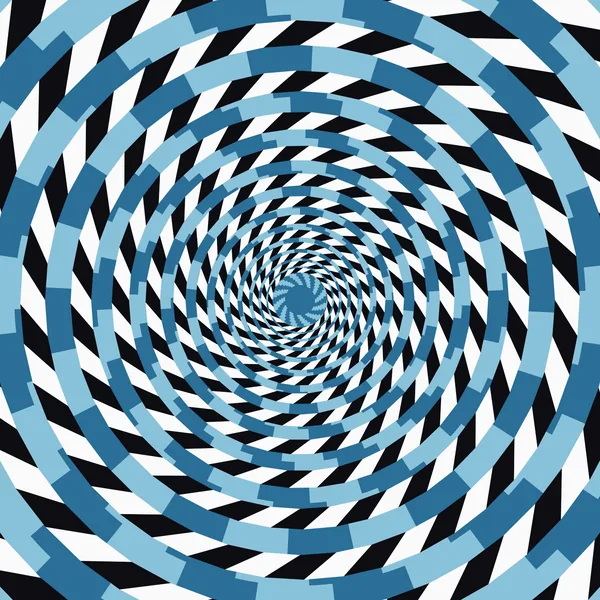 Geometric illusionsFraser SpiralConcentric circles of twisted cord that look like one big spiral.
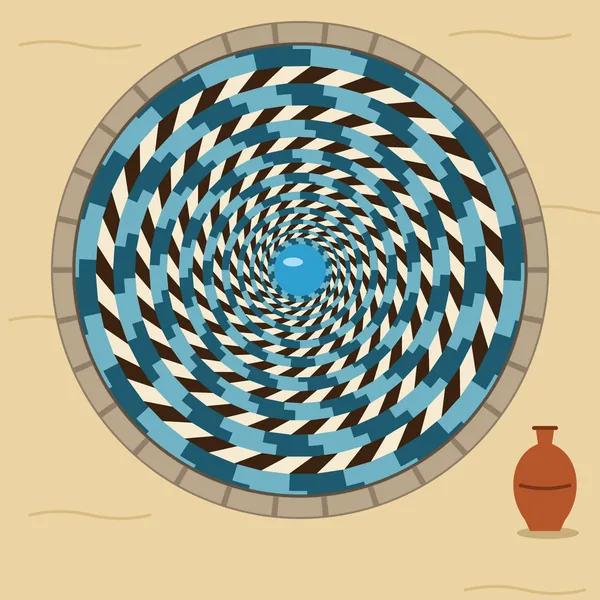 Shabbos & Yom Tov Illusion of the WeekRivka's Well IllusionLook down into Rivka's well: the rope seems to spiral down to the water, yet every coil is a perfect circle.