
Rivka's Well Illusion
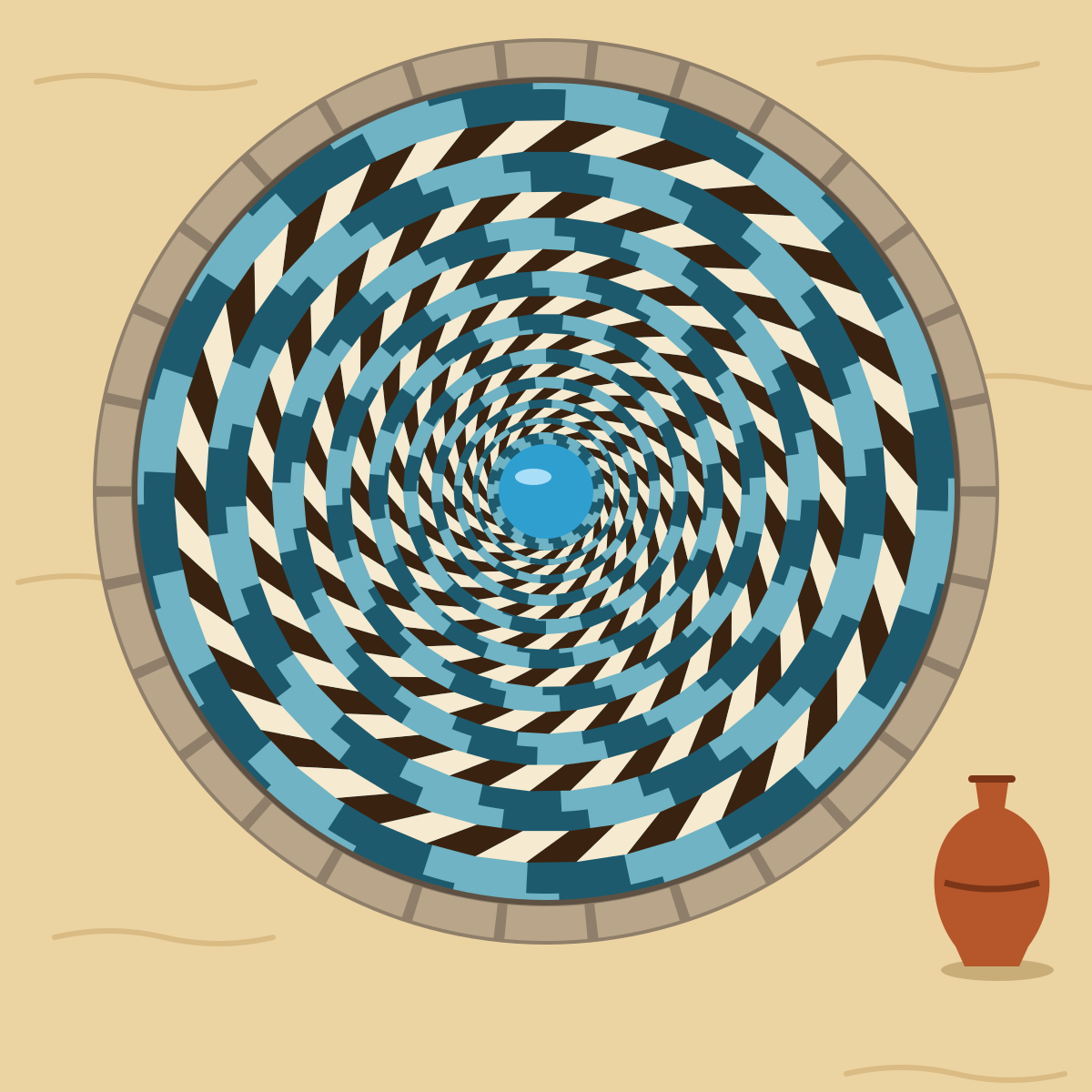
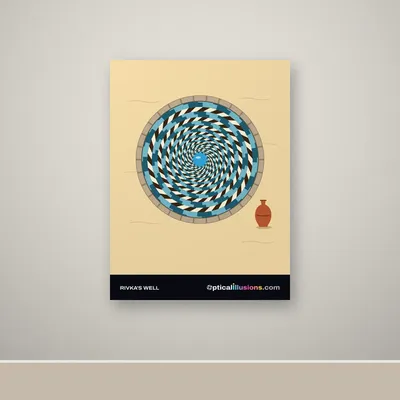
Look down into Rivka's well: the rope seems to spiral down to the water, yet every coil is a perfect circle.
Get Rivka's Well on a tee, mug or poster
Printed to order with the Opticalillusions.com wordmark. Or cover the challot with it this Shabbos.
What do you see?
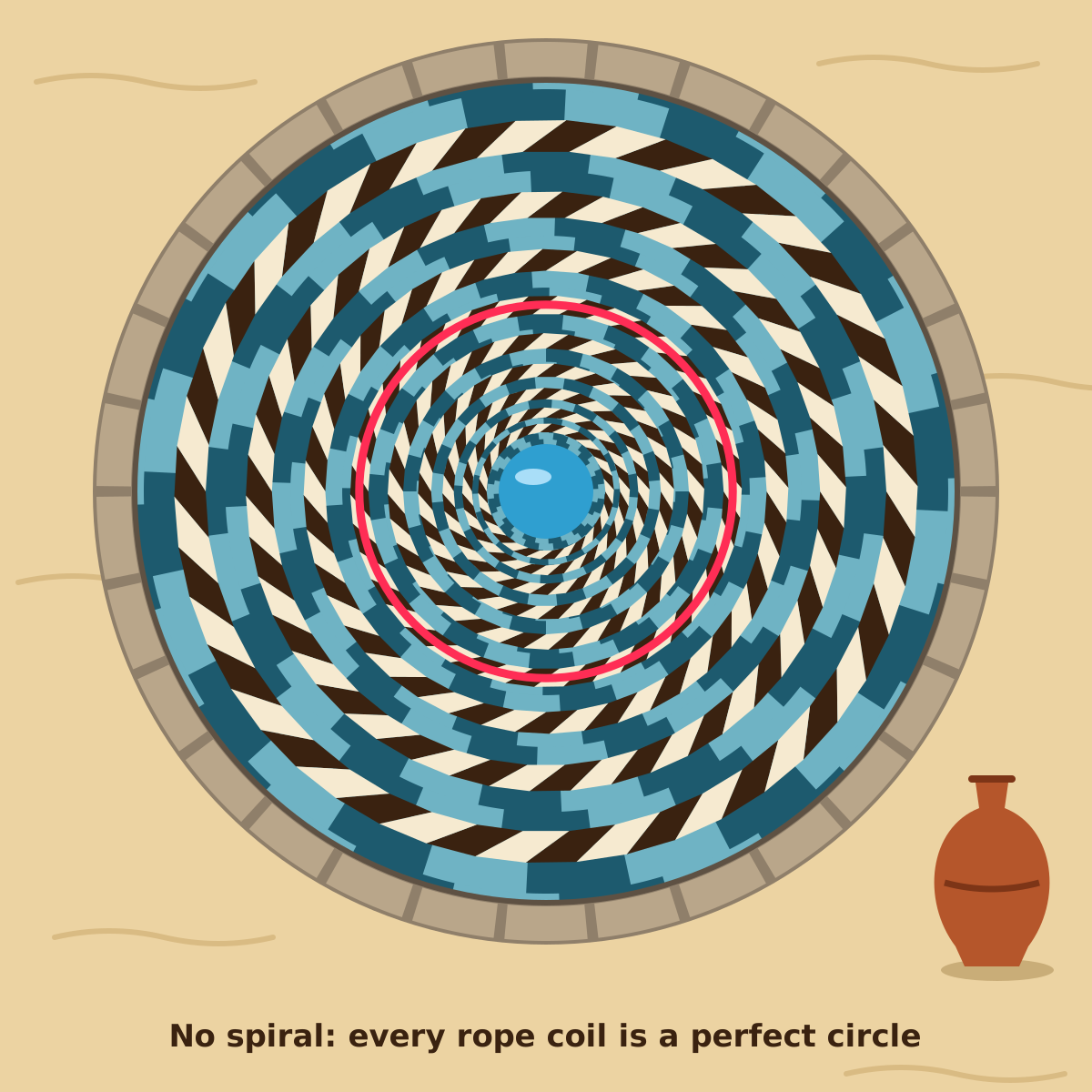
You are looking straight down into a stone well in the desert sand. Coils of twisted rope wind down the inside toward the bright water at the bottom, and Rivka's clay jug waits beside the rim. Most people see one long rope spiraling inward, around and around, like a staircase into the well. Now pick one coil and follow it all the way around with your eyes or your finger. It never moves inward. It comes right back to where it started. Press "Trace one coil" to see it outlined in red.
How it works
This is a version of the Fraser spiral, one of the strongest illusions of direction ever found. Every coil in the well is a perfect circle around the same center. Nothing in the picture actually spirals.
The trick is in the rope. Each coil is built from short dark and light pieces, and every piece is tilted a little in the same direction, like the strands of a twisted cord. Cells in the early visual system that respond to edges pick up that tilt at every point along the coil. When the brain links those small pieces into a longer line, it adds the tilt up, so each circle seems to lean inward a little more at every step. A circle that keeps leaning inward is a spiral, and that is what you see.
The background makes it stronger. Behind the rope, the water-blue checks are arranged along spiral paths, so the whole field seems to sweep in the same direction as the tilted pieces. Your visual system treats the background and the rope as telling the same story.
The illusion is fragile in an interesting way. When you trace a single coil slowly, attention follows the real path and the circle shows itself. As soon as you look at the whole well again, the spiral returns. Knowing the answer does not switch the illusion off, because the tilt is detected long before conscious thinking gets involved.
Covering part of the picture also helps: if you hide everything except one coil, it looks like the circle it is. The effect needs many tilted pieces working together.
History
The Scottish psychologist James Fraser described the twisted cord illusion in 1908 in the British Journal of Psychology. Parashat Chayei Sara (Genesis 23:1 to 25:18) is read on Shabbat, November 7, 2026. Avraham's servant travels with ten camels to find a wife for Yitzchak and waits by a well. Rivka comes out with her jug on her shoulder, gives him water to drink, and then keeps drawing water until all the camels have had enough (Genesis 24:10 to 20). Her kindness to a stranger is the sign he prayed for. This picture is original artwork for Opticalillusions.com.
Try it
- Put your finger on one coil and follow it all the way around. Where does it end?
- Press the reveal button: the red ring sits exactly on one coil from start to finish.
- Cover half the well with a sheet of paper. Does the spiral get weaker?
- At the Shabbos table, ask everyone how many times the rope goes around before telling them it never goes in at all.
Frequently asked questions
Does the rope in Rivka's well really spiral?
No. Every coil is a perfect circle around the same center. Follow one with your finger and it comes right back to where it started.
Why does the rope look like a spiral?
Each coil is made of short dark and light pieces all tilted the same way, like a twisted cord. Your brain adds up that tilt as it links the pieces, so each circle seems to lean inward into a spiral.
What illusion is Rivka's well based on?
It is a version of the Fraser spiral. Scottish psychologist James Fraser described the twisted cord illusion in 1908 in the British Journal of Psychology.
What is the story behind Rivka's well?
In Parashat Chayei Sara, Avraham's servant waits by a well to find a wife for Yitzchak. Rivka gives him water and keeps drawing water until all ten camels have had enough, and her kindness is the sign he prayed for.
Sources & credits
Based on the Fraser spiral illusion (James Fraser, 1908). The well, rope and jug are an original drawing.
- Fraser, J. (1908). A new visual illusion of direction. British Journal of Psychology, 2, 307–320.
- Fraser spiral illusion — overview Read →
- Chayei Sarah — overview Read →
Further reading: The Illusions Index (University of Glasgow) and Michael Bach’s Optical Illusions & Visual Phenomena.
Written by K.R. for Opticalillusions.com · Updated . Illusion artwork © The Wizard Of Sales, LLC. Feel free to share a link; see our terms for reuse.
Related illusions
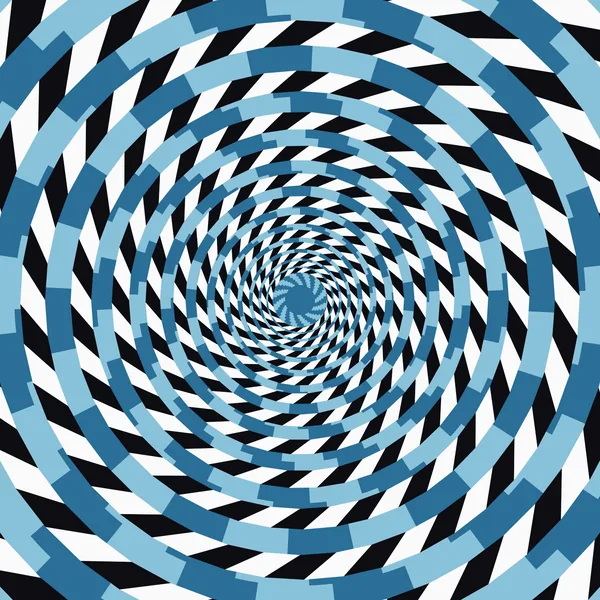 Geometric illusionsFraser SpiralConcentric circles of twisted cord that look like one big spiral.
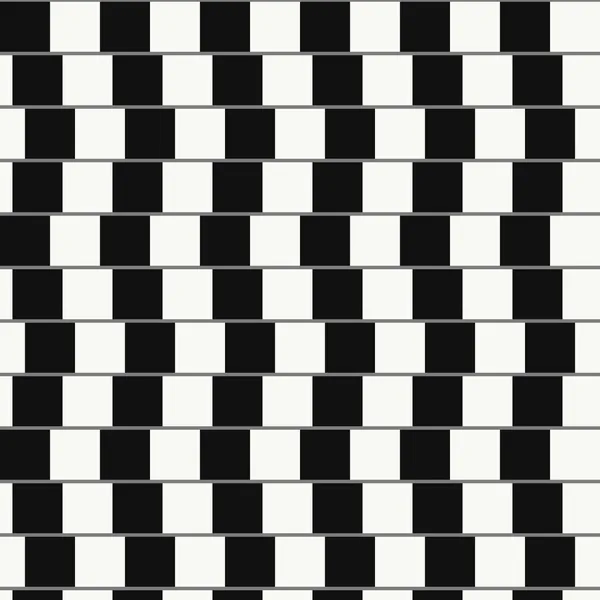 Geometric illusionsCafé Wall IllusionPerfectly parallel rows of tiles that seem to tilt into wedges.
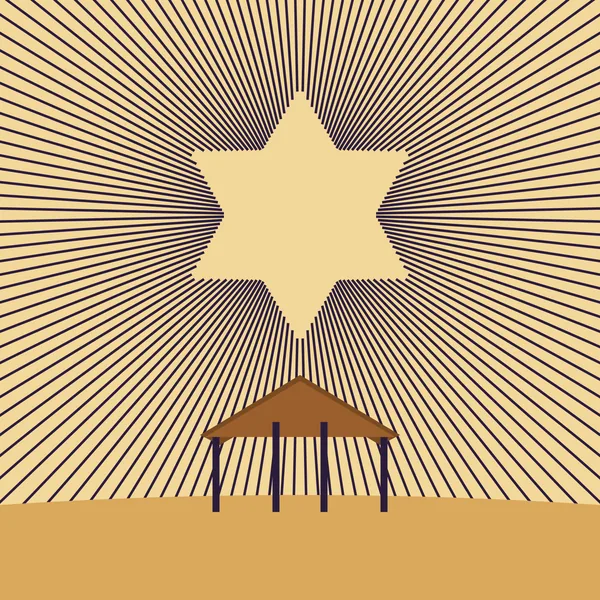 InteractiveShabbos & Yom Tov Illusion of the WeekStar of Vayera IllusionA glowing Star of David shines over Avraham's open tent. Not one of its edges is drawn.
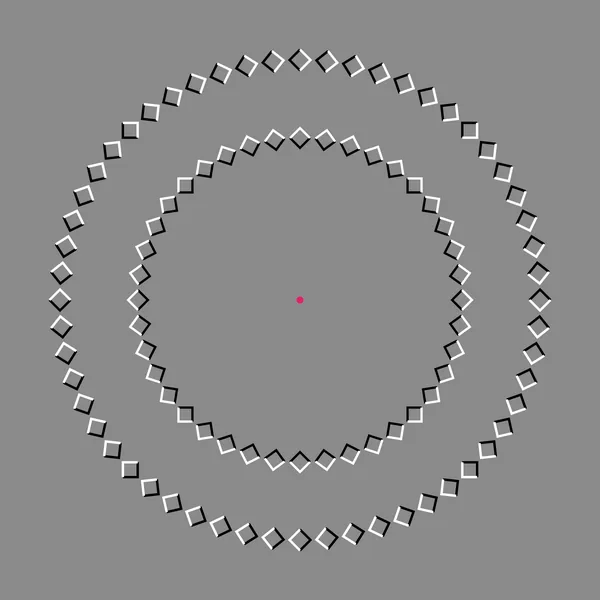 Motion illusionsPinna-Brelstaff RingsMove your head toward the dot and the two rings turn opposite ways.