
Star of Vayera Illusion
A glowing Star of David shines over Avraham's open tent. Not one of its edges is drawn.
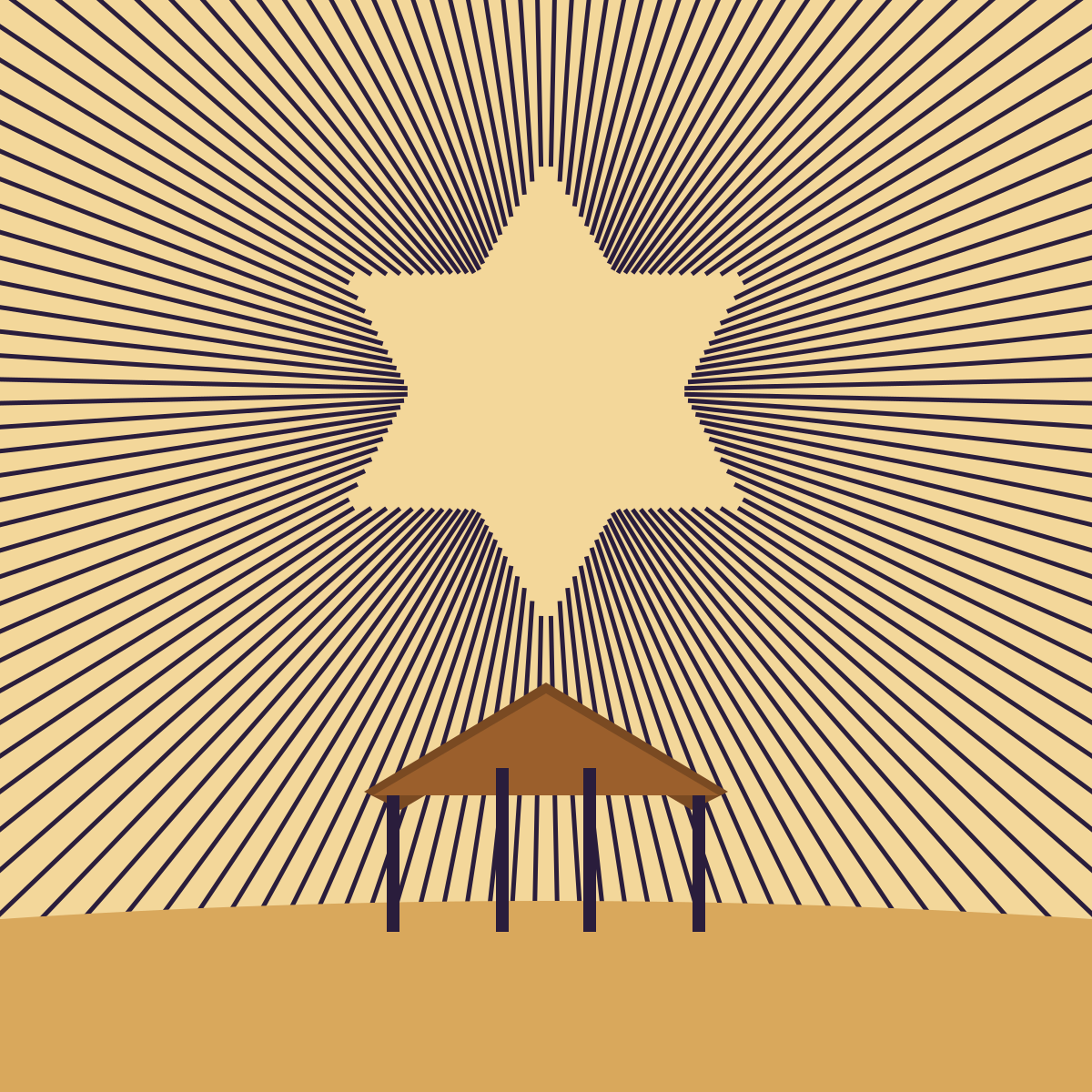
What do you see?
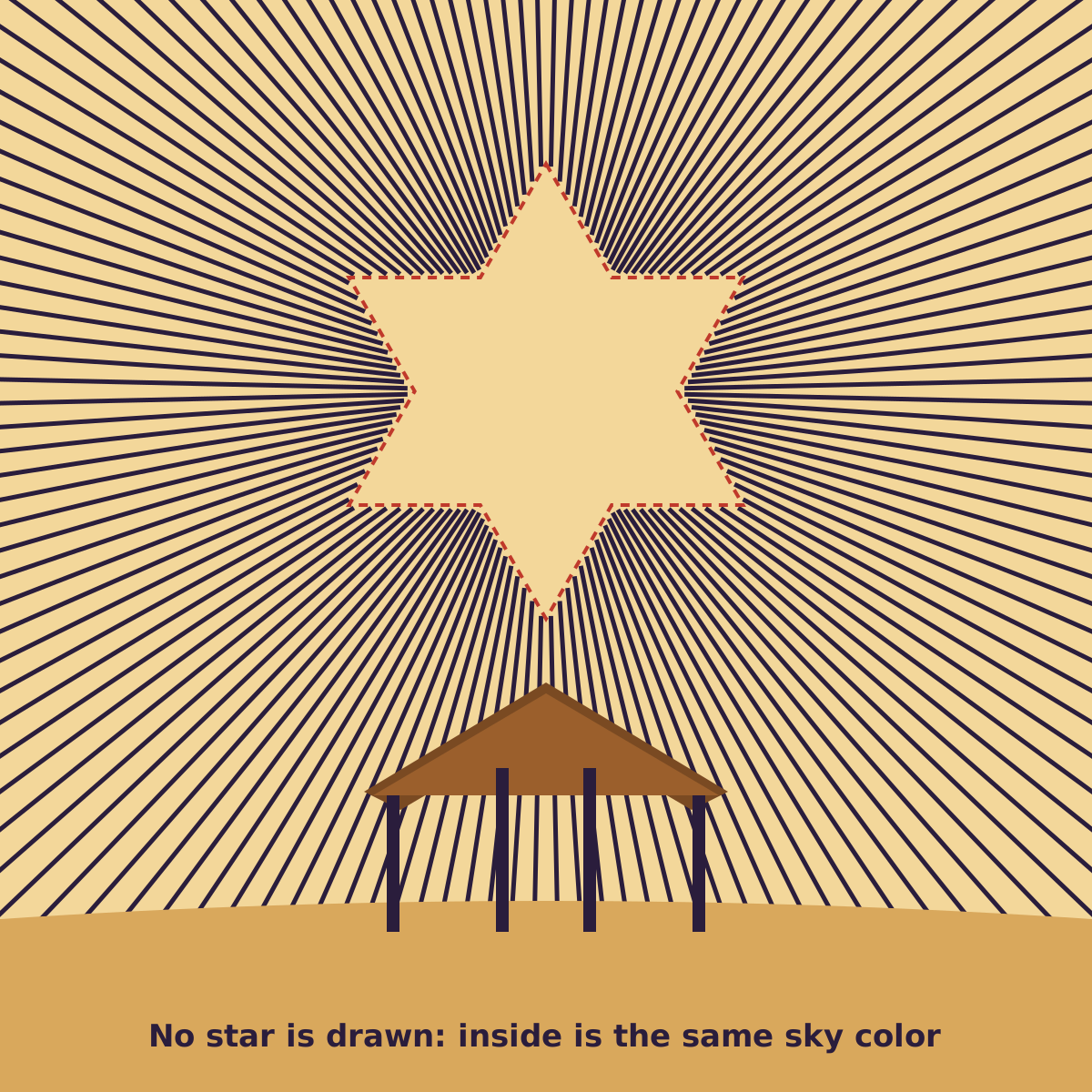
A desert sky in the heat of the day, full of dark rays streaming out from the center, and above a simple tent with four poles and no walls, a bright six-pointed Star of David. The star looks crisp, with sharp points and straight edges, and a little brighter and whiter than the sky around it. Now look closely at one of its edges. Nothing is there. No line was drawn, and the inside of the star is exactly the same color as the sky. Press "Check the star" to outline it and see for yourself.
How it works
The star is an illusory contour, the same family of effects as the famous Kanizsa triangle. The only things in the picture are straight rays that all stop at certain points. Your visual system pays special attention to the places where lines end, because in the real world a row of line ends usually means that one object is sitting in front of another and hiding part of it.
Here the ends of more than a hundred rays line up along twelve straight paths. The simplest explanation your brain can find is a bright six-pointed shape lying on top of the rays and covering their inner ends. Once it settles on that explanation, it fills in the edges between the line ends, and you see a complete star with borders that exist only in your perception.
The star also looks brighter than the sky, although it is the very same color. Cells early in the visual system compare each small area with its neighbors. Outside the star, the sky is crowded with dark rays; inside, there are none, so the empty area is signaled as a lighter surface. The more rays there are, and the more neatly their ends line up, the stronger the glow.
Researchers have found neurons in an area of the visual cortex called V2 that fire for illusory edges like these almost as if a real line were present. Rüdiger von der Heydt and his colleagues reported in 1984 that these cells respond when line ends are aligned, even with nothing connecting them.
The open tent adds a quieter idea from the parsha: a space defined only by its edges. Four poles and a roof are enough for your eyes to read a room, even though no wall is drawn.
History
Illusory contours made by line ends were described by Friedrich Schumann in 1900 and studied by Gaetano Kanizsa from 1955. Parashat Vayera (Genesis 18:1 to 22:24) is read on Shabbat, October 31, 2026. It opens with Avraham sitting at the entrance of his tent in the heat of the day, welcoming three visitors, and according to the Midrash his tent was open on all four sides so that guests could arrive from any direction. This picture is original artwork for Opticalillusions.com.
Try it
- Trace one edge of the star with your finger. Notice how sure you feel about a line that is not there.
- Press the reveal button: the outline shows the star is the same color as the sky.
- Look from across the room: the star often looks even brighter from far away.
- At the Shabbos table, ask everyone what shape is in the sky before telling them the secret.
Frequently asked questions
Is the star really drawn in the picture?
No. No line was drawn, and the inside of the star is exactly the same color as the sky. Press Check the star to outline it.
Why do I see a star that isn't there?
More than a hundred rays end along twelve straight paths. The simplest explanation is a bright shape lying on top of them, so your brain fills in the edges. This is called an illusory contour.
Why does the star look brighter than the sky?
Outside the star the sky is crowded with dark rays, and inside there are none. Cells that compare each area with its neighbors signal the empty area as a lighter surface.
What is the connection to Parashat Vayera?
Vayera opens with Avraham at the entrance of his tent in the heat of the day, welcoming three visitors. According to the Midrash his tent was open on all four sides so guests could arrive from any direction.
Sources & credits
Based on illusory contours (Schumann, 1900; Kanizsa, 1955). The desert sky and tent are an original drawing.
- Kanizsa, G. (1955). Margini quasi-percettivi in campi con stimolazione omogenea. Rivista di Psicologia, 49.
- von der Heydt, R., Peterhans, E. & Baumgartner, G. (1984). Illusory contours and cortical neuron responses. Science, 224.
- Illusory contours — overview Read →
- Vayera — overview Read →
Further reading: The Illusions Index (University of Glasgow) and Michael Bach’s Optical Illusions & Visual Phenomena.
Written by K.R. for Opticalillusions.com · Updated . Illusion artwork © The Wizard Of Sales, LLC. Feel free to share a link; see our terms for reuse.
Related illusions
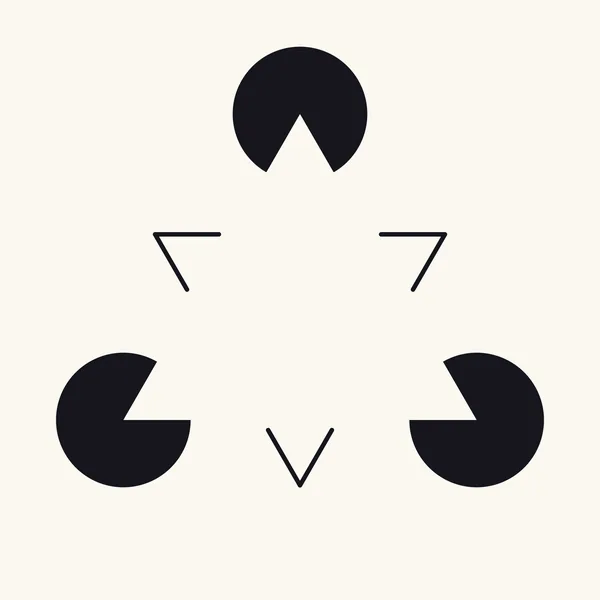 Geometric illusionsKanizsa TriangleA bright white triangle appears from nothing but three cut-out discs.
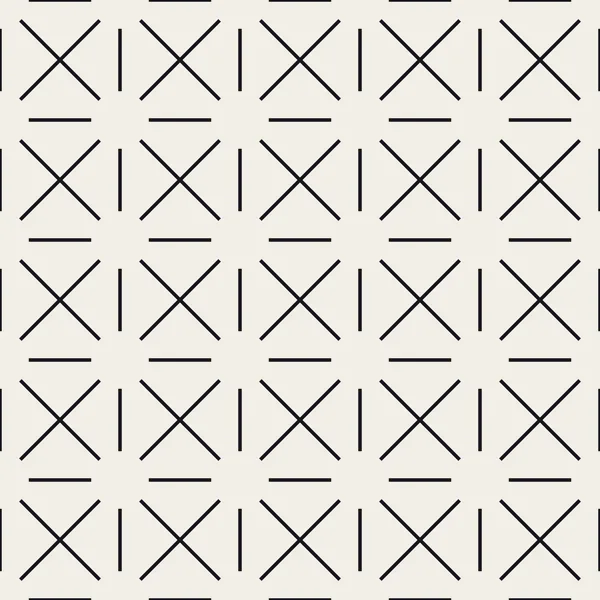 InteractiveBrightness illusionsEhrenstein IllusionGaps in a pattern of lines look like glowing white discs.
 InteractiveHoliday illusionsJack-o'-Lantern AfterimageStare at a blue pumpkin for 30 seconds and an orange jack-o'-lantern with a glowing face appears.
 Brightness illusionsHermann GridGray smudges flicker at the crossings of a black-and-white grid.