
Schröder Stairs
A staircase you climb from above or hang beneath from below.
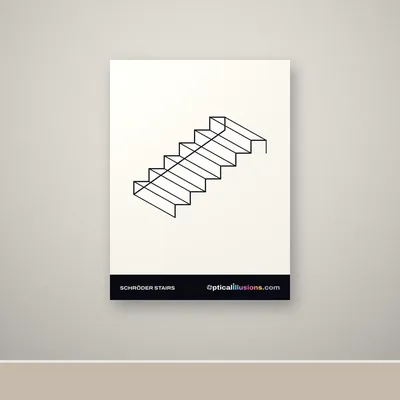
Get this illusion on a hoodie, mug or poster
Schröder Stairs, printed to order with the Opticalillusions.com wordmark.
What do you see?
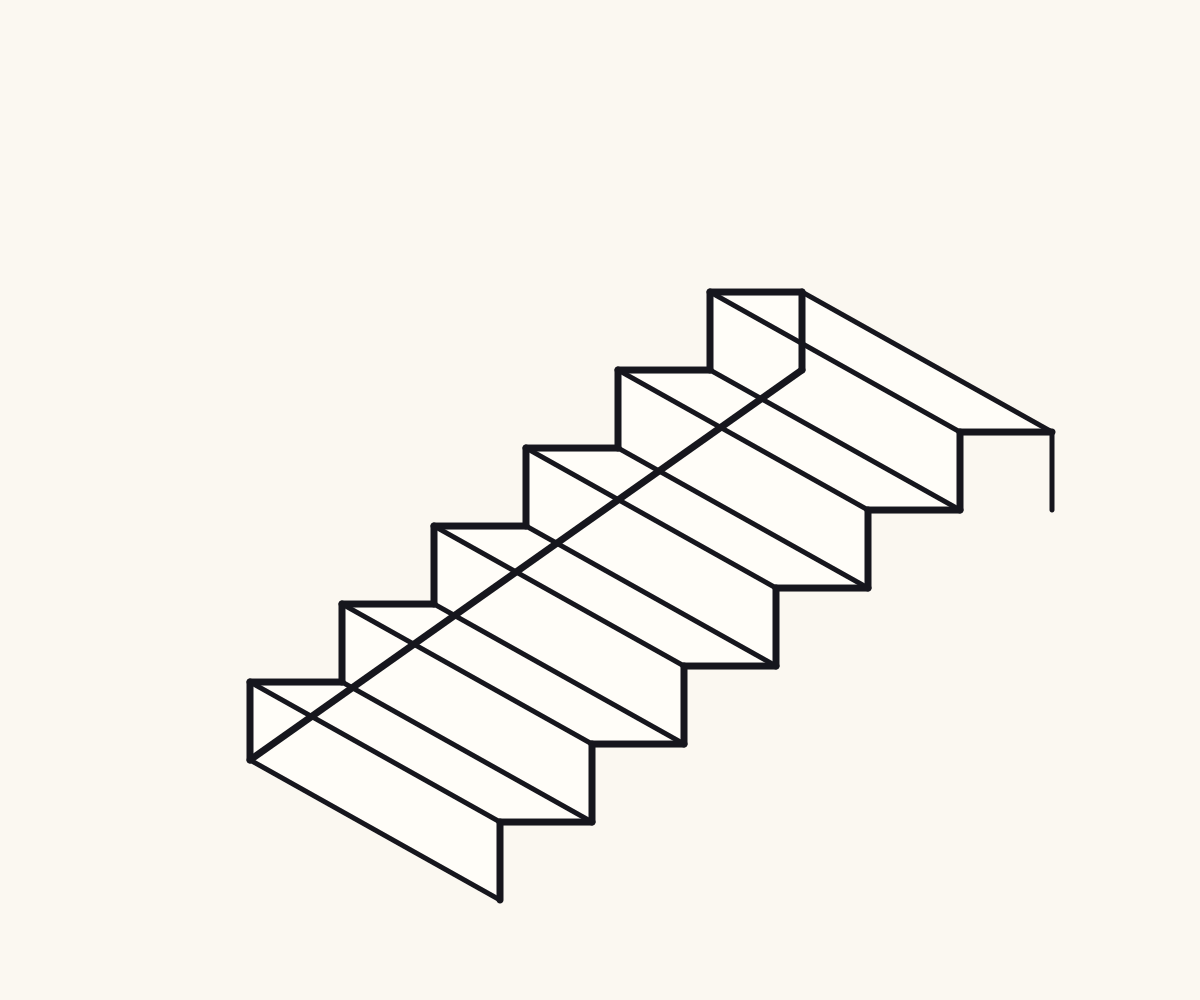
A simple line drawing of a flight of stairs. At first you probably see ordinary stairs from above, rising from the lower left to the upper right, with the treads facing up so you could walk on them. Keep looking and the drawing can suddenly flip: now you are looking up at the underside of an overhanging staircase, as if it were attached upside down to a ceiling. The lines have not moved, but the whole shape has turned inside out.
How it works
Schröder stairs are an ambiguous figure, like the Necker cube. The drawing uses parallel projection, so there is no perspective shrinking and no shading to tell your brain which surfaces are nearer. Every line is consistent with two different three-dimensional objects: stairs seen from above, and stairs seen from below. With no cue to choose between them, perception alternates.
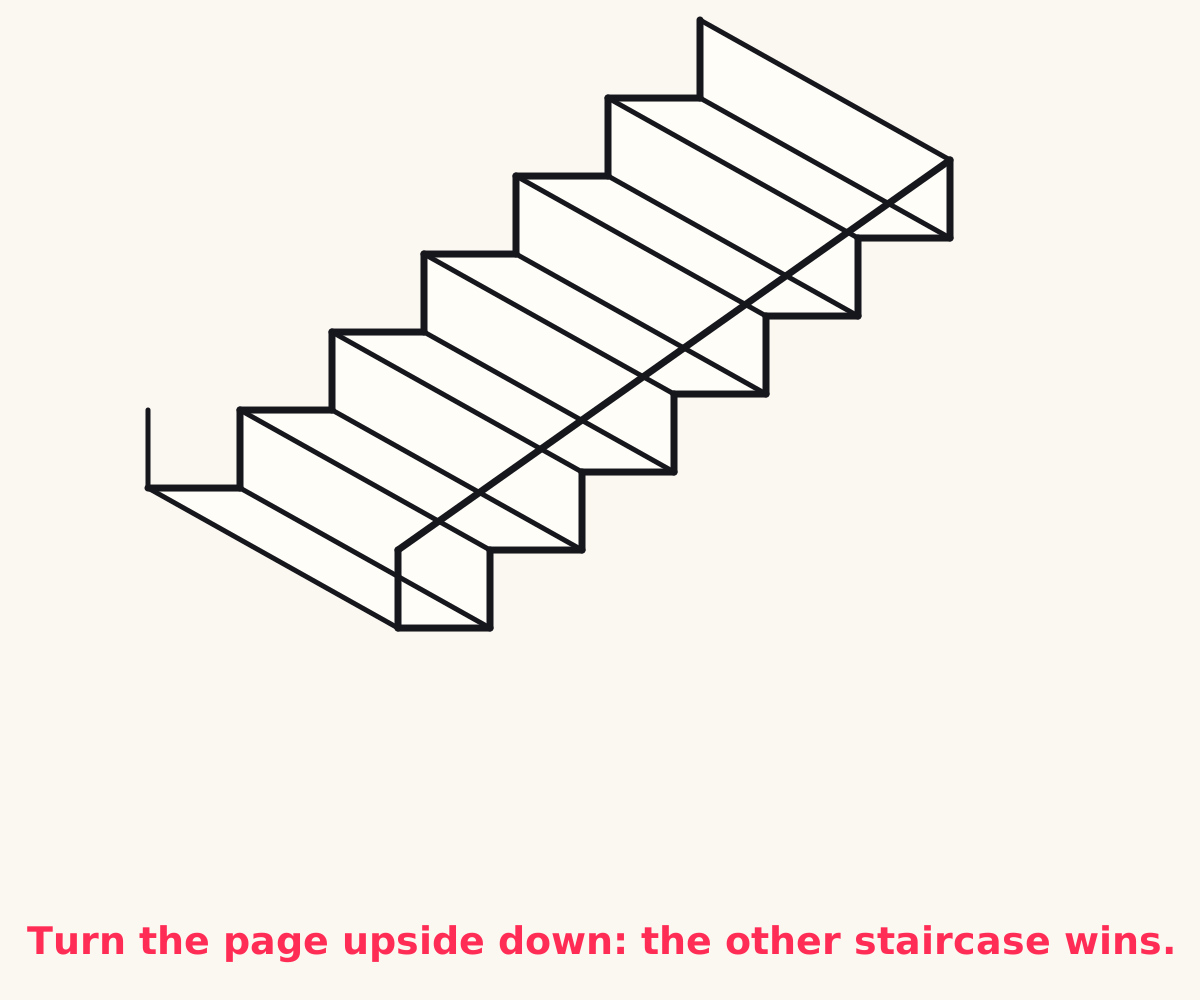
Even though both readings are valid, most people see the staircase from above first. A strong explanation is a built-in assumption that we view objects from above. In daily life we look down on most things around us, from tables to floors, so the visual system has learned that a surface whose edges point a certain way is more likely to be a top than an underside. Research on silhouettes and line drawings by Nikolaus Troje and Matthew McAdams found a similar viewing-from-above bias. When you turn the Schröder stairs upside down, the same bias now favors the other interpretation, which is why the reveal button makes the overhang reading much easier.
As with other bistable figures, the switch is all-or-nothing. Your brain treats each reading as a complete solution and swaps one whole solution for the other. One explanation is that groups of neurons representing each interpretation compete. The active group gradually tires, the suppressed group recovers, and the balance tips. Where you look also matters. Fixating on the top-right corner tends to favor one reading, and fixating on the lower-left corner can favor the other.
The figure is useful for vision scientists because it is simple, it contains no misleading shading, and the timing of its flips can be measured. Researchers have used similar figures to study attention, ageing and the effects of tiredness on how often perception switches.
The faint fill on the side wall is the same tone on every face, so it adds no lighting clue. If you added a shadow under each step, the ambiguity would disappear, which shows how heavily the brain relies on shading when it is available.
History
The figure was published in 1858 by the German natural scientist Heinrich G. F. Schröder in a paper on optical illusions in the journal Annalen der Physik und Chemie. It is one of the oldest reversible figures, published 26 years after Louis Albert Necker described his cube. The drawing on this page was made for Opticalillusions.com.
Try it
- Stare at the top step for a few seconds, then at the bottom step. Does the staircase flip?
- Press the reveal button or turn your phone upside down and see which reading wins now.
- Try to hold one interpretation for 30 seconds. Most people cannot.
- Draw your own: a zigzag, a copy shifted diagonally, and lines joining matching corners.
Frequently asked questions
Why do the Schröder stairs flip upside down?
The drawing has no perspective or shading to tell your brain which surfaces are nearer. It fits stairs seen from above and stairs seen from below, so your view alternates.
Why do most people see the stairs from above first?
We look down on most things in daily life, so the visual system assumes it is viewing objects from above. Turn the picture upside down and the other reading becomes easier.
Who created the Schröder stairs?
German natural scientist Heinrich G. F. Schröder published the figure in 1858 in the journal Annalen der Physik und Chemie.
Does where I look change what I see?
Yes. Looking at the top-right corner tends to favor one reading, and looking at the lower-left corner can favor the other.
Sources & credits
Published by Heinrich G. F. Schröder (1858).
- Schröder, H. (1858). Ueber eine optische Inversion bei Betrachtung verkehrter, durch optische Vorrichtung entworfener physischer Bilder. Annalen der Physik und Chemie, 181.
- Troje, N. F. & McAdams, M. (2010). The viewing-from-above bias and the silhouette illusion. i-Perception, 1.
- Schroeder stairs — overview Read →
Further reading: The Illusions Index (University of Glasgow) and Michael Bach’s Optical Illusions & Visual Phenomena.
Written by K.R. for Opticalillusions.com · Updated . Illusion artwork © The Wizard Of Sales, LLC. Feel free to share a link; see our terms for reuse.
Related illusions
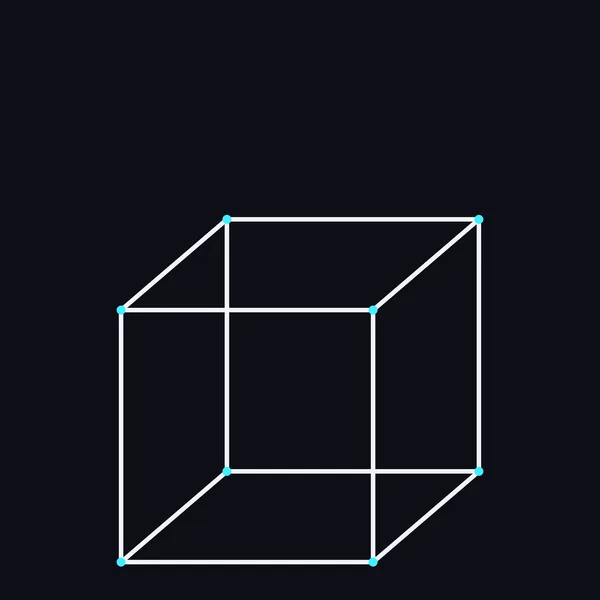 Impossible & ambiguous figuresNecker CubeA wireframe cube that flips between two orientations.
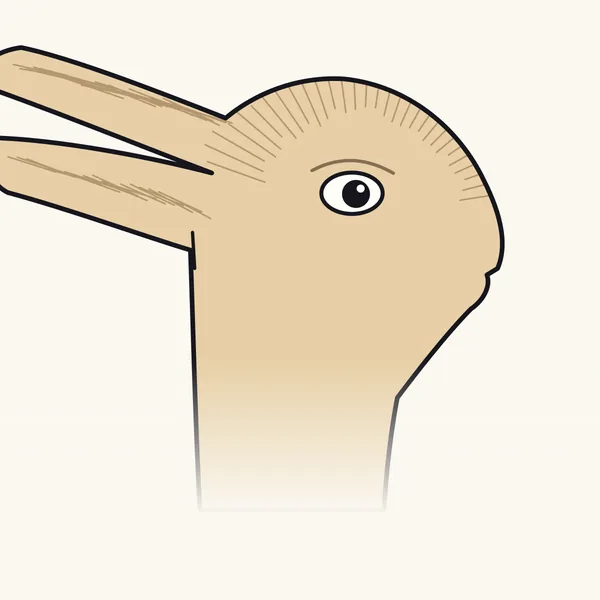 InteractiveImpossible & ambiguous figuresRabbit-Duck IllusionOne drawing, two animals: a duck facing left or a rabbit facing right.
 Impossible & ambiguous figuresImpossible TriangleThree bars meet at right angles to form a triangle that cannot exist.
 Impossible & ambiguous figuresRubin VaseA golden vase, or two dark profiles facing each other.