
Rabbit-Duck Illusion
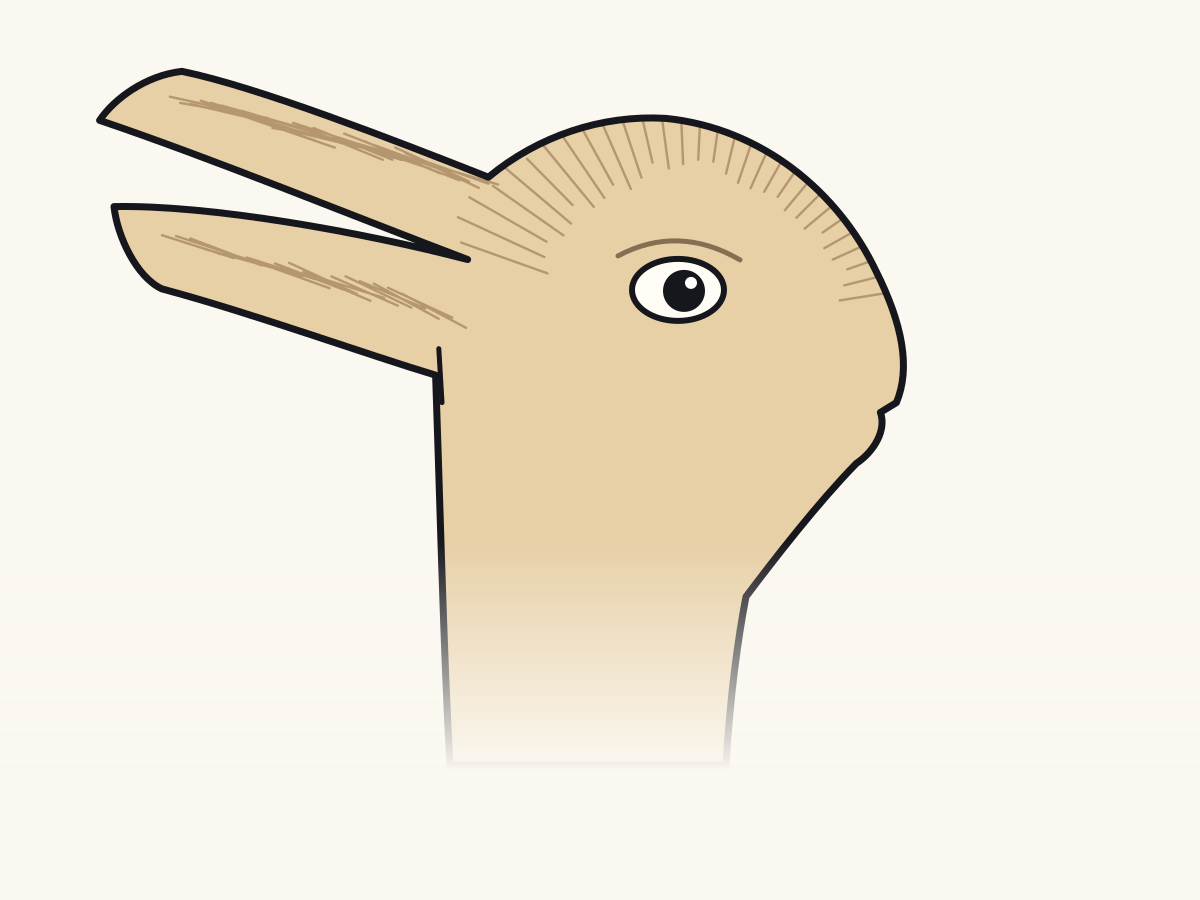
One drawing, two animals: a duck facing left or a rabbit facing right.
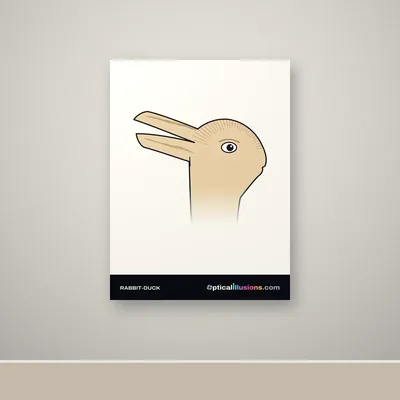
Get this illusion on a hoodie, mug or poster
Rabbit-Duck Illusion, printed to order with the Opticalillusions.com wordmark.
What do you see?
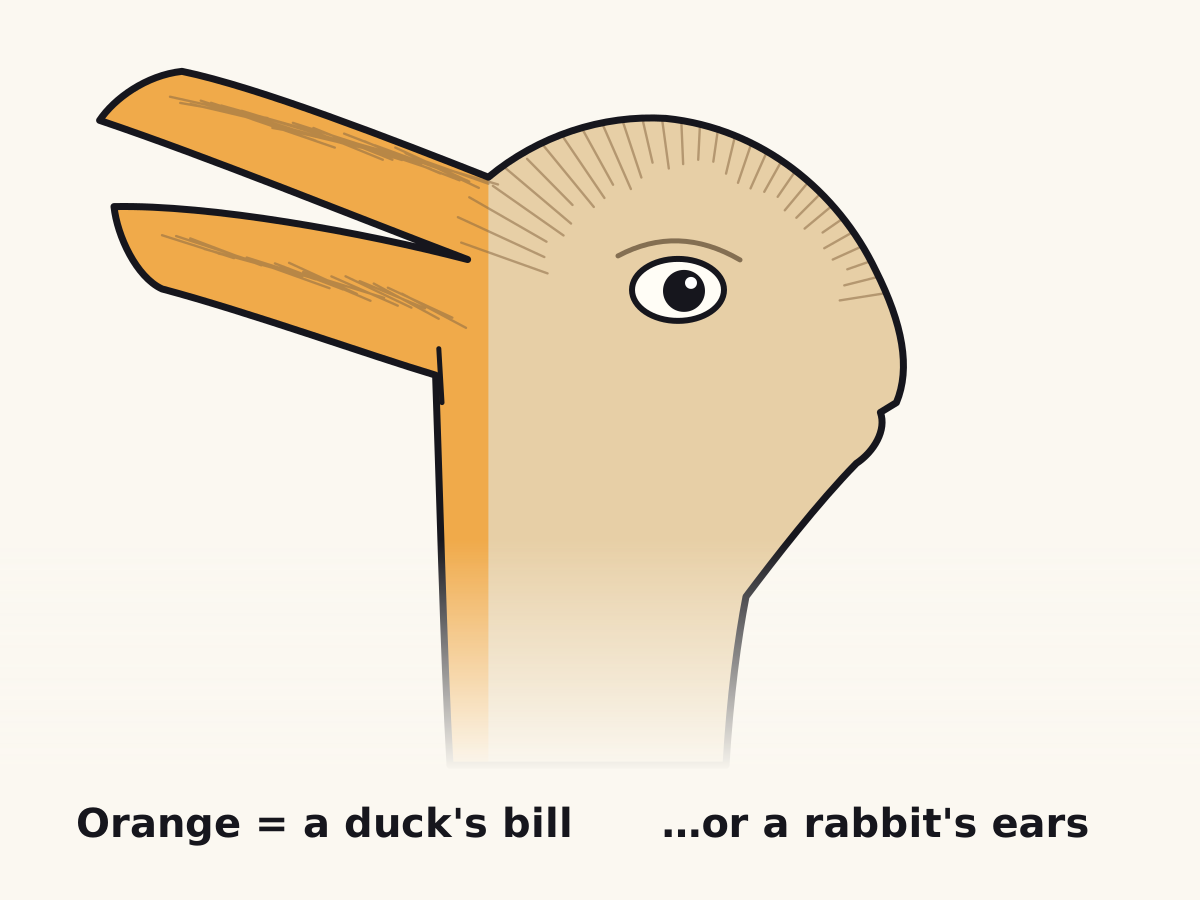
A head with a round eye and two long shapes sticking out to the left. Read the long shapes as a beak and you see a duck looking to the left, its bill slightly open. Read the same shapes as ears and you see a rabbit looking to the right, its ears laid back, with the little notch on the right as its mouth. Most people see one animal first. Once you have found the second, you can switch between them, but you cannot see both at the same moment.
How it works
The rabbit-duck is an ambiguous figure: a single set of lines that fits two different objects equally well. Nothing on the page changes when your perception flips. What changes is the interpretation your brain assigns to each part. The same two lobes are either a bill or a pair of ears, the same notch is either the back of a duck's head or a rabbit's mouth, and the eye seems to look left or right depending on which animal you are seeing.
Your visual system does not wait for complete information before deciding what it is looking at. It quickly commits to the most likely interpretation and uses that choice to organize everything else: which way is front, which edge is the face, where the animal is looking. Because these choices depend on each other, the picture snaps from one whole interpretation to the other rather than drifting gradually. Psychologists call this perceptual bistability, and the same switching is seen in the Necker cube and the Rubin vase.
What you see first is not random. Context and expectation push the decision. In a well-known study published in 1993, Peter Brugger and Susanne Brugger showed the figure to children at different times of year. Around Easter, most children saw a rabbit first; in October, more of them saw a duck. Turning the picture also matters: when the long shapes point upward, the rabbit tends to win, and when they point to the side, the duck becomes more common.
Studies of mental imagery add a twist. When people memorize the figure as one animal and are later asked to picture it in their mind, many find it very hard to flip the mental image, even though they can flip the real drawing easily. This suggests that the flipping depends partly on looking at the actual lines, not only on knowledge.
The figure became famous in philosophy as well as psychology. Ludwig Wittgenstein used it to discuss the difference between seeing something and seeing it as something, a distinction that still shapes debates about perception today.
History
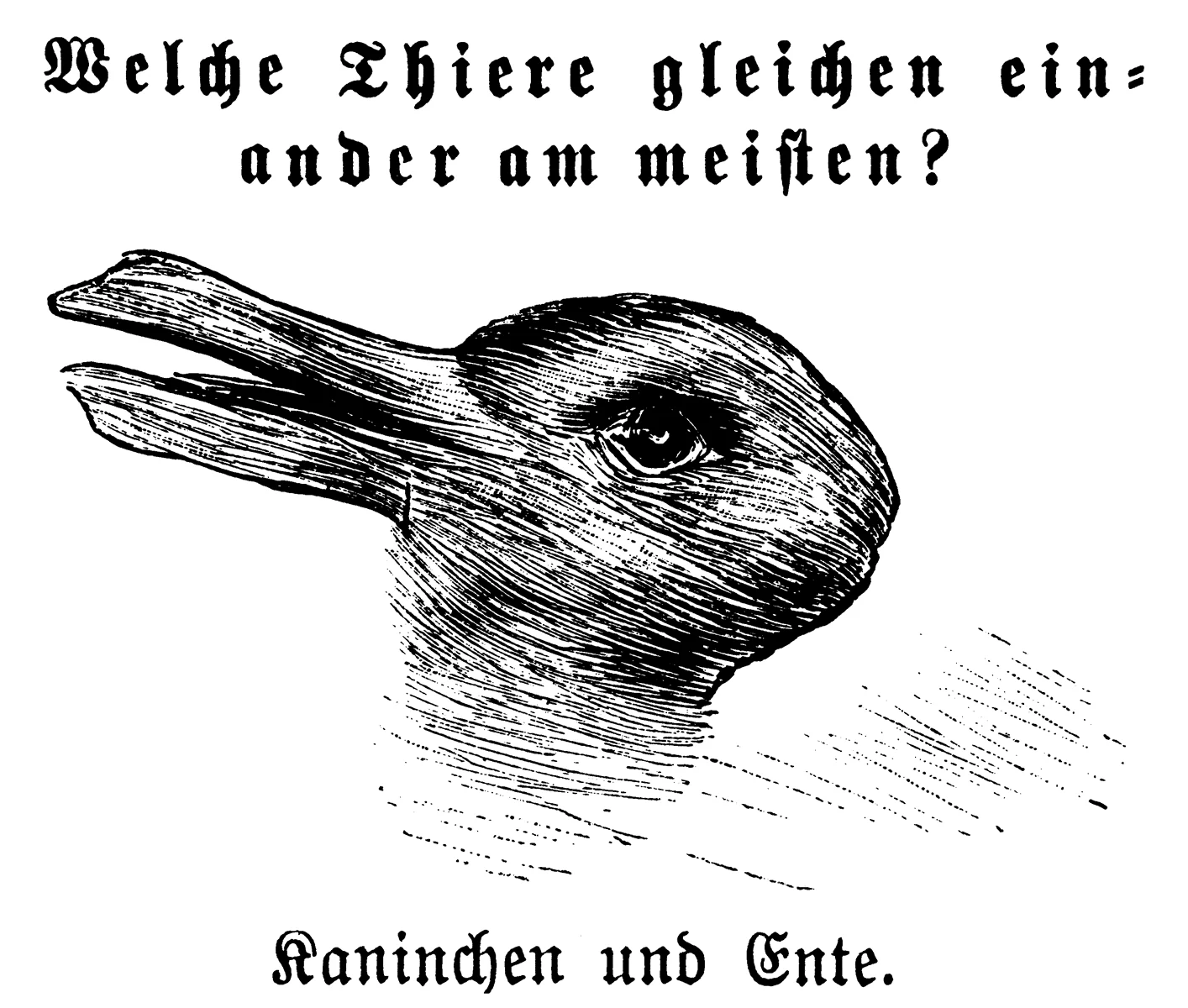
The earliest known version appeared in the German humor magazine Fliegende Blätter on 23 October 1892, captioned "Welche Thiere gleichen einander am meisten? Kaninchen und Ente" ("Which animals are most like each other? Rabbit and duck"). The artist is unknown and the drawing is now in the public domain. American psychologist Joseph Jastrow used it in 1899 to show that perception is shaped by the mind, and Wittgenstein discussed it in his Philosophical Investigations, published in 1953. The drawing at the top of this page is an original version made for Opticalillusions.com.

Try it
- Look at the eye and ask which way it is looking. Change your answer and watch the animal change.
- Tilt your head or rotate your screen so the long shapes point up: the rabbit usually becomes easier.
- Show it to a friend without saying anything and ask what animal they see. Try it again at Easter.
- Close your eyes and picture the animal you saw. Can you flip the picture in your head?
Frequently asked questions
Is it a rabbit or a duck?
It is both. Read the long shapes as a beak and you see a duck looking left, or read them as ears and you see a rabbit looking right.
Can I see the rabbit and the duck at the same time?
No. You can switch between them, but your brain commits to one whole interpretation at a time.
Does the time of year change what you see?
In a 1993 study by Peter Brugger and Susanne Brugger, most children saw a rabbit first around Easter, while in October more of them saw a duck.
Where did the rabbit-duck illusion come from?
The earliest known version appeared in the German humor magazine Fliegende Blätter on 23 October 1892, and the artist is unknown. Joseph Jastrow used it in 1899 to show that perception is shaped by the mind.
Sources & credits
Earliest known version: Fliegende Blätter, 23 October 1892 (artist unknown; public domain). Used by Joseph Jastrow (1899) and Ludwig Wittgenstein (1953). Our drawing is original.
- Kaninchen und Ente, Fliegende Blätter (1892) — public-domain scan, Wikimedia Commons Open →
- Jastrow, J. (1899). The mind's eye. Popular Science Monthly, 54.
- Brugger, P. & Brugger, S. (1993). The Easter bunny in October: is it disguised as a duck? Perceptual and Motor Skills, 76.
- Rabbit–duck illusion — overview Read →
Further reading: The Illusions Index (University of Glasgow) and Michael Bach’s Optical Illusions & Visual Phenomena.
Written by K.R. for Opticalillusions.com · Updated . Illusion artwork © The Wizard Of Sales, LLC. Feel free to share a link; see our terms for reuse.
Related illusions
 Impossible & ambiguous figuresRubin VaseA golden vase, or two dark profiles facing each other.
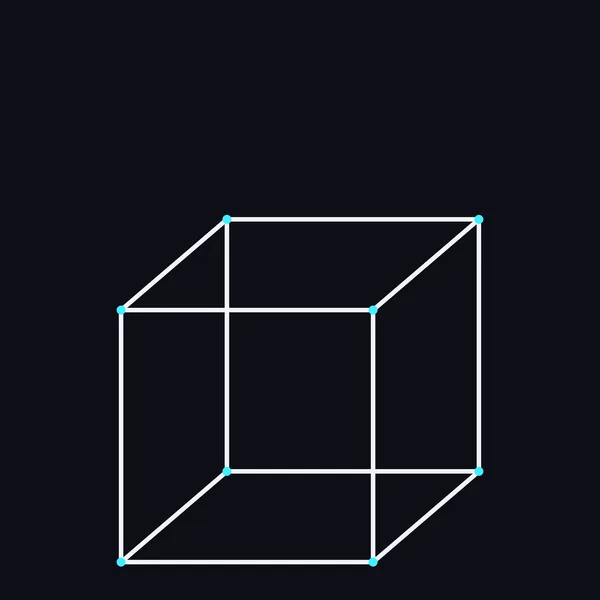 Impossible & ambiguous figuresNecker CubeA wireframe cube that flips between two orientations.
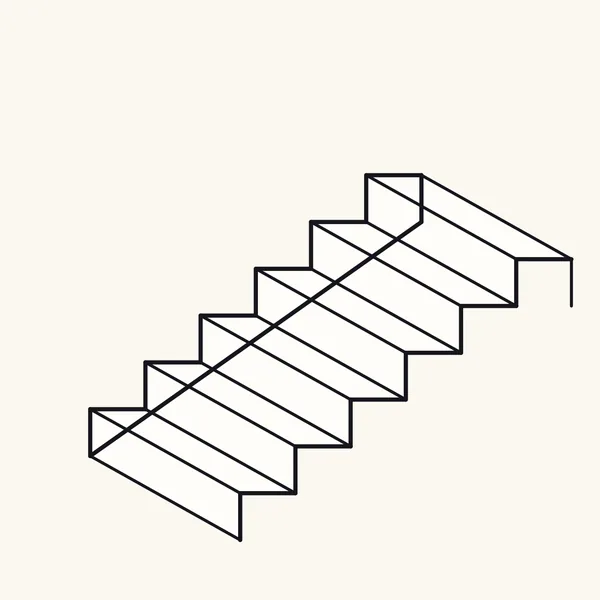 Impossible & ambiguous figuresSchröder StairsA staircase you climb from above or hang beneath from below.
 InteractiveImpossible & ambiguous figuresSpinning Dancer IllusionA spinning silhouette that turns clockwise for some people and the other way for others.