
Shepard Tables
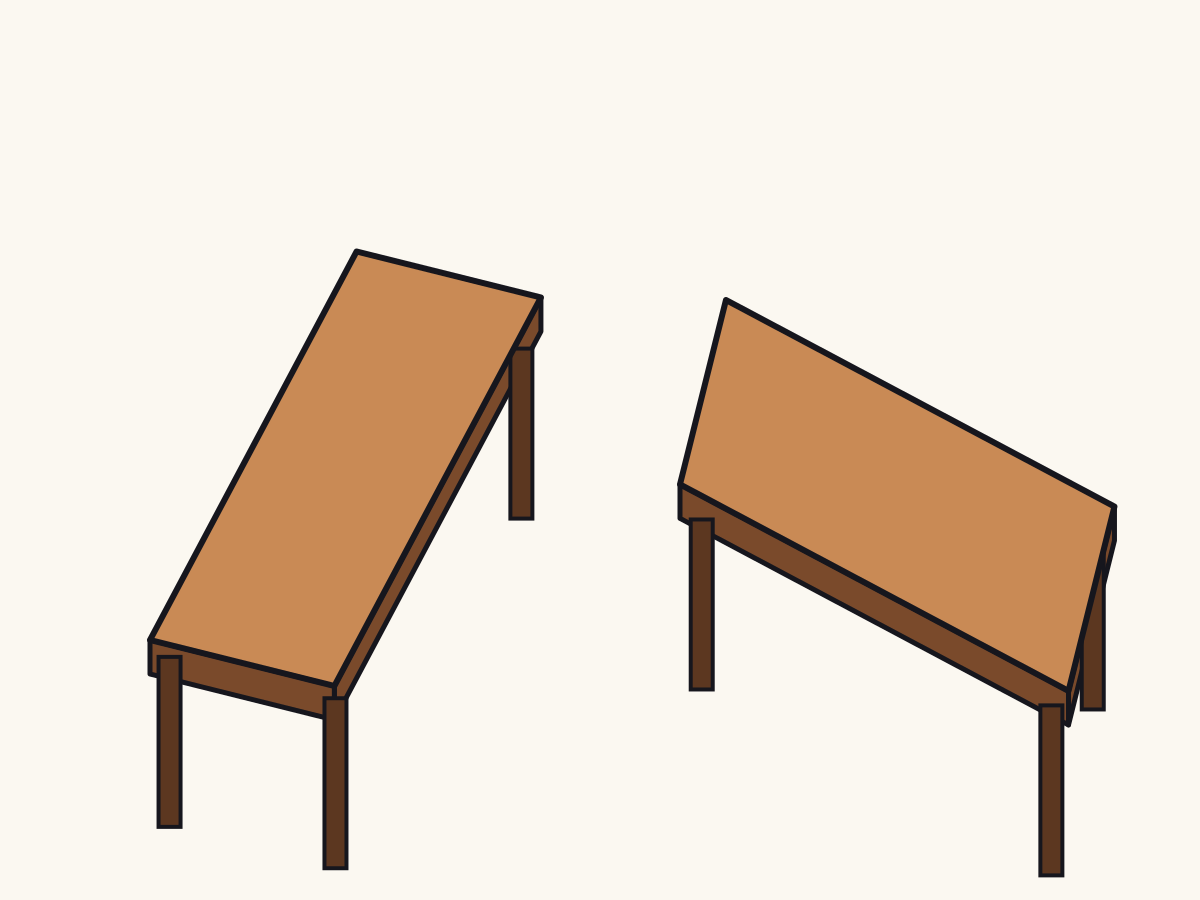
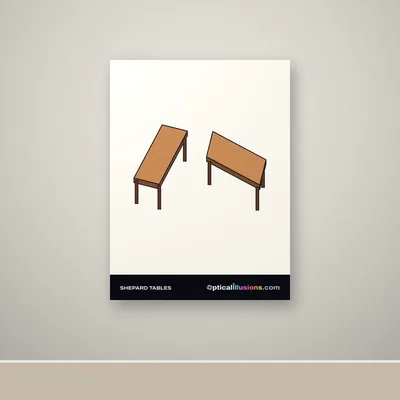
A long table and a wide table with exactly the same tabletop.
Get this illusion on a hoodie, mug or poster
Shepard Tables, printed to order with the Opticalillusions.com wordmark.
What do you see?
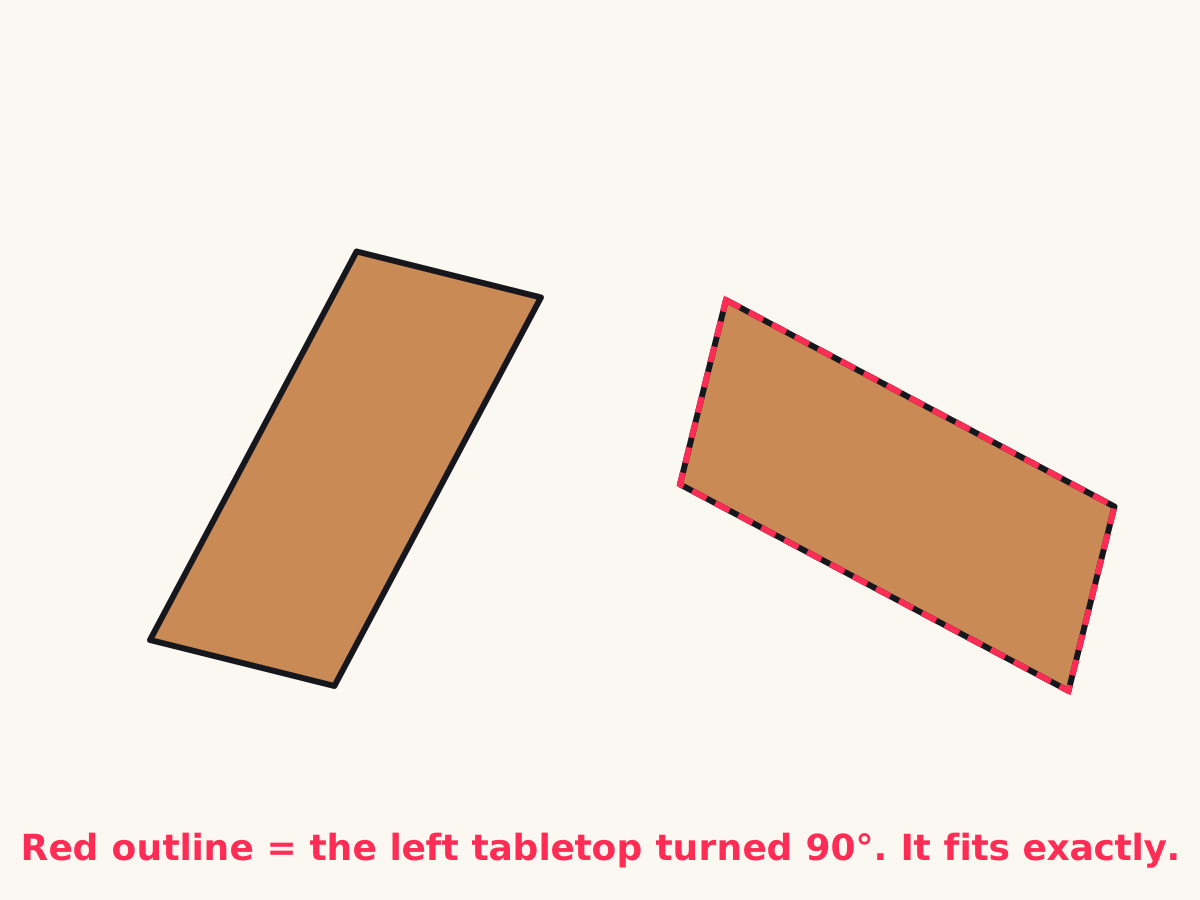
Two wooden tables. The one on the left looks long and narrow, stretching away from you like a dining table. The one on the right looks shorter and wider, almost square. The two tabletops are exactly the same parallelogram on the page, one simply turned by 90 degrees. Press the reveal button: the legs vanish, and a red outline of the left tabletop, turned 90 degrees, fits exactly over the right one.
How it works
Shepard tables show how strongly your brain interprets flat drawings as three-dimensional scenes. As soon as the legs and the thickness of the tabletops appear, your visual system reads the drawing as two real tables standing on a floor. It then corrects for perspective automatically, as it would in real life.
Lines that run across your view are seen at their true length, but lines that seem to run away from you into depth are foreshortened, so the brain scales them up. On the left table, the long sides seem to recede into the distance, so your brain stretches them and the table looks even longer. On the right table, the same sides run across your view, while the short sides now seem to recede and get stretched instead. The result is that the right table looks wider and stubbier.
The correction is automatic and very hard to switch off. Even when you know the tabletops are identical, and even after you have seen the reveal, the tables keep looking different. This shows that the size correction happens early in visual processing, before conscious knowledge can intervene. It is the same mechanism that helps you see a door as rectangular when you view it at an angle, or a coin as round when it is tilted.
Researchers have used Shepard tables to measure how much depth information affects shape perception. Removing the legs weakens the illusion, and adding more depth clues, such as shading or a floor, can strengthen it. Studies have found that people can misjudge the aspect ratio of the tops by a large amount, sometimes around 20 to 50 percent.
The illusion is a reminder that our perception of shape is not a direct copy of the image on the retina. The brain is always estimating what is out in the world, and in the real world, that estimate is usually right.
History
The illusion was created by the American cognitive scientist Roger Shepard, who published it as Turning the Tables in his 1990 book Mind Sights, a collection of his own illusions and drawings. Shepard was well known for research on mental rotation and perception. The tables on this page are an original drawing made for Opticalillusions.com.
Try it
- Trace the left tabletop on a piece of tracing paper, then turn it and lay it on the right one.
- Press reveal and back again and watch the tables reshape.
- Cover the legs with your fingers and notice the illusion weaken.
- Look at a real table from different angles and see how its shape changes on your retina.
Frequently asked questions
Are the two tabletops really the same shape?
Yes. They are exactly the same shape on the page, one simply turned by 90 degrees. Press the reveal button to see an outline of one fit exactly over the other.
Why does one table look longer?
Your brain reads the drawing as real tables and corrects for perspective. Lines that seem to run away from you get stretched, so the left table looks even longer.
Does knowing the answer make the illusion go away?
No. Even after you have seen the reveal, the tables keep looking different, because the correction happens early in vision, before what you know can step in.
Who created the Shepard tables?
American cognitive scientist Roger Shepard created them and published them as Turning the Tables in his 1990 book Mind Sights.
Sources & credits
Created by Roger N. Shepard, published as 'Turning the Tables' in Mind Sights (1990). Our tables are an original drawing.
- Shepard, R. N. (1990). Mind Sights: Original Visual Illusions, Ambiguities, and Other Anomalies. W. H. Freeman.
- Shepard tables — overview Read →
Further reading: The Illusions Index (University of Glasgow) and Michael Bach’s Optical Illusions & Visual Phenomena.
Written by K.R. for Opticalillusions.com · Updated . Illusion artwork © The Wizard Of Sales, LLC. Feel free to share a link; see our terms for reuse.
Related illusions
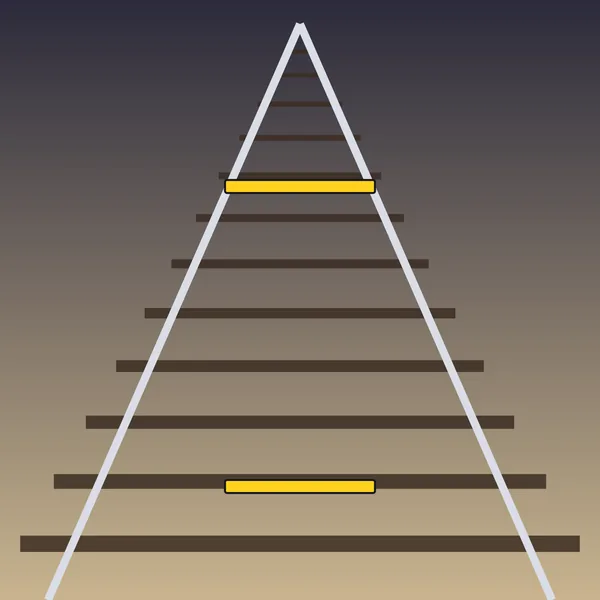 Geometric illusionsPonzo IllusionTwo equal bars on converging rails look like different lengths.
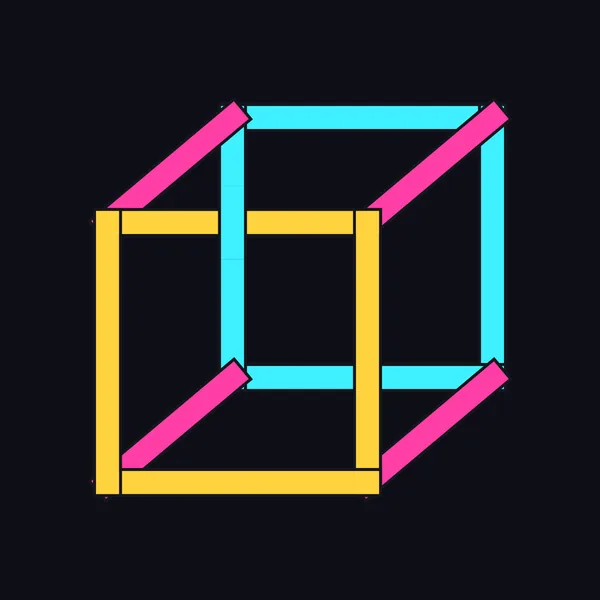 InteractiveImpossible & ambiguous figuresImpossible CubeA cube frame where one beam passes both in front of and behind another.
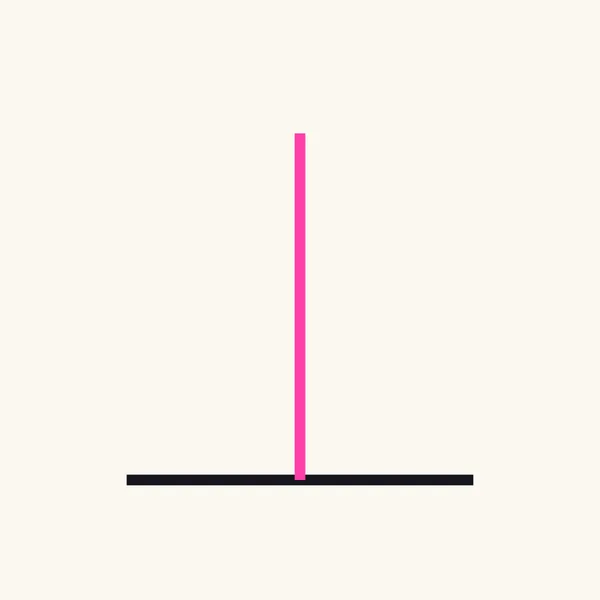 InteractiveGeometric illusionsVertical-Horizontal IllusionAn upside-down T whose two lines are the same length.
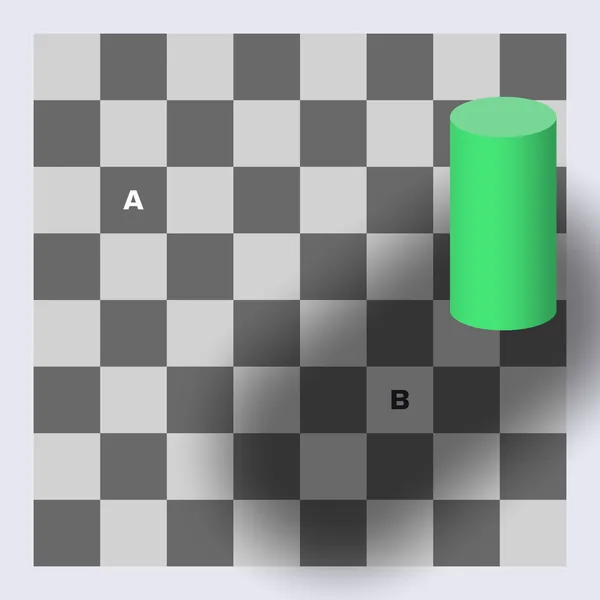 InteractiveBrightness illusionsCheckerboard Shadow IllusionA dark square in light and a light square in shadow are the same gray.