
Spinning Dancer Illusion
A spinning silhouette that turns clockwise for some people and the other way for others.



Get this illusion on a hoodie, mug or poster
Spinning Dancer Illusion, printed to order with the Opticalillusions.com wordmark.
What do you see?
Press Play. A ball of glowing dots starts to spin. Is it turning to the left or to the right? Many people see it turn one way, then, after a while, it suddenly reverses, even though the animation never changes. The famous spinning dancer does the same thing: a dark silhouette of a woman turning on one foot, which some viewers see spinning clockwise and others counterclockwise. Our dot globe uses exactly the same principle, so you can test it here.
How it works
When an object turns, your eyes receive only a flat, two-dimensional image. Your brain recovers its three-dimensional shape and direction from the way the image changes. This is called structure from motion, or the kinetic depth effect. Points that move quickly across the middle of the shape and slow down at the edges are read as lying on a rotating surface, and the globe looks solid instead of like a flat swarm of dots.
But the flat image is missing one crucial piece of information: which points are at the front and which are at the back. In our globe every dot is the same size and brightness, and there is no perspective, so a dot traveling right could be on the front of a globe spinning one way or on the back of a globe spinning the other way. Both interpretations produce exactly the same picture. Your brain must choose, and because neither choice is better, perception can flip between them.
The spinning dancer silhouette works the same way. Because it is filled in solid black, you cannot see which leg is in front or which way she is facing at any moment. Her outline is equally consistent with a dancer seen slightly from above turning clockwise and one seen slightly from below turning counterclockwise. Research by Nikolaus Troje and Matthew McAdams in 2010 found that most people see the dancer turning clockwise, which fits a general bias to assume we are viewing figures from above.
The illusion is sometimes passed around online as a test of whether you are left-brained or right-brained. There is no scientific evidence for that claim. The direction you see depends on interpretation biases, where you look and small cues such as which foot you focus on, not on personality.
Press the depth-cue button to make front dots larger and brighter. Now the front and back are no longer ambiguous, and the direction usually stops flipping. That simple change shows that the illusion exists only because the depth information is missing.
History
The spinning dancer animation was created in 2003 by Japanese web designer Nobuyuki Kayahara and spread widely online from 2008. The underlying effect has a much longer history: Hans Wallach and D. N. O'Connell described the kinetic depth effect in 1953, showing that the shadow of a rotating wire shape looks three-dimensional and can reverse direction. The dot globe on this page is an original animation made for Opticalillusions.com; Kayahara's dancer is his own work and is not reproduced here.
Try it
- Watch the globe and wait for it to reverse. Count how long each direction lasts.
- Look at the left edge, then the right edge. Does that change which way it spins?
- Turn on the depth cue and see whether you can still make it reverse.
- Ask friends which way it turns first and compare answers.
Frequently asked questions
Which way is the spinning dancer turning?
Either way. The flat image does not show which points are in front, so it fits a clockwise turn and a counterclockwise turn equally well.
Why does the spin suddenly reverse?
Both directions produce exactly the same picture, so your brain has to choose, and because neither choice is better, your perception can flip.
Why do most people see the dancer turn clockwise?
Research by Nikolaus Troje and Matthew McAdams in 2010 found most people see her turning clockwise, which fits a general bias to assume we view figures from above.
Who created the spinning dancer?
Japanese web designer Nobuyuki Kayahara created it in 2003, and it spread widely online from 2008. The dot globe on this page is an original animation made for Opticalillusions.com.
Sources & credits
The Spinning Dancer animation was created by Nobuyuki Kayahara (2003) and is his work; our spinning dot globe is an original animation of the same principle. Kinetic depth effect: Wallach and O'Connell (1953).
- Wallach, H. & O'Connell, D. N. (1953). The kinetic depth effect. Journal of Experimental Psychology, 45.
- Troje, N. F. & McAdams, M. (2010). The viewing-from-above bias and the silhouette illusion. i-Perception, 1.
- Spinning dancer — overview Read →
Further reading: The Illusions Index (University of Glasgow) and Michael Bach’s Optical Illusions & Visual Phenomena.
Written by K.R. for Opticalillusions.com · Updated . Illusion artwork © The Wizard Of Sales, LLC. Feel free to share a link; see our terms for reuse.
Related illusions
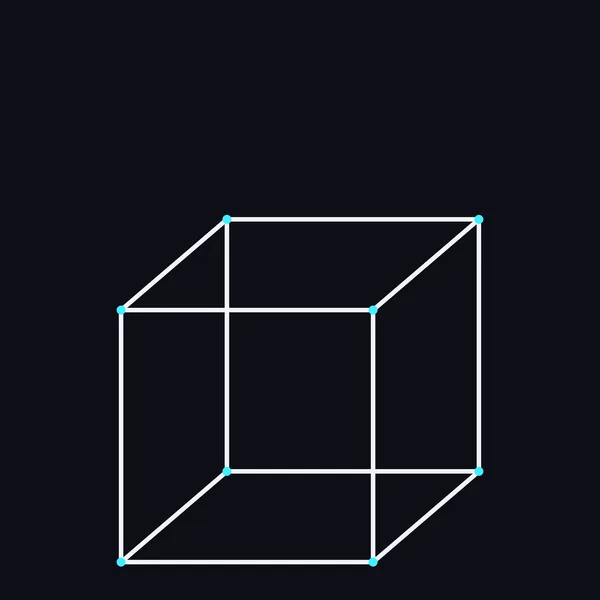 Impossible & ambiguous figuresNecker CubeA wireframe cube that flips between two orientations.
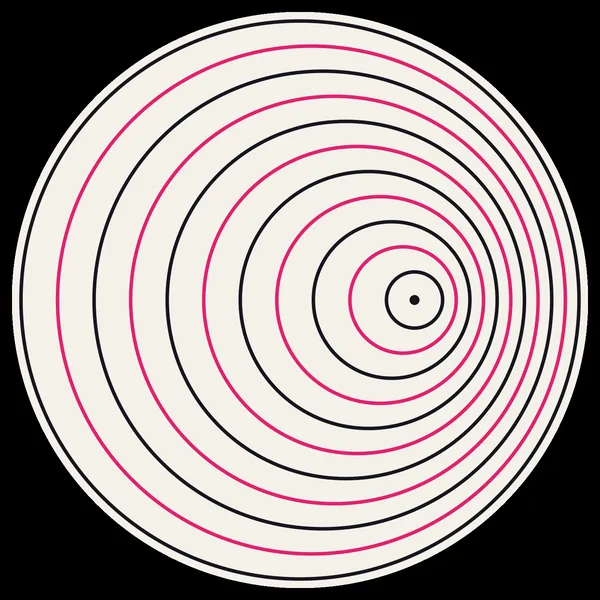 InteractiveMotion illusionsStereokinetic RingsTurning flat circles that suddenly pop out as a cone or tunnel.
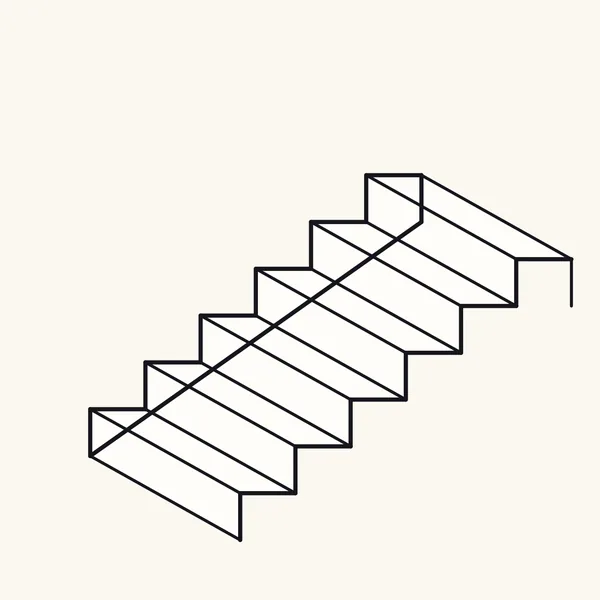 Impossible & ambiguous figuresSchröder StairsA staircase you climb from above or hang beneath from below.
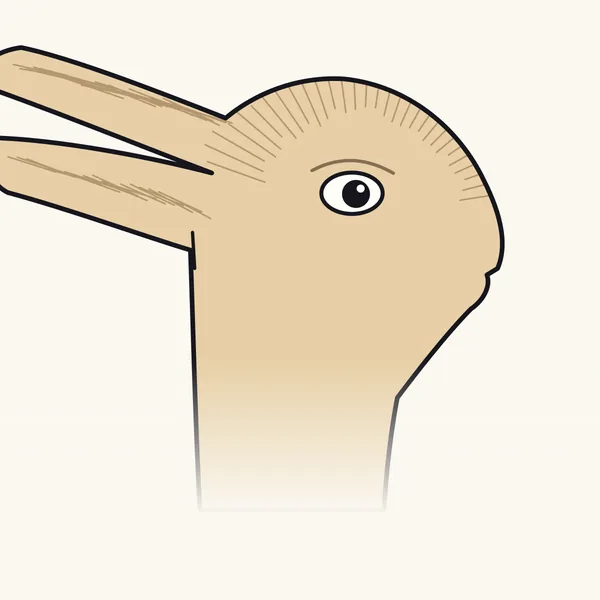 InteractiveImpossible & ambiguous figuresRabbit-Duck IllusionOne drawing, two animals: a duck facing left or a rabbit facing right.