
Are Optical Illusions Bad for Your Eyes? Facts and Myths
Optical illusions can make your eyes water, your head spin and still pictures wiggle. So are they harmful? For almost everyone the answer is no. Here are the real facts, the few people who should take care, and the myths you can stop worrying about.

The short answer
For almost everyone, looking at optical illusions is safe. They do not damage your eyes, weaken your vision or harm your brain. What they do is show you the clever shortcuts your visual system uses every day, by catching those shortcuts in the act.
Some illusions can cause short-lived side effects, like tired eyes, a colored afterimage or a moment of dizziness. These go away on their own, usually within seconds or minutes. There is one important exception: people with photosensitive epilepsy should be careful with flashing lights and some strong striped patterns. We explain that below.
This guide gives general information. It is not medical advice. If you have worries about your eyes or your health, talk to a doctor or an eye care professional.
Why illusions can feel strange
When an illusion "works," your eyes are doing exactly what they are built to do. The odd feelings come from a few normal things happening at once.
Tired eyes
Staring hard at anything, whether it is an illusion, a book or a phone, can make your eyes feel tired, dry or achy. The American Academy of Ophthalmology explains that people normally blink about 15 times a minute but only 5 to 7 times a minute while looking at screens. Fewer blinks means drier eyes. The academy also says that using screens for a long time does not permanently damage your eyes, and that this kind of eye strain is no different from the strain of reading or sewing for a long stretch. The fix is simple: blink, and look up at something far away now and then.
Afterimages
Stare at a bright color for thirty seconds, then look at a white wall, and you will see a ghost in the opposite color. That is an afterimage. It happens because the cells that respond to that color get tired for a moment, and it fades within seconds. Our guide to afterimages explains it in detail.
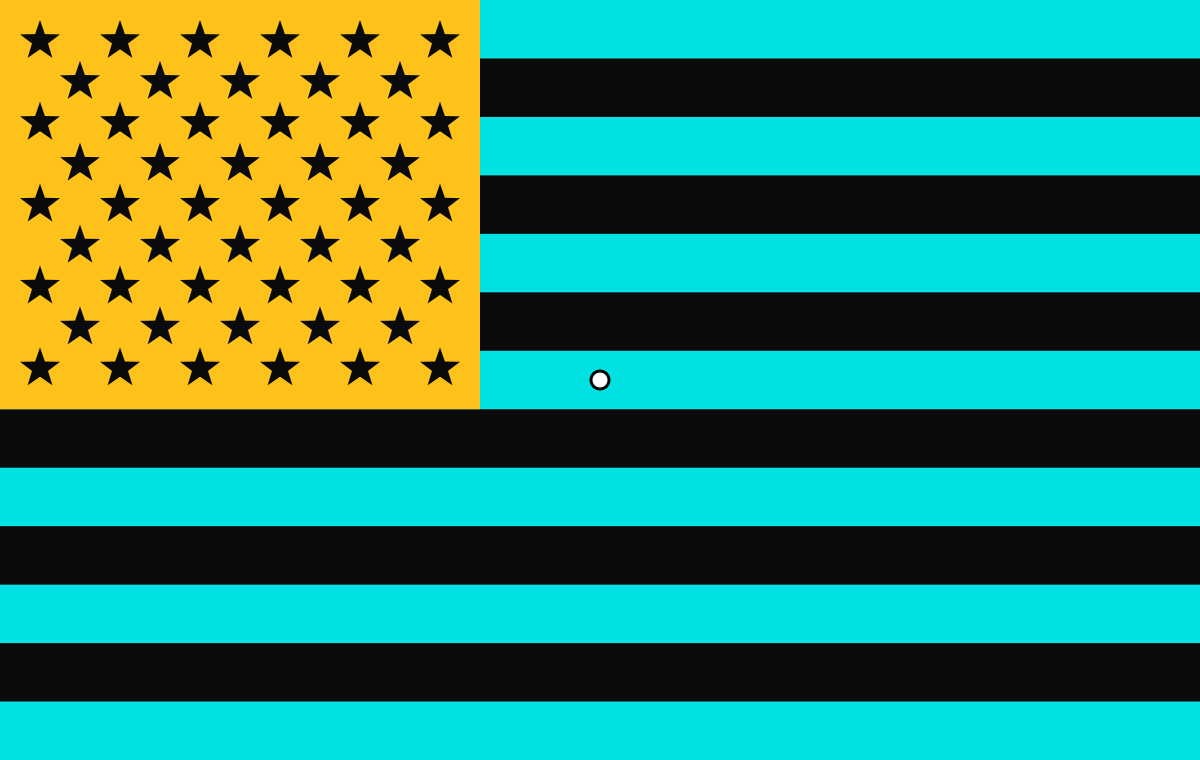
Afterimages from normal pictures are harmless. Never stare at the sun, a laser or a very bright lamp, though. Light that strong can damage the eye.
Dizziness and a "wobbly" feeling
Some illusions, especially strong motion illusions and spinning patterns, can make people feel a little dizzy or queasy. Your eyes are reporting motion while your balance system says you are standing still, and the mismatch can feel uncomfortable, a bit like reading in a moving car. Some people also find bold black-and-white stripes uncomfortable to look at for long. If that happens, simply look away. The feeling passes once you stop looking.
Who should be careful: photosensitive epilepsy
A small group of people have photosensitive epilepsy, a condition in which seizures can be triggered by things they see. According to the UK charity Epilepsy Action, only about 3 to 5 in every 100 people with epilepsy have this kind, and it most often starts in people under 20.
The triggers they describe include:
- Flashing or flickering lights, especially at about 10 to 25 flashes per second
- Strong repeating patterns, such as high-contrast stripes, checks or zigzags
- Patterns that flicker, vibrate or reverse colors on a screen
Most still optical illusions are not flashing, but some motion illusions and striped patterns fall into these categories. If you or your child has epilepsy, check with your doctor about which kinds of images to avoid. Epilepsy Action advises that if you suddenly see a possible trigger, you should cover one eye with your hand and turn away, rather than closing your eyes. On Opticalillusions.com, every illusion page carries a short comfort note, and pages with motion or flicker say so clearly.
Myths about optical illusions
Myth: Optical illusions can damage your eyes
There is no evidence that looking at optical illusions harms your eyes or your vision. The effects you feel are temporary and come from your visual system working normally.
Myth: Optical illusions can test you for eye disease
Online illusion "tests" are fun, but they cannot check the health of your eyes. Being fooled by an illusion is normal, and being fooled a little more or less than a friend does not mean anything is wrong. Only an eye exam by a professional can check your eye health. Our optical illusion test is for fun and learning, not diagnosis.
Myth: Only people with ADHD (or a certain personality) can see this
You may have seen viral posts claiming that only people with ADHD, autism or a special kind of brain can see a hidden image. There is no illusion that can diagnose ADHD, autism or any other condition. Scientists do find that people differ in how strongly illusions affect them, but those are small differences in a lab, not something a picture on social media can reveal. If you have questions about attention or learning, a doctor is the right person to ask.
Myth: If a still picture moves, you are stressed
A popular claim says that if pictures like the rotating snakes seem to move fast, you are stressed or tired. There is no good evidence for this. How much a still picture seems to move depends mostly on things like your eye movements, the size of the picture and where you are looking. Almost everyone sees it move, and it usually stops where you look directly.
Myth: Staring at stereograms or illusions will fix your eyesight
Some products claim that looking at special pictures can improve your eyesight or replace glasses. There is no good evidence that viewing optical illusions or Magic Eye pictures cures nearsightedness, farsightedness or other vision problems. Stereograms are great fun and a safe way to explore 3D vision, and you can learn how Magic Eye pictures work or try our stereograms, but they are not a treatment.
Simple tips for comfortable viewing
- Take breaks. Look away from the screen every few minutes, especially after staring illusions.
- Blink. It sounds silly, but it keeps your eyes from drying out.
- Stop if it feels bad. If an illusion gives you a headache, dizziness or an upset stomach, look away and try a different one later.
- Use normal brightness. You do not need a bright screen for illusions to work.
- Kids: an adult should help younger children choose illusions and remind them to take breaks.
The fun part
Optical illusions are one of the safest and most interesting ways to learn how your eyes and brain work together. They are used in classrooms, museums and science labs all over the world. Explore the science in why optical illusions work, find classroom-friendly activities on our For Teachers page, or start with our gentle optical illusions for kids.
 InteractiveMotion illusionsTroxler FadingStare at the cross and the soft color spots vanish into gray.
 InteractiveColor illusionsAfterimage FlagStare at a cyan, black and yellow flag and a red, white and blue one appears.
 InteractiveBrightness illusionsCheckerboard Shadow IllusionA dark square in light and a light square in shadow are the same gray.
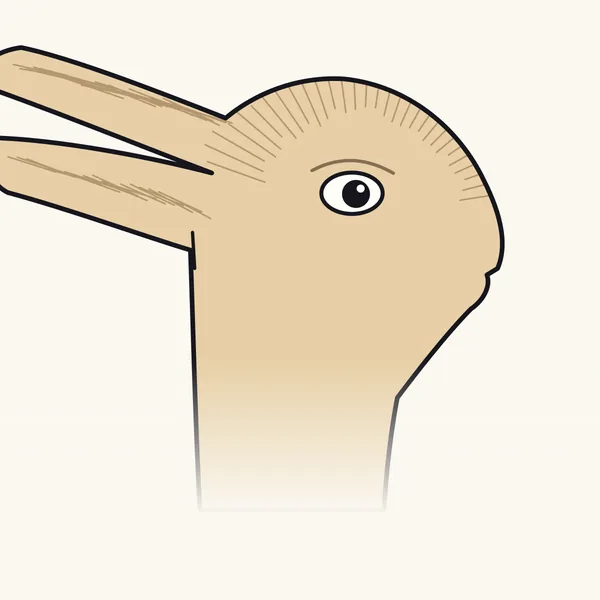 InteractiveImpossible & ambiguous figuresRabbit-Duck IllusionOne drawing, two animals: a duck facing left or a rabbit facing right.
Questions and answers
Are optical illusions bad for your eyes?
No. For almost everyone, optical illusions are safe and do not damage the eyes or vision. They can cause short-lived effects like tired eyes, afterimages or mild dizziness, which go away on their own.
Why do optical illusions make me dizzy?
Strong motion illusions can make your eyes report movement while your balance system says you are still. That mismatch can feel dizzy or queasy. Looking away usually makes it pass quickly.
Can optical illusions cause seizures?
Flashing lights and some strong striped or flickering patterns can trigger seizures in people with photosensitive epilepsy, which affects about 3 to 5 in 100 people with epilepsy. If you have epilepsy, ask your doctor which images to avoid.
Can an optical illusion test tell if I have ADHD?
No. No optical illusion can diagnose ADHD, autism or any other condition. If you have questions about attention or learning, talk to a doctor.

Enjoyed this? Get a new illusion every week
One original illusion in your inbox each week, with the science explained in a minute.
Written by the Opticalillusions.com team · Published . Illusion artwork © The Wizard Of Sales, LLC. Spotted an error? Tell us.
More from Learn
 Learn · Guide15 Famous Optical Illusions and the Stories Behind ThemFrom the Necker cube of 1832 to the dress of 2015: the famous illusions everyone should know, who made them and why they work.
 Learn · GuideThe Penrose Triangle and Other Impossible Objects, ExplainedWhy the impossible triangle, cube and fork look solid but could never be built, and how artists fake them in real life.Learn · GuideWhy Ambiguous Pictures Flip: The Rabbit-Duck, Rubin Vase and MoreA rabbit or a duck? A vase or two faces? Why two-answer pictures flip, why you never see both, and how to switch on purpose.Learn · GuideAfterimage Illusions: Why You See Colors That Aren't ThereStare, look away, and a ghost picture appears in opposite colors. How afterimages work and why they flip red to cyan and blue to yellow.
 Learn · GuideBlind Spot Test: Find the Hole in Your Vision in One MinuteMake a dot vanish and a broken line repair itself. A one-minute test for the blind spot every eye has, and why you never notice it.
 Learn · Guide9 Easy Optical Illusions You Can Do at HomeA floating finger, a hole in your hand, a rubber pencil and more: nine illusions you can do with things you already have.
 Learn · GuideHow to Draw Optical Illusions: 4 Easy Step-by-Step IdeasFour easy illusions anyone can draw with a pencil, ruler and marker, with step-by-step pictures and the science behind each trick.
 Learn · GuideWhat Is Op Art? Optical Illusion Art ExplainedPaintings that ripple, bulge and buzz: how 1960s op artists used lines, grids and color to trick the eye, and how to make your own.Learn · GuideWhy Do Optical Illusions Work? How Your Brain GuessesSeeing is a best guess. The six shortcuts your brain uses, and the illusions that catch each one, explained in plain words.
 Learn · GuideHow Magic Eye Pictures Work (and How to See Them)The science of hidden 3D pictures, from a 1959 lab experiment to the 1990s craze, plus a step-by-step way to see the shape.
 Learn · GuideWhy Do Still Pictures Seem to Move? Motion Illusions ExplainedDrifting snakes, wobbling checks and spinning rings: how your eye movements and motion cells turn flat pictures into motion.Learn · GuideOptical Illusion Science Fair Projects: 8 Ideas That WorkEight testable project ideas, from measuring the Müller-Lyer illusion to timing afterimages, with tips on fair tests and fair rules.
 Learn · GuideTypes of Optical Illusions, Explained (With Examples)Literal, physiological and cognitive illusions, plus motion, color, geometric, ambiguous, impossible and afterimage illusions, with an example of each.
 Learn · GuideWhy Colors Trick Your Eyes: The Science of Color IllusionsColor constancy, simultaneous contrast, the Munker illusion and afterimages: how your brain builds color, and why it sometimes gets it wrong.
 Learn · GuideThe Dress: Why Everyone Saw It DifferentlyBlue and black or white and gold? The 2015 photo, the lighting assumptions behind it and what scientists found when they studied it.