
The Penrose Triangle and Other Impossible Objects, Explained
The Penrose triangle looks like a solid frame made of three wooden bars. Follow it around with your finger, though, and something goes very wrong. Here is how impossible objects trick your brain, where they came from and how people build "real" ones.

What is an impossible object?
An impossible object is a drawing of something that looks like a real, solid thing but could never exist in our three-dimensional world. Nothing about the picture looks wrong at first. The trouble only shows up when you try to understand the whole shape at once.
The most famous example is the Penrose triangle, also called the impossible triangle or tribar. It looks like three square bars joined at right angles to make a triangle. That alone should be a warning: a real triangle cannot have three right-angle corners.
How the Penrose triangle tricks you
Try this with our impossible triangle. Put your finger on one corner and cover it. The two bars you can still see make perfect sense: they look like an L-shaped piece of wood. Now move your finger to another corner. Again, everything you can see is fine.
That is the secret. Your brain does not check the whole picture at once. It works out small pieces quickly, such as which bar is in front, which way a corner points and how the shading falls, and it is happy as long as each piece makes sense on its own. It does not insist that all the pieces agree with each other.
In the Penrose triangle, each corner tells your brain a different story about depth. One corner says, "this bar is coming toward you." The next corner, following the same bar, says, "this bar is going away from you." Each story is believable alone. Together they are impossible.
Who invented the impossible triangle?
The first known impossible triangle was drawn in 1934 by the Swedish artist Oscar Reutersvärd, who built his version out of a row of cubes. He went on to draw hundreds of impossible figures.
The shape got its famous name later. In 1958 the British scientists Lionel Penrose and his son Roger Penrose published a short article about "impossible objects" in the British Journal of Psychology. They showed the tribar in the solid-bar form most people know today. In the same article they introduced the Penrose stairs, a staircase that seems to climb forever in a loop. Roger Penrose later became a famous physicist and won the Nobel Prize in Physics in 2020 for his work on black holes.
M.C. Escher and impossible art
The Dutch artist M.C. Escher took the Penroses' ideas and turned them into some of the most famous prints of the twentieth century. In "Ascending and Descending" (1960), monks march around a never-ending staircase based on the Penrose stairs. In "Waterfall" (1961), water seems to flow downhill along a channel and then fall back to where it started, which would make a machine that runs forever. The trick in "Waterfall" is built from Penrose triangles hidden in the structure.
Escher's prints show why impossible objects are so fun: every part of the picture is drawn carefully and realistically, so your brain trusts it, right up until you notice the loop.
More impossible objects to try
The impossible cube
The impossible cube looks like a frame made of square beams. Follow one of the back beams and you will find that it crosses in front of a beam at the front of the cube. Our version lets you switch to a possible cube to compare. The impossible cube is built on top of the Necker cube, a simple wire cube that flips between two views. The impossible version mixes the two views in one drawing.
The devil's fork
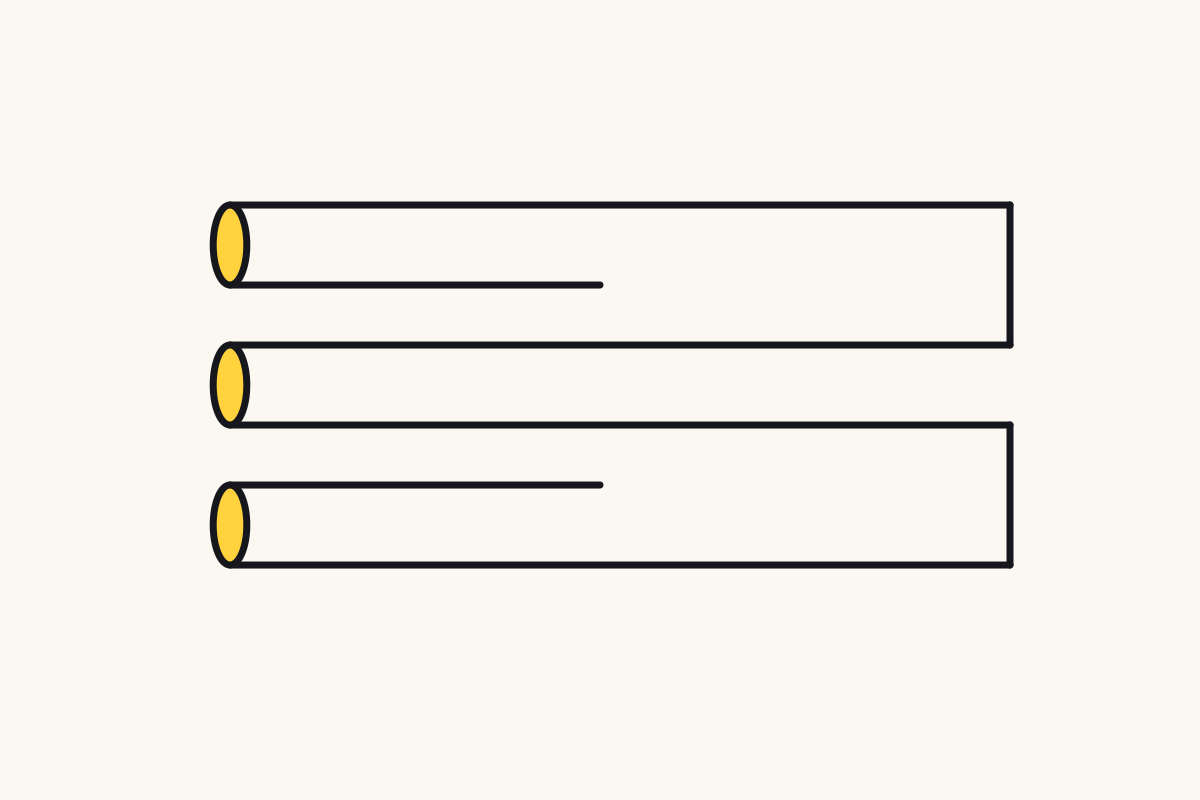
The devil's fork, also called the blivet or impossible trident, became popular in the 1960s. At one end you count three round prongs. At the other end there are only two square bars. Somewhere in the middle, the gaps between the prongs turn into solid bars, and your eyes cannot find where it happens.
Impossible stairs
The Penrose stairs go up, and up, and up, and end where they started. Like the triangle, each flight of stairs looks normal. Only the full loop is impossible.
Can you build an impossible object?
Not really, but you can fake one very well. Artists and engineers have built Penrose triangles as sculptures, including a large one in Perth, Australia. From almost every angle these sculptures look like a strange twisted shape. From one exact spot, though, the pieces line up and the impossible triangle appears.
The trick is that one corner is not actually joined. Two bars pass each other with a gap, one closer to you and one farther away. When you stand in just the right place, the near bar hides the gap and the two ends seem to touch. Take one step to the side and the illusion falls apart.
This shows something important about flat pictures. A drawing or photo only gives one point of view, and your brain fills in the depth. Impossible objects take advantage of that by choosing the one view where the impossible looks possible.
Why scientists care about impossible objects
Impossible objects are more than puzzles. They show that seeing is not one big step but many small ones. Different parts of your visual system work out edges, corners and depth in different places, and they do not always compare notes. Usually that is fine, because real objects never send mixed messages. Impossible drawings are rare cases where the messages disagree, so they let researchers see the pieces of the process working separately.
They also show how quickly the brain decides what is in front and what is behind. Most people say "that is a triangle made of bars" in less than a second, long before they notice the problem. Only careful, slow checking finds the contradiction.
Draw your own
Impossible objects are a favorite for art class. The devil's fork is a good one to start with, because the trick is all in where you stop each line. Our guide on how to draw optical illusions has easy step-by-step ideas, and teachers can find our printable Impossible Shapes unit on the For Teachers page. For more, browse all our impossible objects, see how they fit among the types of optical illusions, or put the impossible triangle on a tee or poster in our shop.
 Impossible & ambiguous figuresImpossible TriangleThree bars meet at right angles to form a triangle that cannot exist.
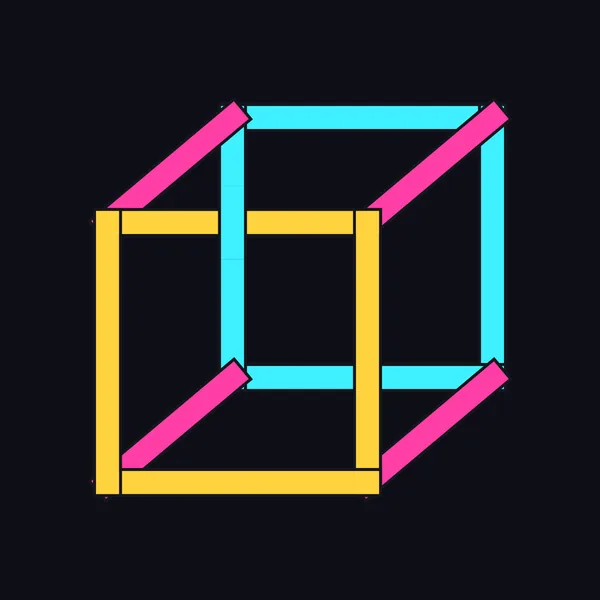 InteractiveImpossible & ambiguous figuresImpossible CubeA cube frame where one beam passes both in front of and behind another.
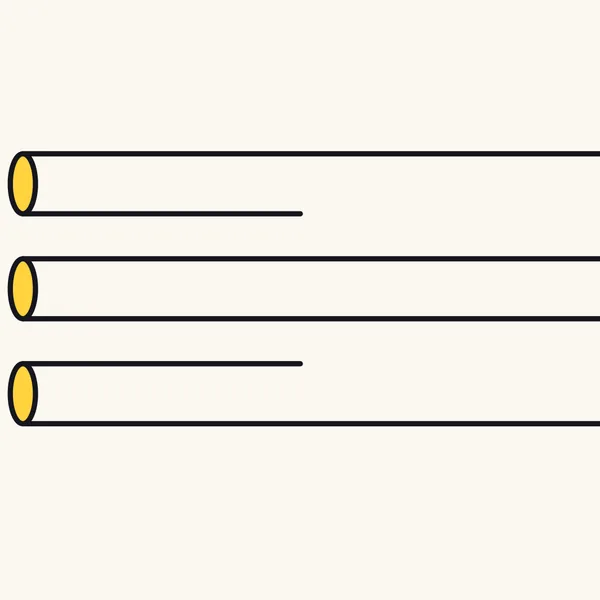 InteractiveImpossible & ambiguous figuresDevil's ForkThree round prongs at one end turn into two flat prongs at the other.
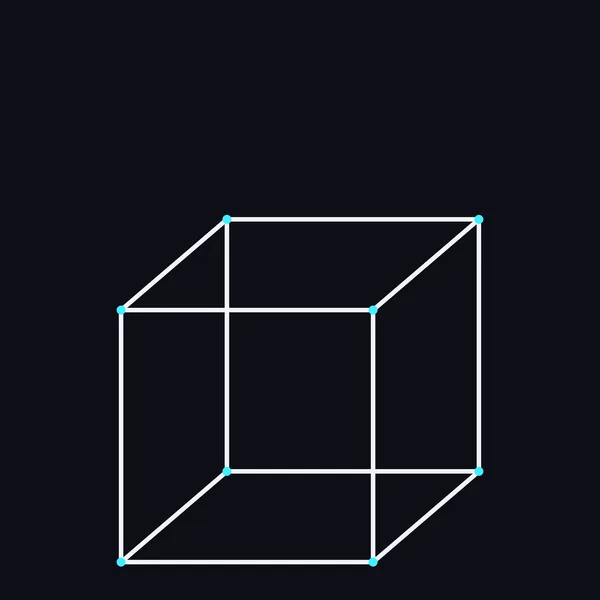 Impossible & ambiguous figuresNecker CubeA wireframe cube that flips between two orientations.
Questions and answers
What is the Penrose triangle?
The Penrose triangle is a drawing of three square bars joined at right angles to form a triangle. Each corner looks normal, but the whole shape could not exist in three dimensions. It is named after Lionel and Roger Penrose, who published it in 1958.
Who invented the impossible triangle?
The Swedish artist Oscar Reutersvärd drew the first known version in 1934. Lionel and Roger Penrose drew it independently and made it famous in 1958.
Can a Penrose triangle be built in real life?
Not as a true closed triangle. Sculptures can only look like one from a single viewpoint, where a gap or a bent piece lines up perfectly. From any other angle the trick is obvious.
Why do impossible objects look possible at first?
Your brain checks small parts of a picture quickly and separately. Each corner of an impossible object makes sense on its own, so the picture looks fine until you try to follow it all the way around.
Enjoyed this? Get a new illusion every week
One original illusion in your inbox each week, with the science explained in a minute.
Written by the Opticalillusions.com team · Published . Illusion artwork © The Wizard Of Sales, LLC. Spotted an error? Tell us.
More from Learn
 Learn · Guide15 Famous Optical Illusions and the Stories Behind ThemFrom the Necker cube of 1832 to the dress of 2015: the famous illusions everyone should know, who made them and why they work.
 Learn · GuideWhy Ambiguous Pictures Flip: The Rabbit-Duck, Rubin Vase and MoreA rabbit or a duck? A vase or two faces? Why two-answer pictures flip, why you never see both, and how to switch on purpose.
 Learn · GuideAfterimage Illusions: Why You See Colors That Aren't ThereStare, look away, and a ghost picture appears in opposite colors. How afterimages work and why they flip red to cyan and blue to yellow.
 Learn · GuideBlind Spot Test: Find the Hole in Your Vision in One MinuteMake a dot vanish and a broken line repair itself. A one-minute test for the blind spot every eye has, and why you never notice it.
 Learn · Guide9 Easy Optical Illusions You Can Do at HomeA floating finger, a hole in your hand, a rubber pencil and more: nine illusions you can do with things you already have.
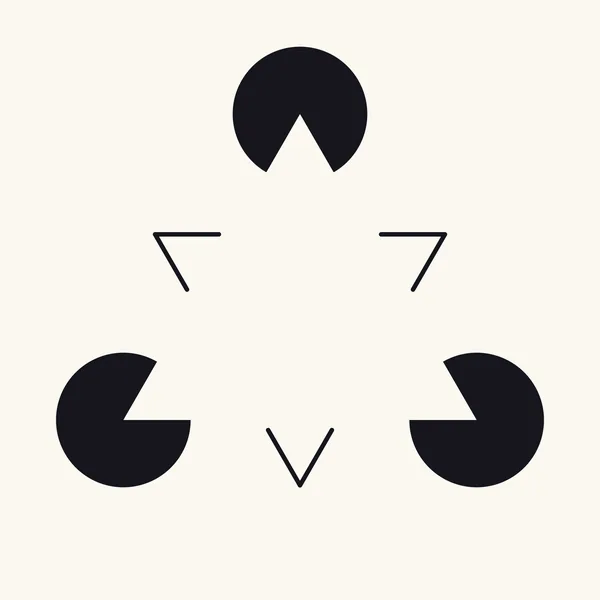 Learn · GuideHow to Draw Optical Illusions: 4 Easy Step-by-Step IdeasFour easy illusions anyone can draw with a pencil, ruler and marker, with step-by-step pictures and the science behind each trick.
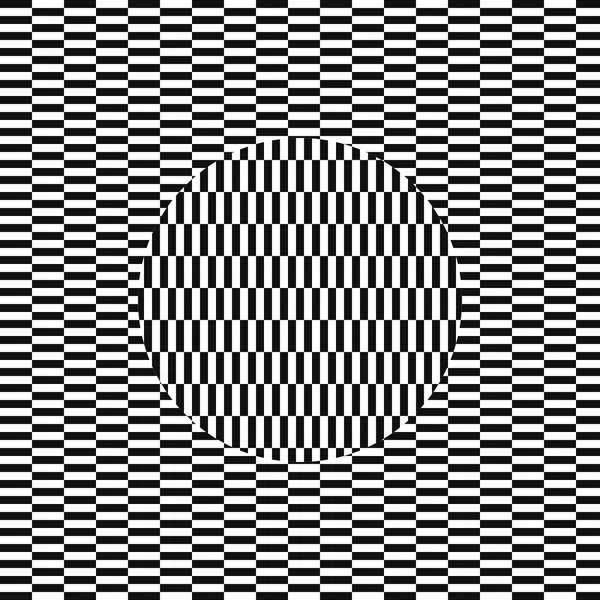 Learn · GuideWhat Is Op Art? Optical Illusion Art ExplainedPaintings that ripple, bulge and buzz: how 1960s op artists used lines, grids and color to trick the eye, and how to make your own.
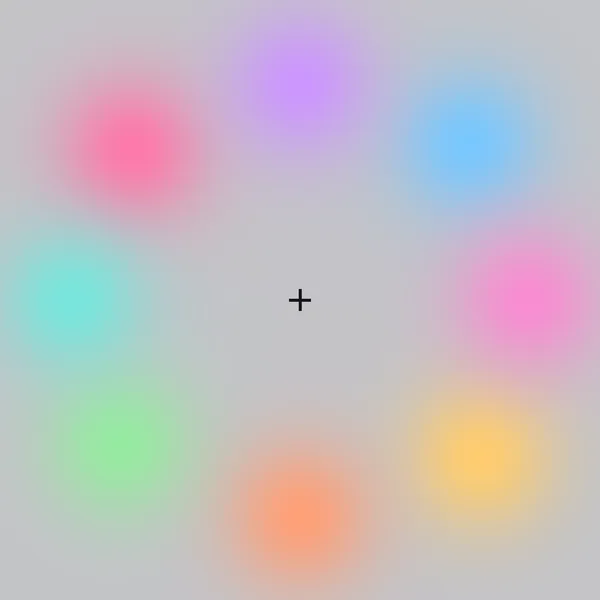 Learn · GuideAre Optical Illusions Bad for Your Eyes? Facts and MythsDo illusions hurt your eyes? The facts on eye strain and dizziness, who should take care with flashing patterns, and the viral myths.
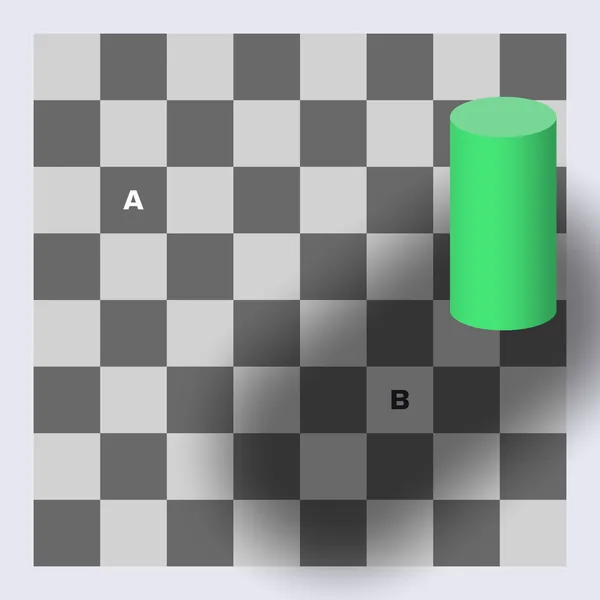 Learn · GuideWhy Do Optical Illusions Work? How Your Brain GuessesSeeing is a best guess. The six shortcuts your brain uses, and the illusions that catch each one, explained in plain words.
 Learn · GuideHow Magic Eye Pictures Work (and How to See Them)The science of hidden 3D pictures, from a 1959 lab experiment to the 1990s craze, plus a step-by-step way to see the shape.
 Learn · GuideWhy Do Still Pictures Seem to Move? Motion Illusions ExplainedDrifting snakes, wobbling checks and spinning rings: how your eye movements and motion cells turn flat pictures into motion.Learn · GuideOptical Illusion Science Fair Projects: 8 Ideas That WorkEight testable project ideas, from measuring the Müller-Lyer illusion to timing afterimages, with tips on fair tests and fair rules.
 Learn · GuideTypes of Optical Illusions, Explained (With Examples)Literal, physiological and cognitive illusions, plus motion, color, geometric, ambiguous, impossible and afterimage illusions, with an example of each.
 Learn · GuideWhy Colors Trick Your Eyes: The Science of Color IllusionsColor constancy, simultaneous contrast, the Munker illusion and afterimages: how your brain builds color, and why it sometimes gets it wrong.
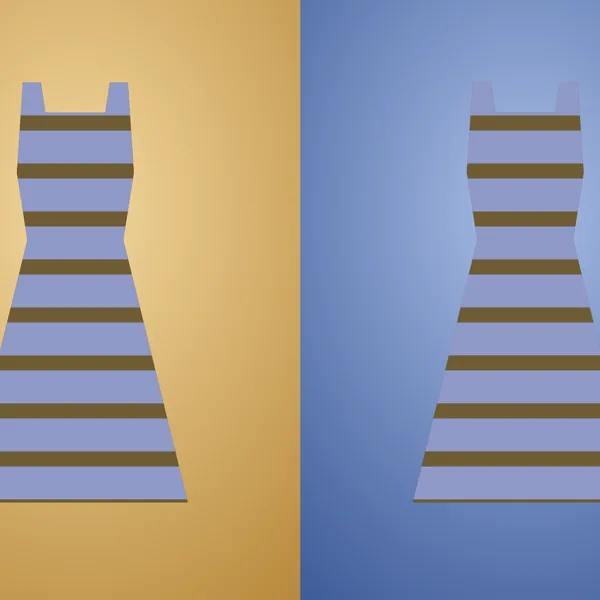 Learn · GuideThe Dress: Why Everyone Saw It DifferentlyBlue and black or white and gold? The 2015 photo, the lighting assumptions behind it and what scientists found when they studied it.