
Blind Spot Test: Find the Hole in Your Vision in One Minute
Every eye has a spot where it cannot see anything at all. You have two of them right now, and you have never noticed. This one-minute test lets you find your blind spot, make a dot disappear and watch your brain paint over the gap.
What is the blind spot?
At the back of each eye is the retina, a thin layer of cells that turn light into signals for your brain. Those signals travel out of the eye through the optic nerve, a cable made of about a million nerve fibers. Where the optic nerve leaves the eye, there is no room for light-sensitive cells. That small patch, called the optic disc, cannot detect light at all.
The result is a blind spot in each eye. As the American Academy of Ophthalmology explains, everyone has one. It is not a problem or a sign of disease. It is simply how human eyes are built.
The blind spot sits a little to the side of the center of your vision, toward your ear. It is not tiny either: it covers about as much of your view as a tennis ball held at arm's length, a little more for some people and a little less for others.
Test 1: make the dot disappear
Use the picture below on your phone, tablet or computer. It works best if the picture is at least as wide as your hand.
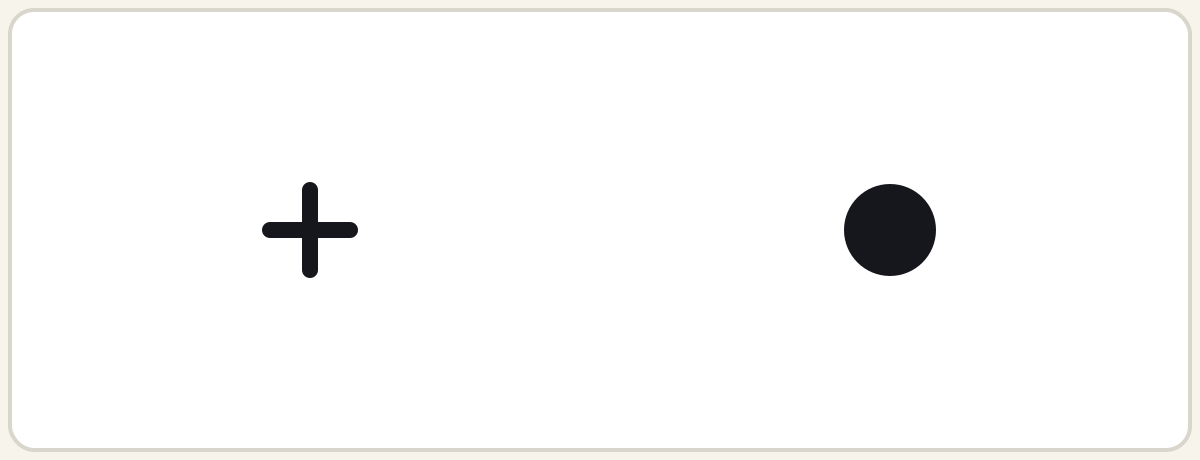
- Close or cover your left eye.
- Look straight at the cross with your right eye. Keep looking at it the whole time.
- Notice that you can still see the dot out of the corner of your eye. Do not look at it directly.
- Slowly move your face closer to the screen, or farther away. On most screens this happens somewhere between 25 and 50 centimeters (10 to 20 inches).
At one distance, the dot will vanish completely. Move a little closer or farther and it pops back. You have just found your right eye's blind spot.
Try the other eye: Close your right eye instead and look at the dot with your left eye. At the right distance, the cross will disappear.
If it does not work at first, make sure you are really looking at the cross and not sneaking glances at the dot, and move slowly. Keeping your head level helps too.
Test 2: watch your brain repair a line
Now try something even stranger. This time there is a pink line with a gap in it.
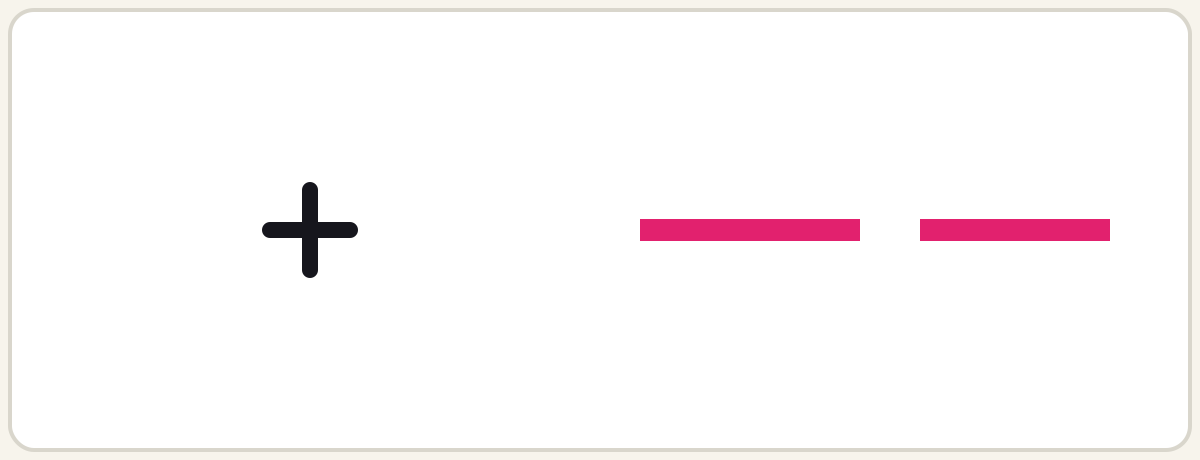
- Close your left eye and look at the cross with your right eye, just like before.
- Move slowly closer or farther until the gap in the pink line lands in your blind spot.
When it does, most people do not see a gap or a hole. They see one long, unbroken pink line. Your brain has filled in the missing piece with what it expects should be there.
This is the most surprising part of the blind spot. You might expect to see a black hole or a blurry patch. Instead, your brain quietly paints over it using the colors and patterns nearby. The American Academy of Ophthalmology describes this filling in as one kind of optical illusion.
Why don't we notice our blind spots?
If there is a tennis-ball-sized hole in each eye's view, why do you never see it? There are three reasons.
Two eyes cover for each other. The blind spot of your left eye and the blind spot of your right eye fall on different parts of the scene. Whatever one eye misses, the other eye sees. With both eyes open, there is no gap at all.
Your eyes are always moving. Your eyes make small, quick movements many times a second. Anything that falls in the blind spot for a moment soon lands somewhere else.
Your brain fills in the gap. Even with one eye closed, you do not see a hole. Your brain fills the area with whatever surrounds it, like the white of the paper or the pattern of a carpet. That is exactly what you saw in Test 2.
Who discovered the blind spot?
The French scientist Edme Mariotte described the blind spot in the 1660s. He worked out where it should be by studying the inside of the eye, then proved it with an experiment much like the one above. People found it hard to believe that everyone had a hole in their vision without knowing it, and the experiment became a popular demonstration.
Filling in is everywhere
The blind spot is one of the clearest examples of a habit your brain uses all the time: when information is missing, it fills the gap with a good guess. The same habit is behind several illusions you can try on this site.
- In the Ehrenstein illusion, bright discs appear where black lines break off, though nothing is drawn there.
- In the Kanizsa triangle, your brain fills in the edges of a triangle that does not exist.
- In Troxler fading, soft spots you are not looking at fade into the background, as if filled in with gray.
- In the watercolor illusion, a thin colored border makes color seem to spread across a whole area.
Is this a vision test?
No. This is a fun way to see how your eyes and brain work, not a medical test. Everyone has a blind spot, and finding yours is normal and healthy.
If you ever notice new blank, dark or blurry patches in your vision, flashes of light or a curtain over part of what you see, that is different. Tell an adult and see an eye doctor promptly.
Keep exploring
If you enjoyed this, try more experiments with your own eyes in easy optical illusions you can do at home, discover why optical illusions work, or see your two eyes work together to reveal a hidden 3D picture in our stereograms. Teachers can use the blind spot test as a quick classroom starter, and our For Teachers page has printable illusion packs to go with it.
 InteractiveBrightness illusionsEhrenstein IllusionGaps in a pattern of lines look like glowing white discs.
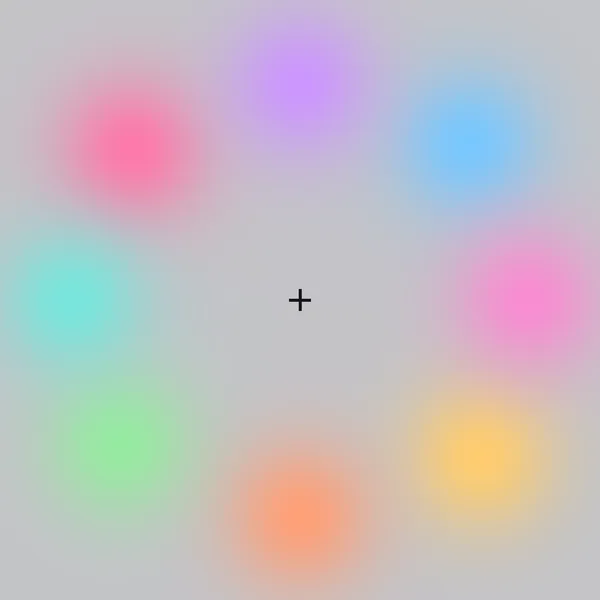 InteractiveMotion illusionsTroxler FadingStare at the cross and the soft color spots vanish into gray.
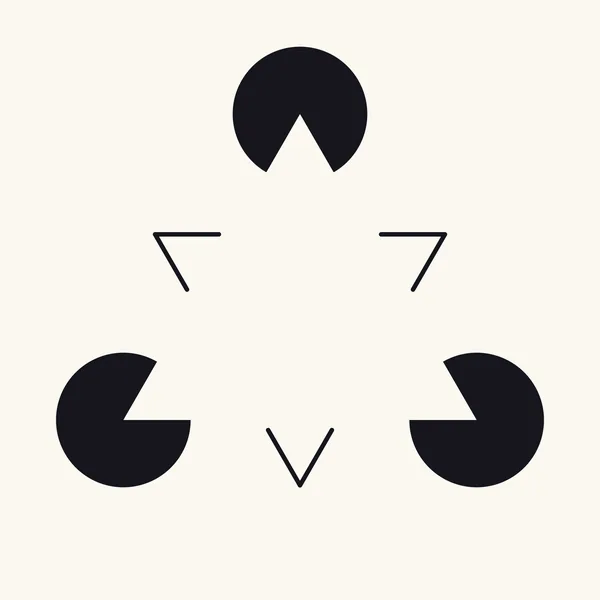 Geometric illusionsKanizsa TriangleA bright white triangle appears from nothing but three cut-out discs.
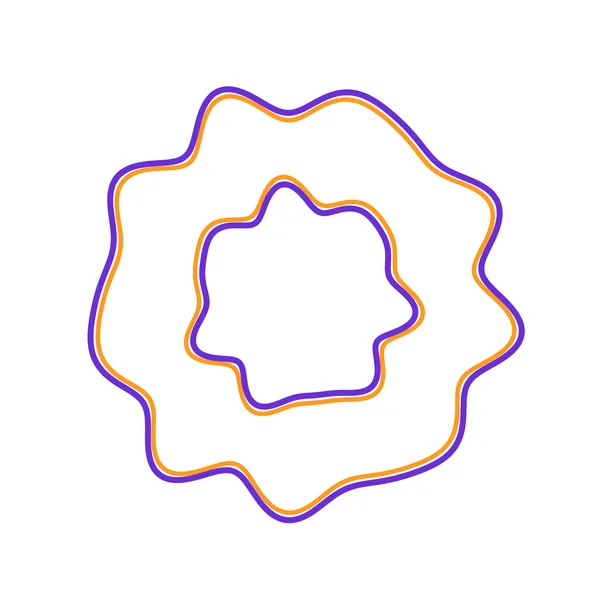 Color illusionsWatercolor IllusionA thin orange edge tints a whole white region pale orange.
Questions and answers
Does everyone have a blind spot?
Yes. Every human eye has a blind spot where the optic nerve leaves the eye, because there are no light-sensitive cells there. It is completely normal.
How do I find my blind spot?
Close your left eye, look at the cross in our test with your right eye, and slowly move closer to or farther from the screen. At one distance, the dot on the right disappears because it lands in your blind spot.
Why don't I see a hole in my vision?
Your two eyes cover each other's blind spots, your eyes are always moving, and your brain fills the gap with the colors and patterns around it.
Is the blind spot test a medical eye test?
No. It shows a normal feature of every eye. If you notice new blank or dark patches in your vision, see an eye doctor.
Enjoyed this? Get a new illusion every week
One original illusion in your inbox each week, with the science explained in a minute.
Written by the Opticalillusions.com team · Published . Illusion artwork © The Wizard Of Sales, LLC. Spotted an error? Tell us.
More from Learn
 Learn · Guide15 Famous Optical Illusions and the Stories Behind ThemFrom the Necker cube of 1832 to the dress of 2015: the famous illusions everyone should know, who made them and why they work.
 Learn · GuideThe Penrose Triangle and Other Impossible Objects, ExplainedWhy the impossible triangle, cube and fork look solid but could never be built, and how artists fake them in real life.
 Learn · GuideWhy Ambiguous Pictures Flip: The Rabbit-Duck, Rubin Vase and MoreA rabbit or a duck? A vase or two faces? Why two-answer pictures flip, why you never see both, and how to switch on purpose.
 Learn · GuideAfterimage Illusions: Why You See Colors That Aren't ThereStare, look away, and a ghost picture appears in opposite colors. How afterimages work and why they flip red to cyan and blue to yellow.
 Learn · Guide9 Easy Optical Illusions You Can Do at HomeA floating finger, a hole in your hand, a rubber pencil and more: nine illusions you can do with things you already have.Learn · GuideHow to Draw Optical Illusions: 4 Easy Step-by-Step IdeasFour easy illusions anyone can draw with a pencil, ruler and marker, with step-by-step pictures and the science behind each trick.
 Learn · GuideWhat Is Op Art? Optical Illusion Art ExplainedPaintings that ripple, bulge and buzz: how 1960s op artists used lines, grids and color to trick the eye, and how to make your own.Learn · GuideAre Optical Illusions Bad for Your Eyes? Facts and MythsDo illusions hurt your eyes? The facts on eye strain and dizziness, who should take care with flashing patterns, and the viral myths.
 Learn · GuideWhy Do Optical Illusions Work? How Your Brain GuessesSeeing is a best guess. The six shortcuts your brain uses, and the illusions that catch each one, explained in plain words.
 Learn · GuideHow Magic Eye Pictures Work (and How to See Them)The science of hidden 3D pictures, from a 1959 lab experiment to the 1990s craze, plus a step-by-step way to see the shape.
 Learn · GuideWhy Do Still Pictures Seem to Move? Motion Illusions ExplainedDrifting snakes, wobbling checks and spinning rings: how your eye movements and motion cells turn flat pictures into motion.Learn · GuideOptical Illusion Science Fair Projects: 8 Ideas That WorkEight testable project ideas, from measuring the Müller-Lyer illusion to timing afterimages, with tips on fair tests and fair rules.
 Learn · GuideTypes of Optical Illusions, Explained (With Examples)Literal, physiological and cognitive illusions, plus motion, color, geometric, ambiguous, impossible and afterimage illusions, with an example of each.
 Learn · GuideWhy Colors Trick Your Eyes: The Science of Color IllusionsColor constancy, simultaneous contrast, the Munker illusion and afterimages: how your brain builds color, and why it sometimes gets it wrong.
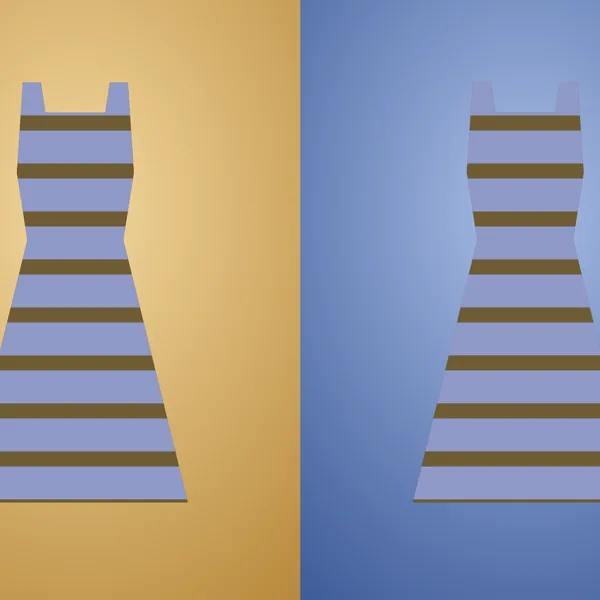 Learn · GuideThe Dress: Why Everyone Saw It DifferentlyBlue and black or white and gold? The 2015 photo, the lighting assumptions behind it and what scientists found when they studied it.