
9 Easy Optical Illusions You Can Do at Home
You do not need a printer, a screen or special equipment to fool your brain. Your own hands, a pencil and a paper tube are enough. Here are nine easy optical illusions you can do at home or in class in a few minutes, with a simple explanation for each one.
Before you start
These illusions use your own body and everyday things. Most take less than a minute. They work for kids and grown-ups alike, and they make a great activity for a rainy afternoon, a classroom or a family dinner table.
You will need, at most:
- Your hands
- A pencil
- A cardboard tube from a paper towel roll, or a sheet of paper rolled into a tube
- A sheet of paper and a pen
- A small card or piece of cardboard and some string, for the last one
Each illusion below has the same three parts: what to do, what you should see, and why it happens.
1. The floating finger sausage
What to do: Hold your two index fingers out in front of your face at eye level, tips pointing at each other and almost touching, about 20 to 25 centimeters (8 to 10 inches) from your nose. Now look past your fingers at a wall or something far away.
What you see: A little "sausage" with a fingertip on each end appears to float between your fingers. Pull your fingers apart slightly and it floats in mid-air.
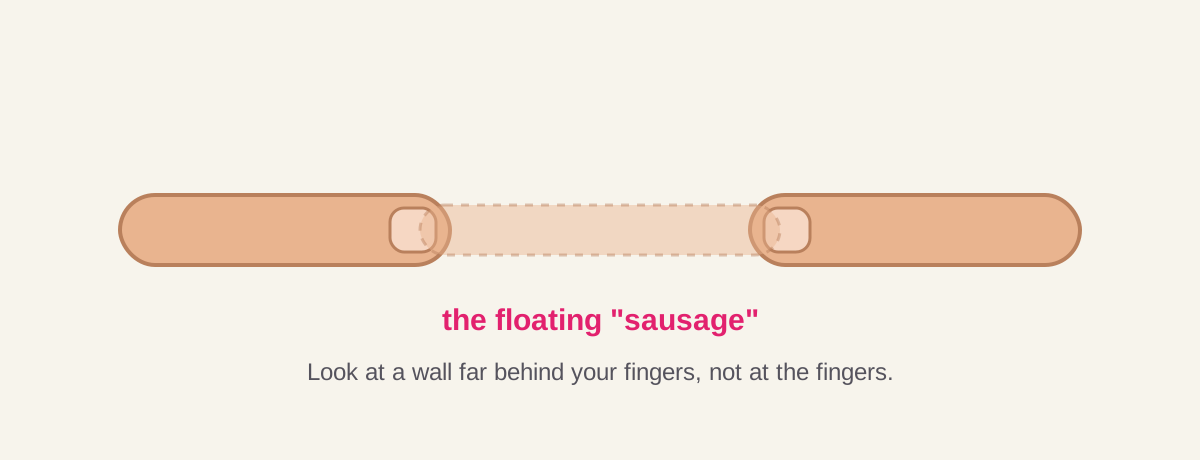
Why it happens: Your eyes are about two inches apart, so each one sees a slightly different view, as the American Academy of Ophthalmology explains. When you focus on something far away, the images of your nearby fingers do not line up in the two eyes. Your brain overlaps the two fingertip images in the middle, making a short finger that is not really there.
2. The hole in your hand
What to do: Hold a paper tube up to your right eye like a telescope, using your right hand. Keep both eyes open and look at something across the room. Now put your left hand, palm facing you, beside the tube, touching it, about halfway along.
What you see: A round hole seems to appear right through the middle of your palm, and you can see the room through it.
Why it happens: Your right eye sees the room through the tube. Your left eye sees your palm. Your brain usually blends the views from your two eyes into one picture, so it lays the circle of room on top of your hand. The American Academy of Ophthalmology uses this same experiment to show how the brain combines the two views.
3. The jumping thumb
What to do: Hold one thumb up at arm's length and line it up with something far away, like a door handle. Close your left eye. Then open it and close your right eye. Keep switching.
What you see: Your thumb seems to jump from side to side, even though it is not moving. With one eye, it stays lined up with the door handle. With the other, it jumps away.
Why it happens: Again, each eye sees from a slightly different spot. Close objects shift a lot between the two views, while faraway objects barely shift. The eye that keeps your thumb lined up is probably your dominant eye, the one your brain trusts most when you point at things.
4. The rubber pencil
What to do: Hold a pencil loosely between your thumb and first finger, about a third of the way from one end. Move your hand up and down quickly, about an inch each way, so the pencil wobbles and the ends swing.
What you see: The stiff pencil looks bendy, like it is made of rubber.
Why it happens: The ends of the pencil swing faster than the part you are holding. Your eyes cannot follow every position, so your brain blends the blurry positions together, and the different parts of the pencil seem to arrive at slightly different times. The result looks like a curve.
5. The disappearing dot
What to do: On a piece of paper, draw a small cross on the left and a dot about 8 centimeters (3 inches) to its right. Close your left eye and look at the cross with your right eye. Slowly bring the paper closer to your face.
What you see: At one distance, the dot completely disappears.
Why it happens: Every eye has a blind spot where the optic nerve leaves, with no cells to detect light. When the dot lands there, you cannot see it, and your brain fills the gap with the paper color. You can try an on-screen version, plus a line that "repairs" itself, in our blind spot test.
6. The upside-down T
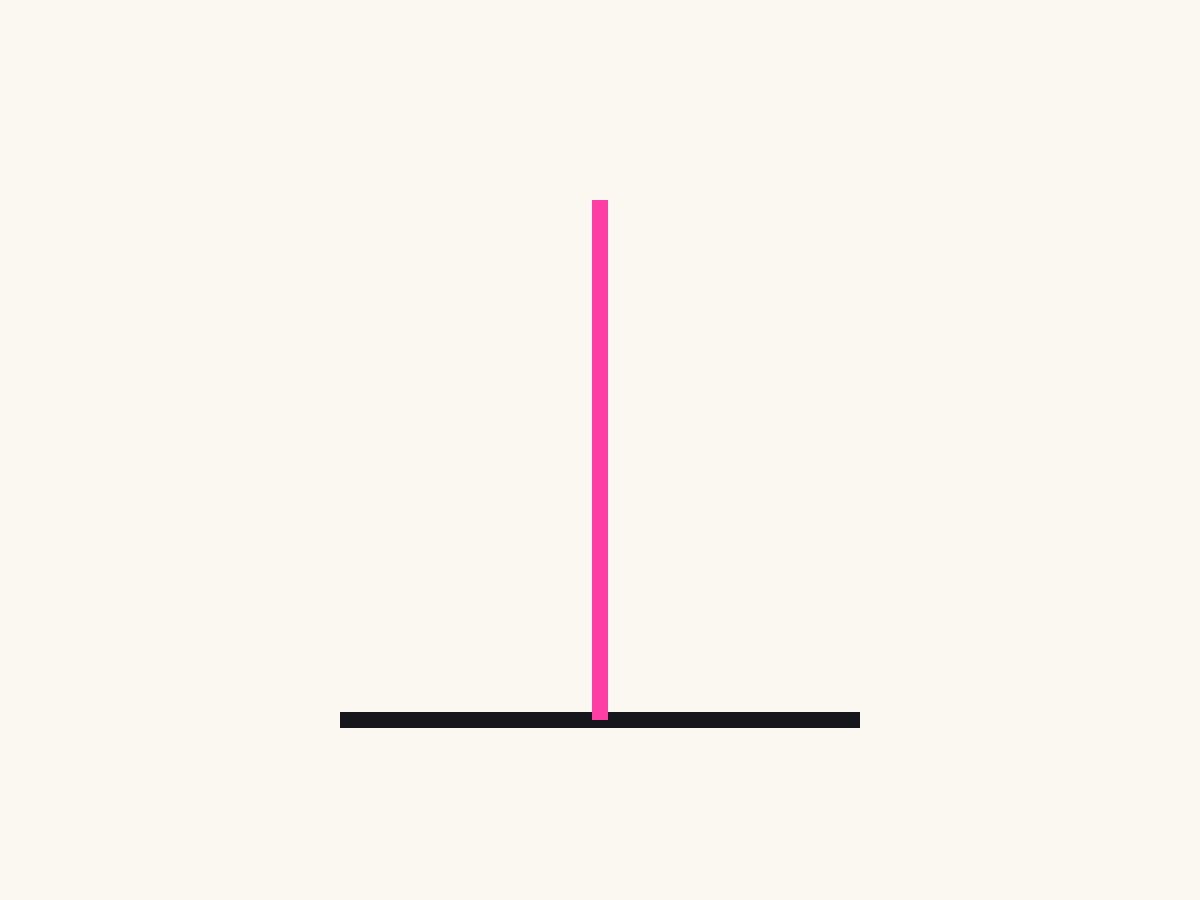
What to do: Draw a horizontal line about 8 centimeters (3 inches) long. From its middle, draw a vertical line straight up, exactly the same length. Measure carefully.
What you see: The vertical line looks clearly longer, even though you measured them.
Why it happens: People tend to see vertical lengths as longer than horizontal ones. On top of that, the vertical line cuts the horizontal one in half, which makes the horizontal one look shorter. Try our version of the vertical-horizontal illusion to compare with a reveal.
7. The fading spots
What to do: Look at a soft, blurry spot at the edge of your vision, or open our Troxler fading picture. Keep your eyes perfectly still on a single point.
What you see: After ten to twenty seconds, soft spots at the edges of your vision fade away. Move your eyes and they come back.
Why it happens: Your visual system is built to notice change. When something blurry stays exactly the same, the cells reporting it turn down their signal, and your brain fills the area in with the background.
8. The waterfall effect
What to do: Watch a waterfall, a fast stream or the bubbles rising in a fizzy drink for 30 to 60 seconds, keeping your eyes on one spot. Then look at something still, like a rock or a wall.
What you see: The still thing seems to drift the opposite way, upward for a waterfall.
Why it happens: Cells that detect motion in one direction get tired. When you look at something still, cells for the opposite direction win for a few seconds. No waterfall nearby? Use our motion aftereffect spiral.
9. The bird in a cage (spinning card)
What to do: Cut a small card. Draw a bird on one side and an empty birdcage on the other, with the cage drawn upside down so it lines up when the card flips. Tape a piece of string to each side, then twist the strings between your fingers so the card spins fast. This toy is called a thaumatrope, and it was popular in the 1820s.
What you see: The bird appears to sit inside the cage.
Why it happens: The two pictures swap faster than your visual system can separate them, so your brain blends them into one image. The same idea makes the frames of a flipbook or a movie look like smooth motion.
Turn it into a game or a project
Try these with friends and see who sees each illusion first. Write down your guesses about why each one works before you read the explanation, then test small changes: does the finger sausage get bigger if you move your fingers closer? Does the blind spot dot disappear at the same distance for everyone?
For more ideas, see our optical illusion science fair projects and learn how to draw optical illusions yourself. Parents and teachers can find printable worksheets on optical illusions for kids and classroom packs on the For Teachers page. For a different kind of eye trick, try making a 3D picture appear in our weather stereogram.
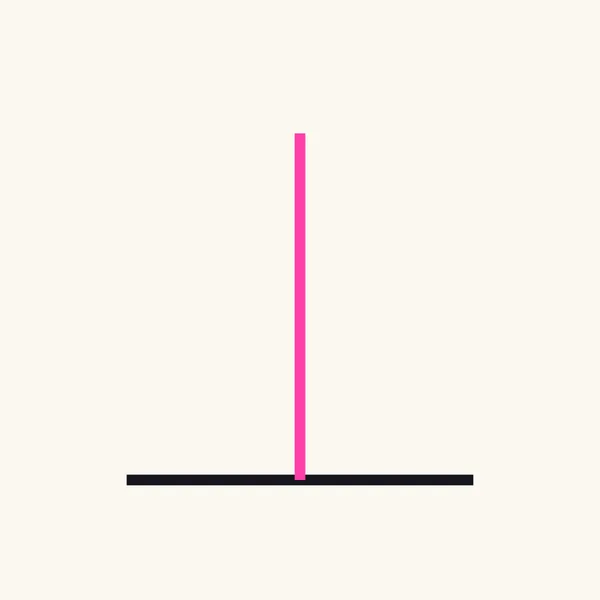 InteractiveGeometric illusionsVertical-Horizontal IllusionAn upside-down T whose two lines are the same length.
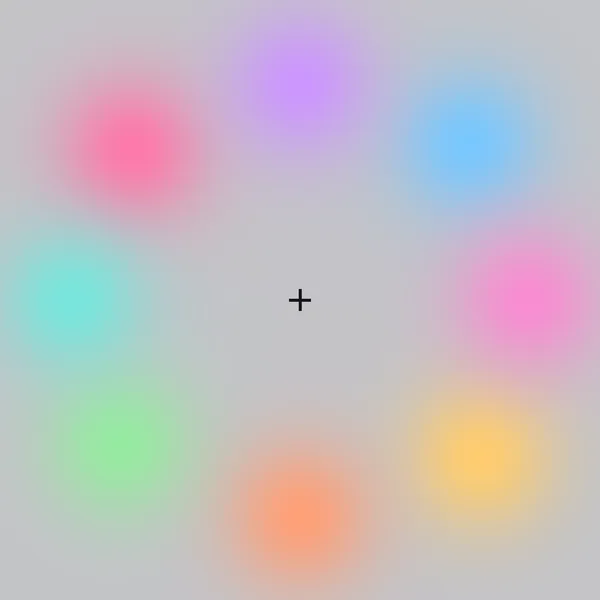 InteractiveMotion illusionsTroxler FadingStare at the cross and the soft color spots vanish into gray.
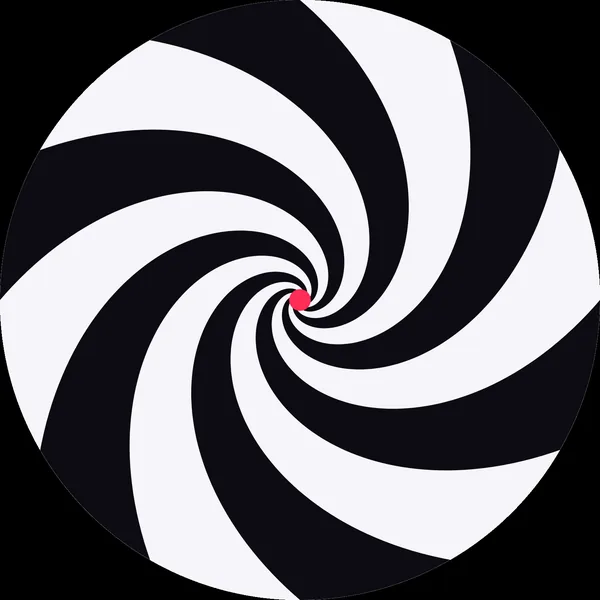 InteractiveMotion illusionsMotion Aftereffect SpiralWatch a spinning spiral for 30 seconds and still things start to move.
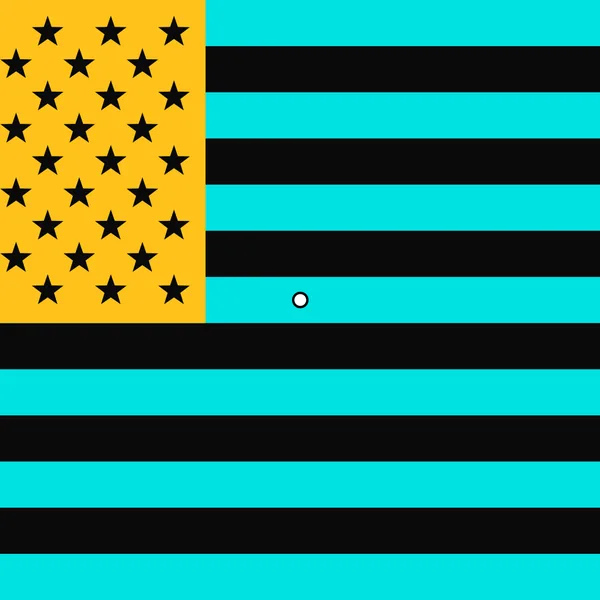 InteractiveColor illusionsAfterimage FlagStare at a cyan, black and yellow flag and a red, white and blue one appears.
Questions and answers
What is the easiest optical illusion to do at home?
The floating finger sausage is the easiest. Hold your index fingers tip to tip in front of your face, look at a far wall, and a small floating finger appears between them.
What optical illusions can kids do with their hands?
Kids can try the floating finger sausage, the jumping thumb and the hole in your hand with a paper tube. All three show how the brain combines the views from the two eyes.
Why do I see a hole in my hand with a paper tube?
One eye sees the room through the tube and the other eye sees your hand. Your brain blends both views into one picture, so the circle of room appears on top of your palm.
Are these illusions safe?
Yes. They use only your hands and everyday objects. Take breaks if your eyes feel tired, and never look at the sun or bright lights.
Enjoyed this? Get a new illusion every week
One original illusion in your inbox each week, with the science explained in a minute.
Written by the Opticalillusions.com team · Published . Illusion artwork © The Wizard Of Sales, LLC. Spotted an error? Tell us.
More from Learn
 Learn · Guide15 Famous Optical Illusions and the Stories Behind ThemFrom the Necker cube of 1832 to the dress of 2015: the famous illusions everyone should know, who made them and why they work.
 Learn · GuideThe Penrose Triangle and Other Impossible Objects, ExplainedWhy the impossible triangle, cube and fork look solid but could never be built, and how artists fake them in real life.
 Learn · GuideWhy Ambiguous Pictures Flip: The Rabbit-Duck, Rubin Vase and MoreA rabbit or a duck? A vase or two faces? Why two-answer pictures flip, why you never see both, and how to switch on purpose.Learn · GuideAfterimage Illusions: Why You See Colors That Aren't ThereStare, look away, and a ghost picture appears in opposite colors. How afterimages work and why they flip red to cyan and blue to yellow.
 Learn · GuideBlind Spot Test: Find the Hole in Your Vision in One MinuteMake a dot vanish and a broken line repair itself. A one-minute test for the blind spot every eye has, and why you never notice it.
 Learn · GuideHow to Draw Optical Illusions: 4 Easy Step-by-Step IdeasFour easy illusions anyone can draw with a pencil, ruler and marker, with step-by-step pictures and the science behind each trick.
 Learn · GuideWhat Is Op Art? Optical Illusion Art ExplainedPaintings that ripple, bulge and buzz: how 1960s op artists used lines, grids and color to trick the eye, and how to make your own.Learn · GuideAre Optical Illusions Bad for Your Eyes? Facts and MythsDo illusions hurt your eyes? The facts on eye strain and dizziness, who should take care with flashing patterns, and the viral myths.
 Learn · GuideWhy Do Optical Illusions Work? How Your Brain GuessesSeeing is a best guess. The six shortcuts your brain uses, and the illusions that catch each one, explained in plain words.
 Learn · GuideHow Magic Eye Pictures Work (and How to See Them)The science of hidden 3D pictures, from a 1959 lab experiment to the 1990s craze, plus a step-by-step way to see the shape.
 Learn · GuideWhy Do Still Pictures Seem to Move? Motion Illusions ExplainedDrifting snakes, wobbling checks and spinning rings: how your eye movements and motion cells turn flat pictures into motion.Learn · GuideOptical Illusion Science Fair Projects: 8 Ideas That WorkEight testable project ideas, from measuring the Müller-Lyer illusion to timing afterimages, with tips on fair tests and fair rules.
 Learn · GuideTypes of Optical Illusions, Explained (With Examples)Literal, physiological and cognitive illusions, plus motion, color, geometric, ambiguous, impossible and afterimage illusions, with an example of each.
 Learn · GuideWhy Colors Trick Your Eyes: The Science of Color IllusionsColor constancy, simultaneous contrast, the Munker illusion and afterimages: how your brain builds color, and why it sometimes gets it wrong.
 Learn · GuideThe Dress: Why Everyone Saw It DifferentlyBlue and black or white and gold? The 2015 photo, the lighting assumptions behind it and what scientists found when they studied it.