
15 Famous Optical Illusions and the Stories Behind Them
Some illusions are so good that they have been fooling people for more than a hundred years. Here are 15 of the most famous ones, in the order they appeared, with the person behind each one, what it shows about your brain, and a version you can try right now.
What makes an illusion famous?
Thousands of optical illusions have been drawn, but only a few become classics. The famous ones have three things in common. They are simple, so anyone can see the effect in a second. They are strong, so they work on almost everybody. And they teach scientists something real about how seeing works, so they keep appearing in textbooks.
The list below is in date order, from the oldest to the newest. Each entry says who made the illusion, what you see and the short version of why. Every link goes to an original version drawn for Opticalillusions.com, where you can try it, reveal the trick and read the full explanation.
1. The Necker cube (1832)
In 1832 the Swiss scientist Louis Albert Necker was drawing crystals when he noticed something odd: a simple line drawing of a box kept flipping. One moment the front face pointed down and to the left, the next it pointed up and to the right.
The Necker cube works because a flat drawing has no real depth, so it fits two different 3D shapes equally well. Your brain picks one, then after a few seconds switches to the other. It never shows you both at once. This flipping is the main idea behind ambiguous pictures.
2. The Hermann grid (1870)
The German scientist Ludimar Hermann described this one in 1870. Look at a grid of black squares separated by white lines, and pale gray spots seem to appear where the white lines cross. Look straight at a crossing and its spot disappears.
For a long time the Hermann grid was explained by cells in the eye that compare a spot with its neighbors. Newer experiments show the story is more complicated, which is part of what makes it famous. Its cousin, the scintillating grid, adds white dots at the crossings that seem to flash black.
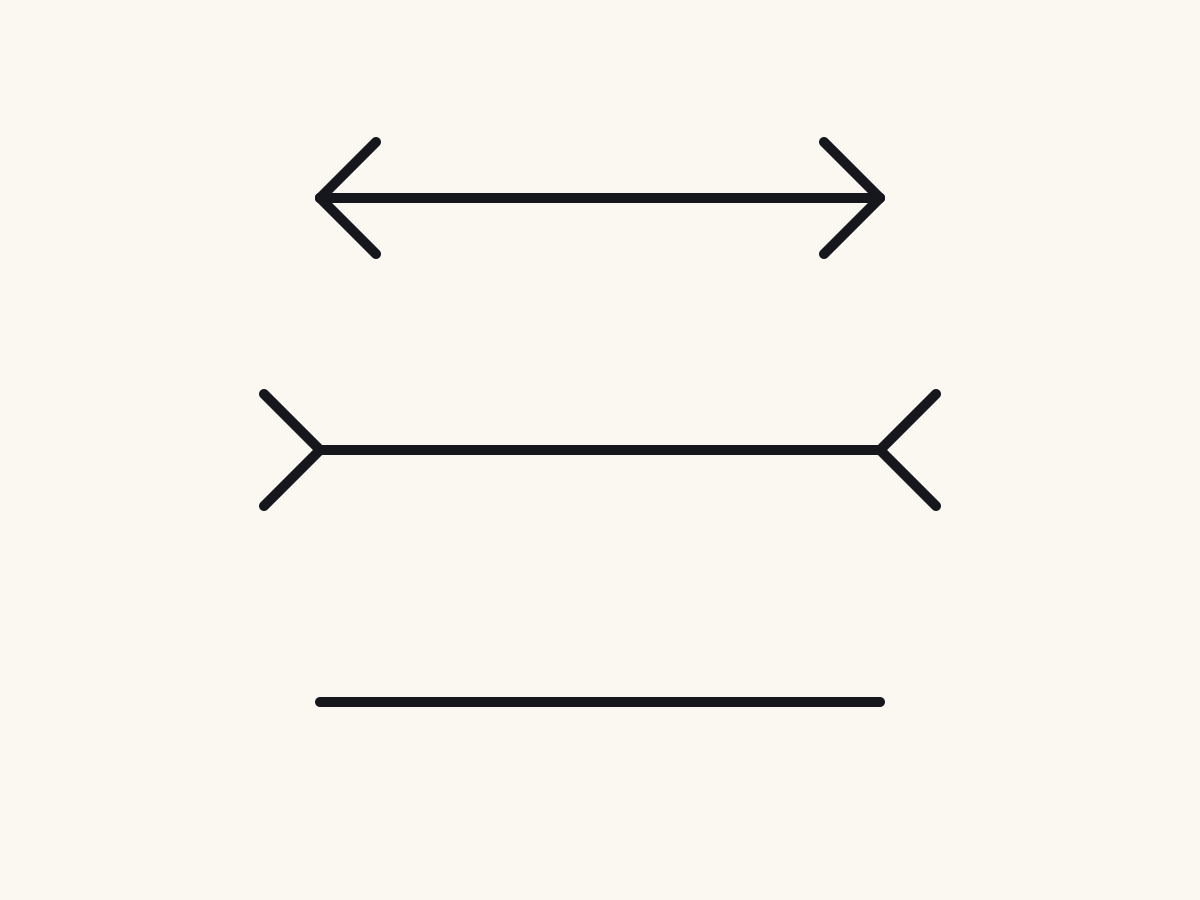
3. The Müller-Lyer illusion (1889)
This is probably the best-known illusion of all. In 1889 the German psychiatrist Franz Carl Müller-Lyer published two lines of exactly the same length. One has fins pointing outward, like arrow tails, and the other has fins pointing inward, like arrowheads. The line with the outward fins looks clearly longer.
Scientists still argue about why the Müller-Lyer illusion works. One popular idea is that the fins look like the corners of rooms and buildings, which makes your brain treat one line as farther away. Measure it with a ruler and it still fools you.
4. The rabbit-duck (1892)
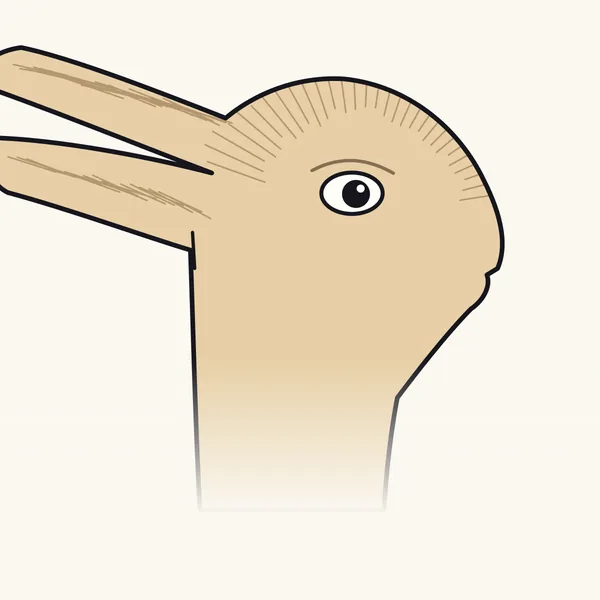
The earliest known version of this drawing appeared in a German humor magazine called Fliegende Blätter on October 23, 1892. Seven years later the American psychologist Joseph Jastrow used it to show that seeing is something the mind does, not just something the eyes record.
Is it a duck looking left or a rabbit looking right? The rabbit-duck is both, and you can flip between them. In a well-known 1993 study, people shown the drawing at Easter were more likely to name a rabbit, and people shown it in October more often saw a bird (study record on PubMed).
5. The Ebbinghaus illusion (around 1900)
Two circles of the same size sit in different crowds. One is ringed by big circles, the other by small ones. The one in the small crowd looks bigger.
The illusion is named after the German psychologist Hermann Ebbinghaus and was made popular in English by Edward Titchener in 1901. The Ebbinghaus illusion shows that your brain judges size by comparing things with their neighbors, not by measuring them alone.
6. The Ponzo illusion (1911)
The Italian psychologist Mario Ponzo described this one in 1911. Two equal bars sit between two lines that come together, like railroad tracks going into the distance. The bar near the narrow end looks longer.
The Ponzo illusion fools you because your brain reads the slanted lines as a 3D clue. The top bar seems farther away, so your brain makes it look bigger to make up for the distance. In real life that habit keeps faraway things from seeming to shrink.
7. The Rubin vase (1915)
In 1915 the Danish psychologist Edgar Rubin made famous a picture that is either a vase or two faces looking at each other. You can see either one, but not both at the same moment.
The Rubin vase is the classic example of figure and ground: your brain has to decide which part is the object and which part is the background. The edge between them can only belong to one side at a time.
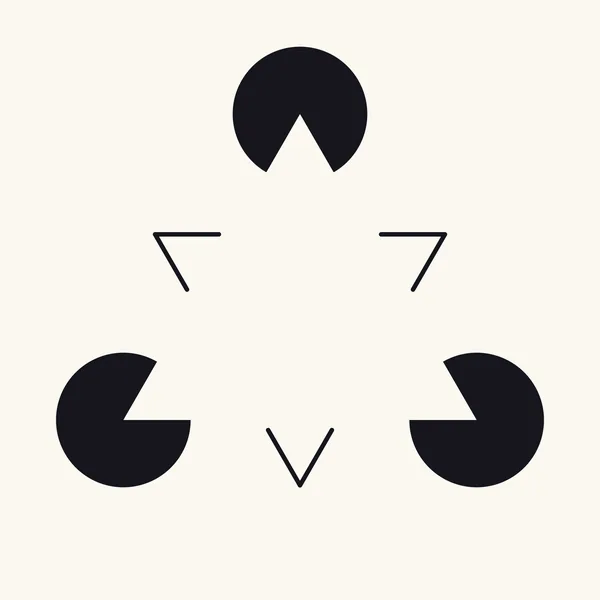
8. The Kanizsa triangle (1955)
The Italian psychologist Gaetano Kanizsa published this illusion in 1955. Three black circles with wedges cut out are enough to make most people see a bright white triangle lying on top, with sharp edges.
There is no triangle in the Kanizsa triangle. Your brain decides that a triangle covering three circles is the simplest explanation, and it fills in the edges for you. It is one of the easiest illusions to draw yourself.
9. The Penrose triangle (1958)
The impossible triangle was first drawn by the Swedish artist Oscar Reutersvärd in 1934, but it became famous after the British father and son Lionel and Roger Penrose published it in 1958. Each corner looks like a normal piece of a solid triangle, but the whole thing could never be built.
The impossible triangle inspired the artist M.C. Escher and led to a whole family of impossible objects.
10. The café wall illusion (1979)
The British scientists Richard Gregory and Priscilla Heard described this illusion in 1979, after a member of Gregory's lab noticed it on the tiled wall of a café in Bristol, England. Rows of black and white tiles are shifted a little from row to row, with thin gray lines between them. The rows are perfectly straight and parallel, but they look like wedges.
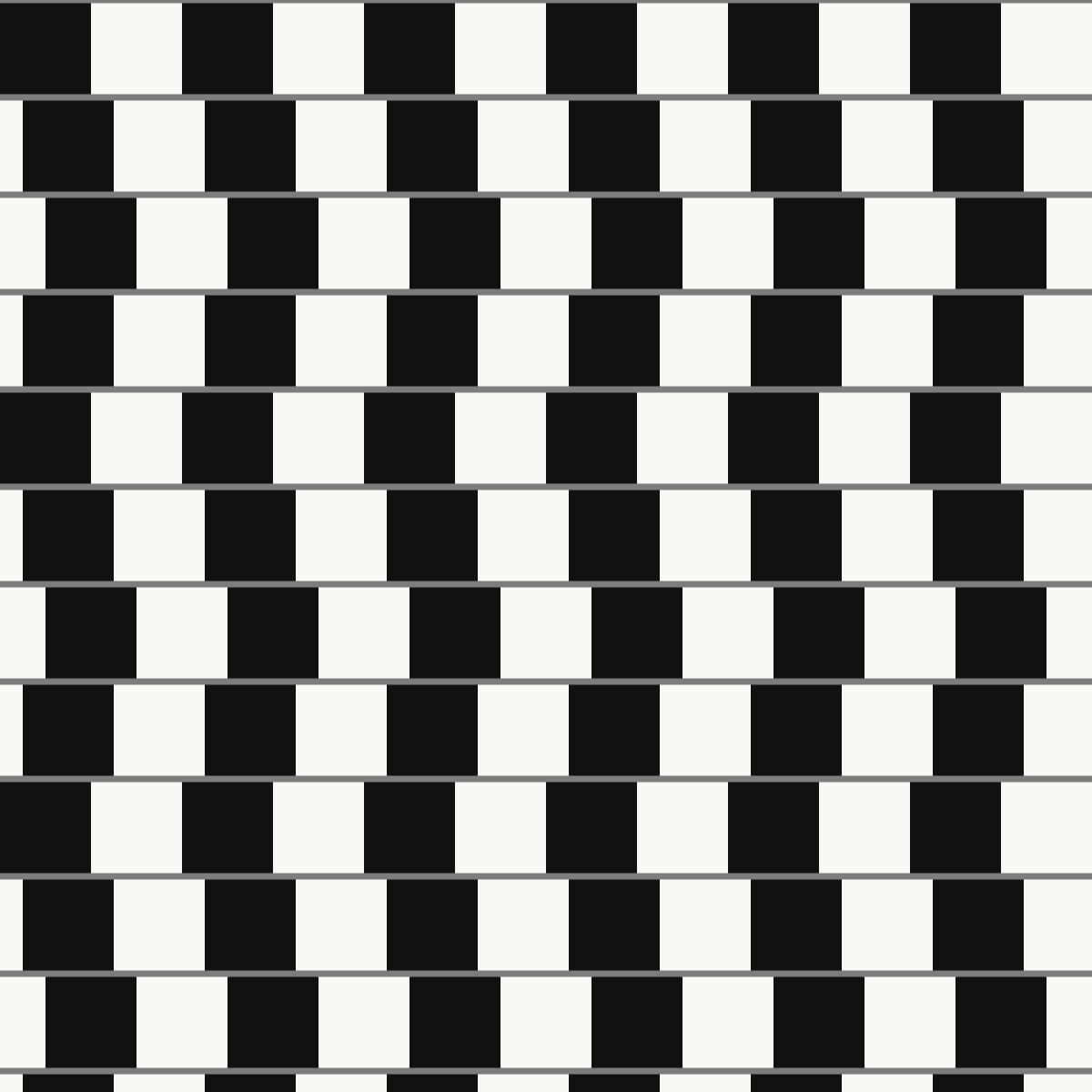
The café wall illusion is now built into real buildings around the world, and it is a favorite of op art.
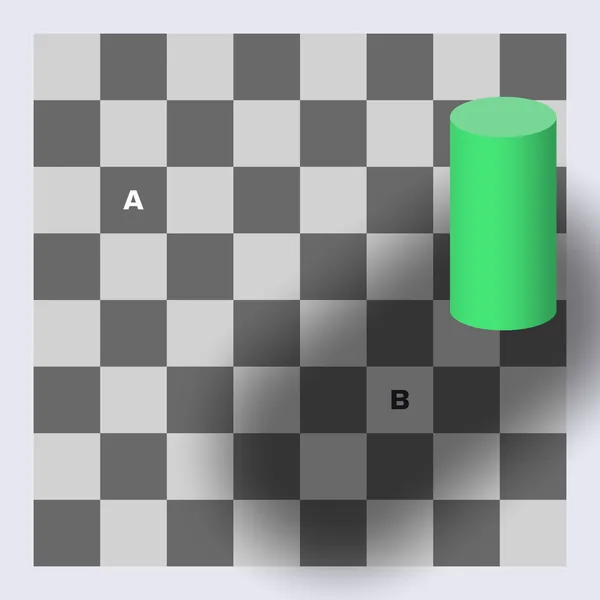
11. The checker shadow illusion (1995)
Edward Adelson, a scientist at the Massachusetts Institute of Technology, created this one in 1995. A green cylinder casts a shadow on a checkerboard. One square in the light and one in the shadow look like very different shades of gray. They are exactly the same.
The checker shadow illusion shows that your brain corrects for shadows so that surfaces keep their "real" color. Our guide to why colors trick your eyes explains it in more detail.
12. The rotating snakes (2003)
The Japanese psychologist Akiyoshi Kitaoka made this pattern in 2003. Circles of colored, shaded shapes seem to turn slowly, even though the picture is completely still. The motion is strongest at the edges of your vision and stops where you look.
Our peripheral drift illusion uses the same trick. Shapes arranged in a careful order of light and dark send signals at slightly different speeds, and your motion detectors read that as movement. Find out more in why still pictures seem to move.
13. The spinning dancer (2003)
The Japanese web designer Nobuyuki Kayahara created an animation of a dancer's silhouette spinning on one foot. Some people see her turn clockwise, others counterclockwise, and many see her switch direction while they watch.
A silhouette has no depth clues, so your brain cannot tell which side is closer to you. Our spinning dot globe uses exactly the same principle, so you can test which way you see it turn.
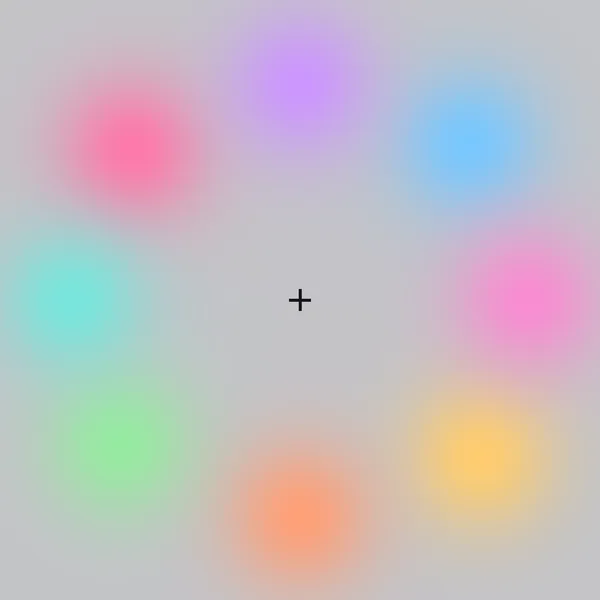
14. The lilac chaser (mid-2000s)
Jeremy Hinton shared this illusion online in the mid-2000s. A ring of soft lilac dots blinks out one at a time around a cross. Stare at the cross and a green dot appears to race around the ring, and then the lilac dots fade away completely.
The lilac chaser combines three effects at once: an afterimage in the opposite color, fading of things you are not looking at, and the brain's habit of seeing a moving object in a gap that jumps from place to place.
15. The dress (2015)
In February 2015 a photo of a striped dress spread across the internet. Some people saw it as white and gold, others as blue and black. The real dress was blue and black.
The dress became famous because it splits people into groups. The photo gives few clues about the light, so each brain makes its own guess about whether the dress is in shadow or in bright light. Read the full story in the dress, explained.
Honorable mentions
A few more classics did not make our top 15 but are worth knowing. The "My Wife and My Mother-in-Law" picture, published by the cartoonist W.E. Hill in 1915, shows either a young woman or an older one. The Ames room, built by Adelbert Ames Jr. in the 1940s, is a strangely shaped room that makes people standing in its corners look like giants or tiny figures. And the Zöllner illusion of 1860 makes parallel lines look tilted with nothing but short slanted marks.
See them all in one place
Want to compare the classics side by side? Browse all our illusions by type, test yourself with the optical illusion test, or learn how they fit together in our guide to the types of optical illusions. Teachers can find classroom packs on our For Teachers page, and the famous designs are also on tees, mugs and posters in our shop.
 InteractiveGeometric illusionsMüller-Lyer IllusionThree identical lines that look clearly different in length.
 Geometric illusionsCafé Wall IllusionPerfectly parallel rows of tiles that seem to tilt into wedges.
 Impossible & ambiguous figuresRubin VaseA golden vase, or two dark profiles facing each other.
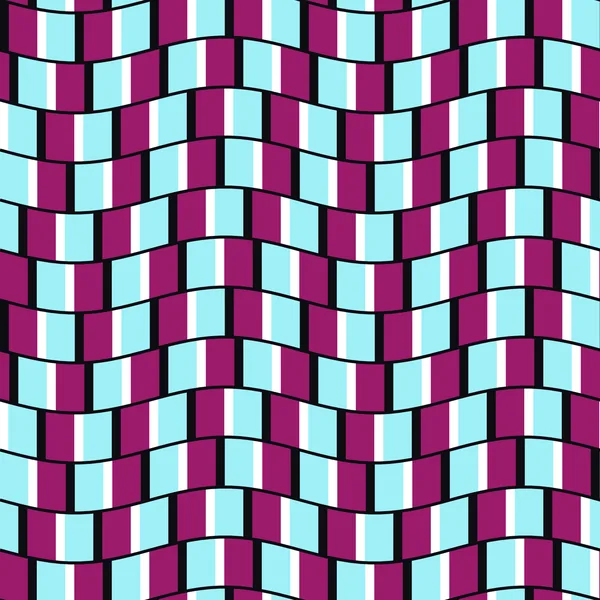 Motion illusionsPeripheral Drift IllusionWavy bands that slide sideways in the corner of your eye, even though nothing moves.
Questions and answers
What is the most famous optical illusion?
The Müller-Lyer illusion, two equal lines that look different lengths because of the fins at their ends, is often called the most famous. The rabbit-duck, the Rubin vase and the dress are close behind.
What is the oldest famous optical illusion?
Of the illusions on this list, the Necker cube, described in 1832, is the oldest. People noticed effects like the motion aftereffect even earlier, and ancient Greek builders are thought to have curved parts of their temples slightly so they would look straight.
Do famous optical illusions work on everyone?
The classic illusions fool almost everyone, but how strongly they work varies from person to person. A few, like the dress, split people into groups that see completely different things.
Where can I try these famous illusions?
Every illusion on this list links to an original version on Opticalillusions.com, where you can try it, reveal the trick and read how it works.
Enjoyed this? Get a new illusion every week
One original illusion in your inbox each week, with the science explained in a minute.
Written by the Opticalillusions.com team · Published . Illusion artwork © The Wizard Of Sales, LLC. Spotted an error? Tell us.
More from Learn
 Learn · GuideThe Penrose Triangle and Other Impossible Objects, ExplainedWhy the impossible triangle, cube and fork look solid but could never be built, and how artists fake them in real life.
 Learn · GuideWhy Ambiguous Pictures Flip: The Rabbit-Duck, Rubin Vase and MoreA rabbit or a duck? A vase or two faces? Why two-answer pictures flip, why you never see both, and how to switch on purpose.
 Learn · GuideAfterimage Illusions: Why You See Colors That Aren't ThereStare, look away, and a ghost picture appears in opposite colors. How afterimages work and why they flip red to cyan and blue to yellow.
 Learn · GuideBlind Spot Test: Find the Hole in Your Vision in One MinuteMake a dot vanish and a broken line repair itself. A one-minute test for the blind spot every eye has, and why you never notice it.
 Learn · Guide9 Easy Optical Illusions You Can Do at HomeA floating finger, a hole in your hand, a rubber pencil and more: nine illusions you can do with things you already have.
 Learn · GuideHow to Draw Optical Illusions: 4 Easy Step-by-Step IdeasFour easy illusions anyone can draw with a pencil, ruler and marker, with step-by-step pictures and the science behind each trick.
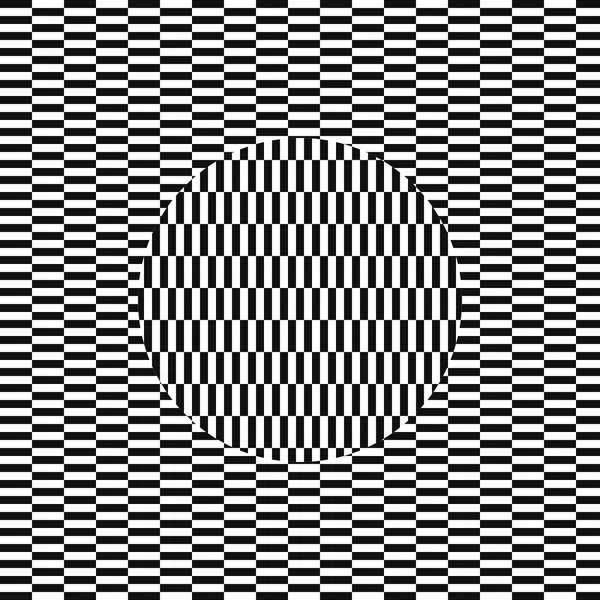 Learn · GuideWhat Is Op Art? Optical Illusion Art ExplainedPaintings that ripple, bulge and buzz: how 1960s op artists used lines, grids and color to trick the eye, and how to make your own.
 Learn · GuideAre Optical Illusions Bad for Your Eyes? Facts and MythsDo illusions hurt your eyes? The facts on eye strain and dizziness, who should take care with flashing patterns, and the viral myths.
 Learn · GuideWhy Do Optical Illusions Work? How Your Brain GuessesSeeing is a best guess. The six shortcuts your brain uses, and the illusions that catch each one, explained in plain words.
 Learn · GuideHow Magic Eye Pictures Work (and How to See Them)The science of hidden 3D pictures, from a 1959 lab experiment to the 1990s craze, plus a step-by-step way to see the shape.Learn · GuideWhy Do Still Pictures Seem to Move? Motion Illusions ExplainedDrifting snakes, wobbling checks and spinning rings: how your eye movements and motion cells turn flat pictures into motion.Learn · GuideOptical Illusion Science Fair Projects: 8 Ideas That WorkEight testable project ideas, from measuring the Müller-Lyer illusion to timing afterimages, with tips on fair tests and fair rules.Learn · GuideTypes of Optical Illusions, Explained (With Examples)Literal, physiological and cognitive illusions, plus motion, color, geometric, ambiguous, impossible and afterimage illusions, with an example of each.
 Learn · GuideWhy Colors Trick Your Eyes: The Science of Color IllusionsColor constancy, simultaneous contrast, the Munker illusion and afterimages: how your brain builds color, and why it sometimes gets it wrong.
 Learn · GuideThe Dress: Why Everyone Saw It DifferentlyBlue and black or white and gold? The 2015 photo, the lighting assumptions behind it and what scientists found when they studied it.