
What Is Op Art? Optical Illusion Art Explained
Some paintings refuse to sit still. Their lines ripple, their squares bulge and their colors buzz, even though nothing on the canvas moves. This is op art, short for optical art. Here is where it came from, the artists who made it famous, and how it uses the same tricks as optical illusions.
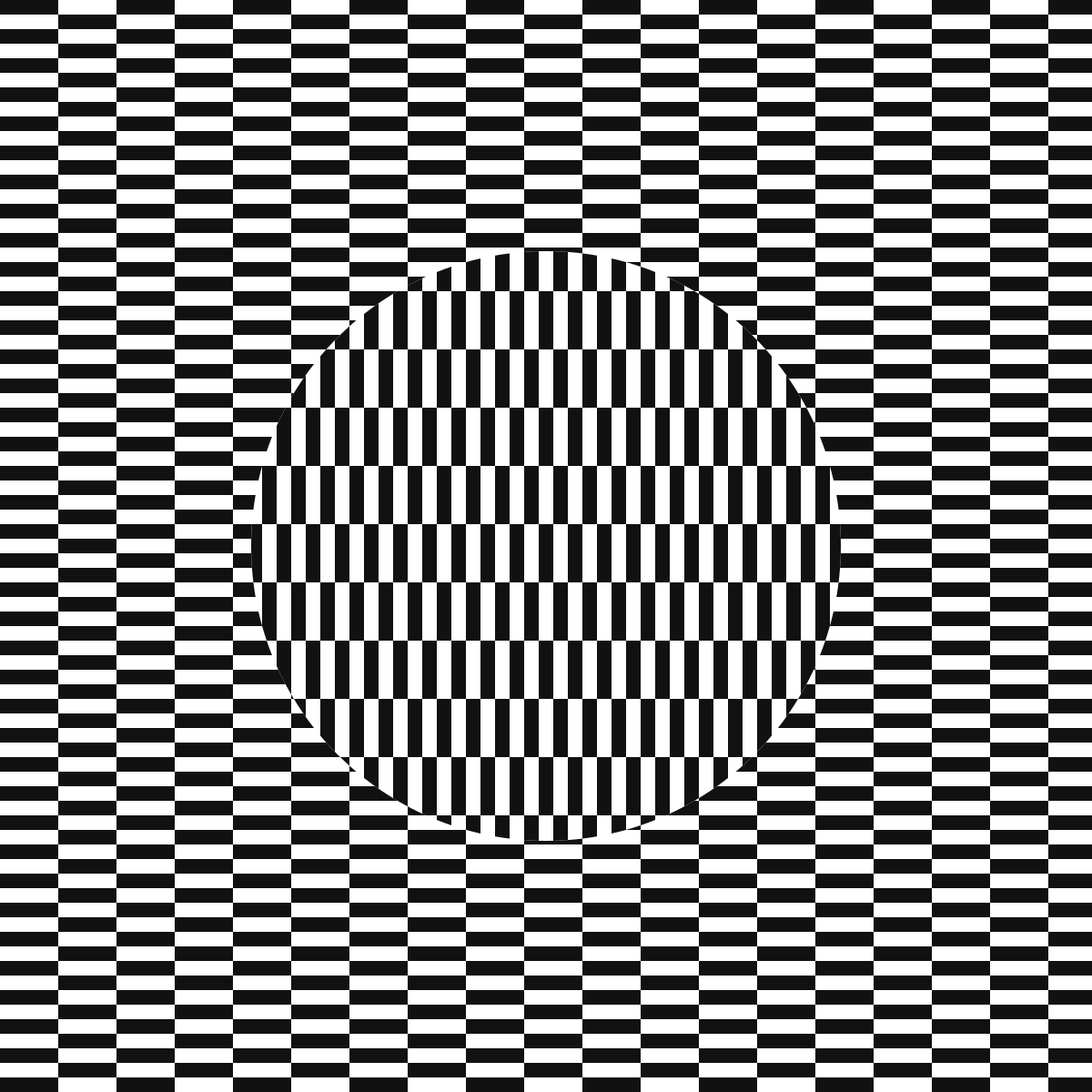
What is op art?
Op art, short for optical art, is a style of abstract art that uses patterns to create effects in your eyes and brain: movement, flicker, swelling, depth or colors that are not really there. Instead of painting people, places or objects, op artists paint lines, circles, squares and stripes, arranged so carefully that the picture seems to come alive.
The Tate gallery in London describes op art as a major development of painting in the 1960s that used geometric forms to create optical effects, drawing on color theory and on the science of how we see (Tate: Op art). In other words, op art is where art and optical illusions meet.
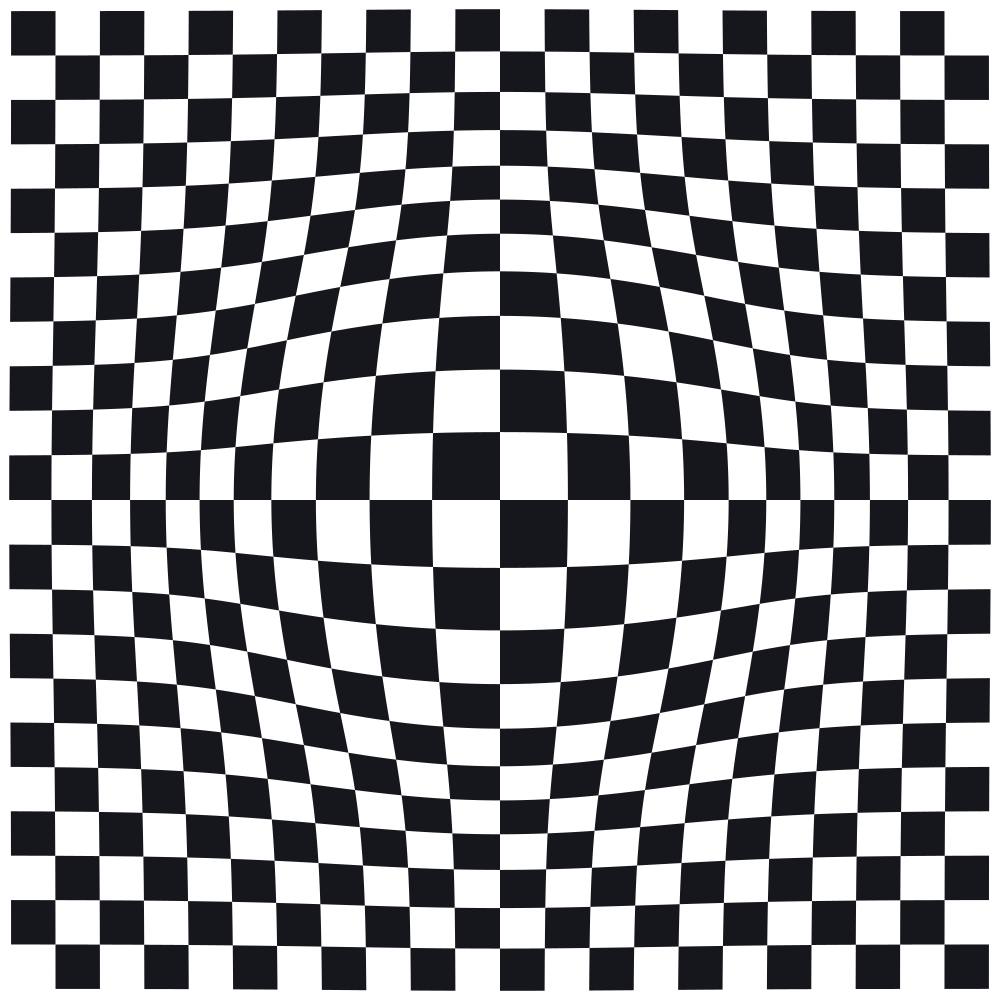
How op art tricks your eyes
Op art works because it uses the same shortcuts as many famous optical illusions. Here are the main tricks.
Repeating patterns
Rows of high-contrast lines or shapes give your visual system more information than it can neatly sort out. The edges compete with each other, and the pattern seems to shimmer or ripple. That is why some op art can feel almost uncomfortable to look at for long, and why it is a good idea to take breaks.
Gradual changes
If squares slowly grow, shrink or bend across a canvas, your brain reads the change as depth, just as it reads a tiled floor stretching away from you. A flat checkerboard with larger squares in the middle seems to bulge outward, like the pattern above.
Shifted rows
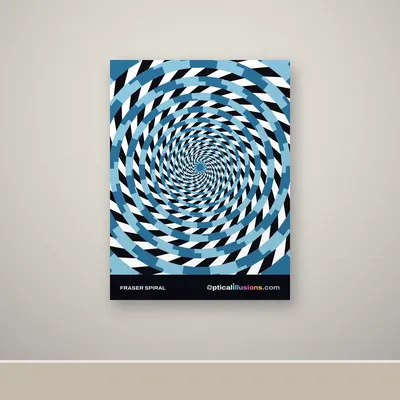
Slightly offset rows make straight lines look tilted, the same trick as the café wall illusion. Tilted marks can also make circles look like spirals, as in the Fraser spiral.
Color side by side
Placing strong colors next to each other changes how each one looks. A color can look brighter, darker or even a different shade depending on its neighbors. Op artists used this to make colors seem to glow or vibrate. Our guide to why colors trick your eyes explains the science.
Overlapping lines
When two sets of fine lines or circles overlap, a third pattern appears that nobody drew. These are moiré patterns, and op artists, especially those who made sculptures, loved them.
Where did op art come from?
Artists had been playing with patterns and perception for a long time, but op art as a movement took off in the 1960s.
The Hungarian-French artist Victor Vasarely (1908 to 1997) is often called one of its founders. As early as the 1930s he was making black-and-white pictures, including zebras made of curving stripes, that played with the eye. Later he built paintings from grids of colored shapes that seem to swell and sink.
The British artist Bridget Riley (born 1931) became one of the most famous op artists in the world. Her early black-and-white paintings, such as "Movement in Squares" (1961), use rows of squares that get narrower across the canvas, so the flat surface seems to fold. She later worked with color, using stripes and curves that seem to flicker and shimmer.
The Venezuelan artists Jesús Rafael Soto and Carlos Cruz-Diez made works that change as you walk past them, mixing op art with kinetic art, art that moves or depends on the viewer's movement.
The name "op art" came from the press. It was used in Time magazine in 1964, and in 1965 the Museum of Modern Art in New York held a big exhibition of optical art called "The Responsive Eye." Op art patterns soon spread to fashion, posters and record covers, and the style became one of the looks of the 1960s.
Op art and optical illusions today
Op art and vision science have always borrowed from each other. Some of the illusions scientists study came from artists, and some op art uses effects first described by scientists.
The Ouchi illusion is a good example. It is named after the Japanese artist Hajime Ouchi, who published it in a 1977 book of optical and geometric art. Scientists later studied it because the center disc seems to float and slide whenever you move your eyes. In the 2000s the Japanese psychologist Akiyoshi Kitaoka created designs like the "rotating snakes," which are scientific illusions and beautiful patterns at the same time. Our peripheral drift illusion and our guide to why still pictures seem to move explain how they work.
Many of the illusions on Opticalillusions.com would fit right in at an op art show, from the scintillating grid to the Pinna-Brelstaff rings.
Make your own op art
Op art is a favorite in school art classes because anyone can make it with a ruler, a pencil and a marker. Here are two easy ideas:
- Bulging checkerboard: Draw a grid where the lines are close together near the edges and farther apart in the middle. Color it like a checkerboard. The middle will seem to swell toward you.
- Rippling lines: Draw a shape, like your hand or a circle, lightly in pencil. Draw straight lines across the page, and wherever a line crosses the shape, curve it upward. Erase the pencil outline and color every other stripe.
Our step-by-step guide on how to draw optical illusions walks through the rippling-lines method with pictures. Teachers looking for ready-made lessons can visit our For Teachers page.
Tips for looking at op art
Strong op art is meant to be intense. If a pattern makes your eyes tired or makes you feel dizzy, look away and take a break. People with photosensitive epilepsy should be careful with high-contrast stripes and flickering patterns. Our guide to whether optical illusions are bad for your eyes has more advice.
Bring op art home
Many of our original illusion designs are op art at heart. You can browse the full collection by type on our all illusions page, find the most famous classics in famous optical illusions, or put the Ouchi illusion, café wall or Fraser spiral on a tee, mug or poster in our shop.
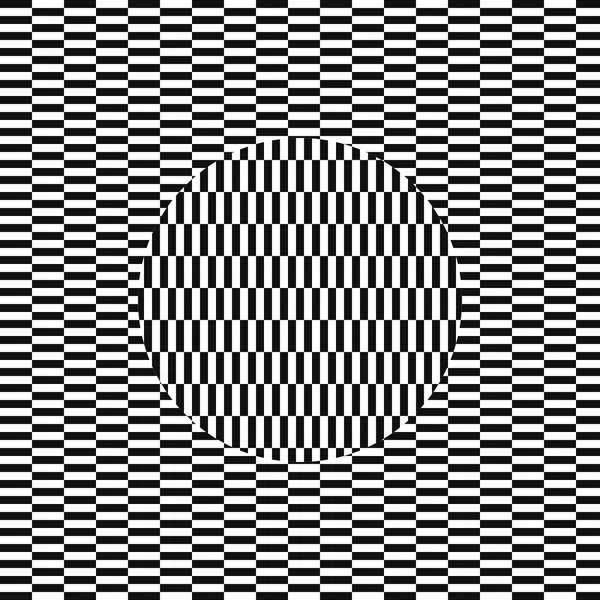 Motion illusionsOuchi IllusionA checkered disc that seems to float and slide over its background.
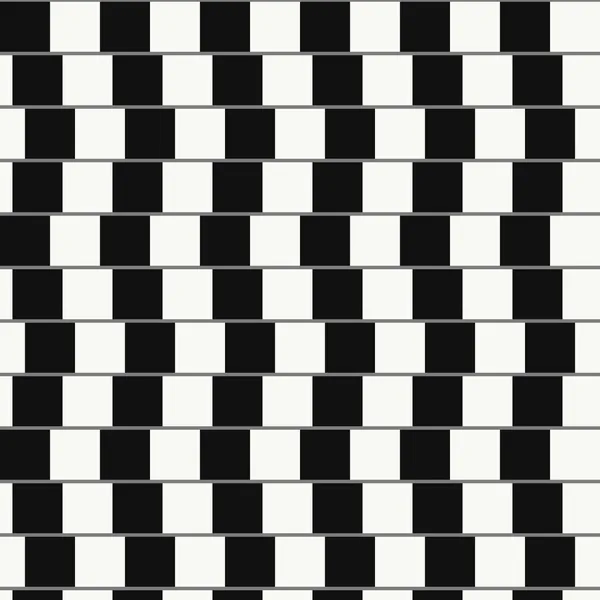 Geometric illusionsCafé Wall IllusionPerfectly parallel rows of tiles that seem to tilt into wedges.
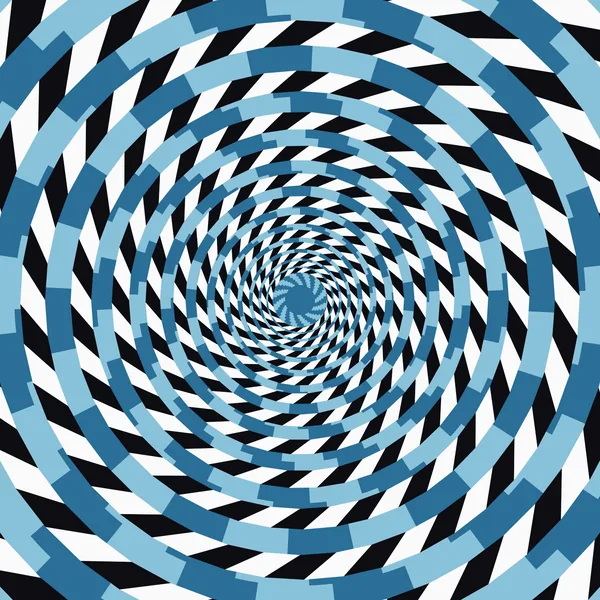 Geometric illusionsFraser SpiralConcentric circles of twisted cord that look like one big spiral.
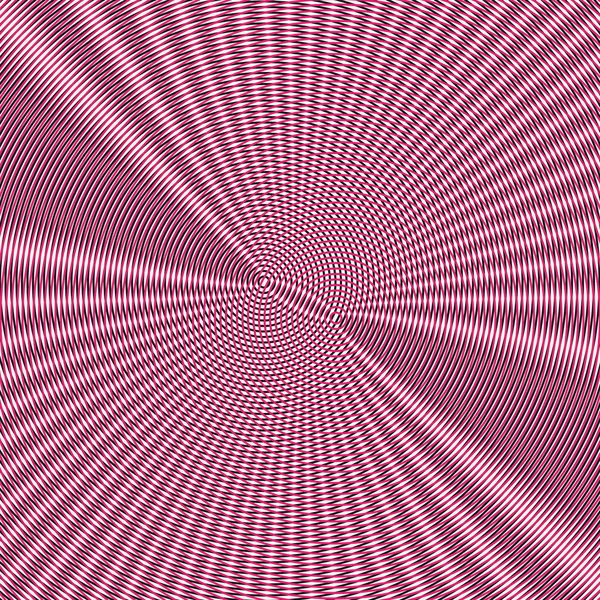 InteractiveMotion illusionsMoiré PatternsTwo sets of rings overlap and phantom waves sweep across them.
Questions and answers
What is op art?
Op art, short for optical art, is abstract art that uses lines, shapes, patterns and color to create optical effects, such as movement, flicker or depth, even though the artwork is completely still. It became popular in the 1960s.
Who are the most famous op artists?
Victor Vasarely and Bridget Riley are the best known. Jesús Rafael Soto and Carlos Cruz-Diez are also important op artists.
How is op art different from an optical illusion?
They use the same tricks. An optical illusion is usually made to show or study how vision works, while op art uses those effects to make a work of art. Many images count as both.
How do you make op art?
Start with a simple pattern of lines or squares, then change it gradually across the page, for example by curving the lines inside a shape or making the squares bigger in the middle. Use a ruler and strong black-and-white contrast.
Enjoyed this? Get a new illusion every week
One original illusion in your inbox each week, with the science explained in a minute.
Written by the Opticalillusions.com team · Published . Illusion artwork © The Wizard Of Sales, LLC. Spotted an error? Tell us.
More from Learn
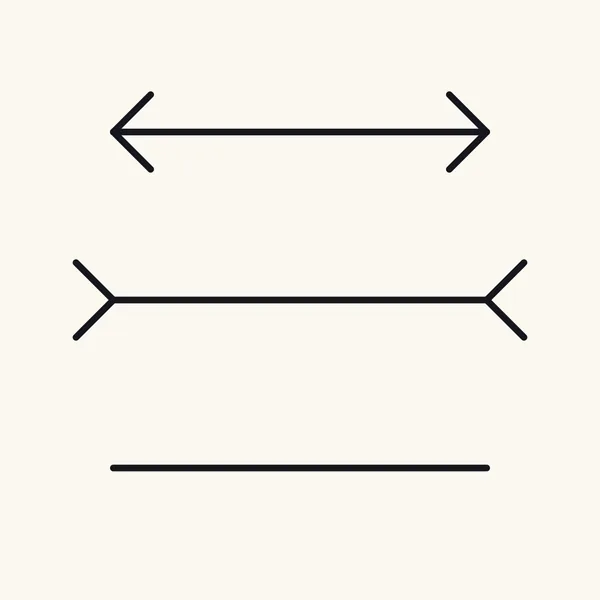 Learn · Guide15 Famous Optical Illusions and the Stories Behind ThemFrom the Necker cube of 1832 to the dress of 2015: the famous illusions everyone should know, who made them and why they work.
 Learn · GuideThe Penrose Triangle and Other Impossible Objects, ExplainedWhy the impossible triangle, cube and fork look solid but could never be built, and how artists fake them in real life.
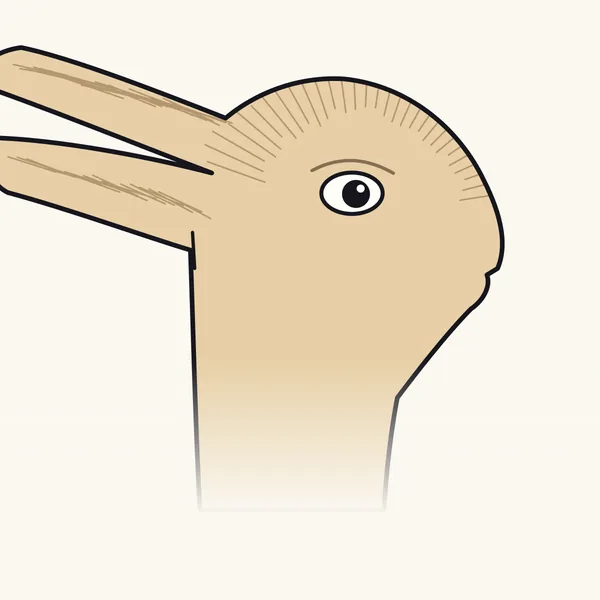 Learn · GuideWhy Ambiguous Pictures Flip: The Rabbit-Duck, Rubin Vase and MoreA rabbit or a duck? A vase or two faces? Why two-answer pictures flip, why you never see both, and how to switch on purpose.
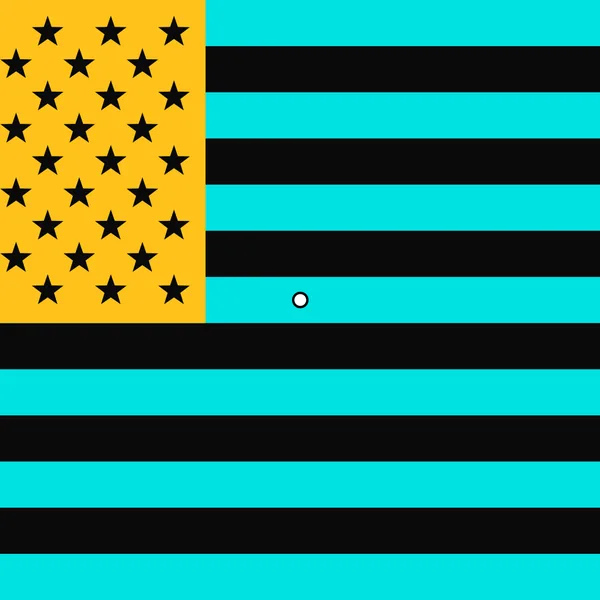 Learn · GuideAfterimage Illusions: Why You See Colors That Aren't ThereStare, look away, and a ghost picture appears in opposite colors. How afterimages work and why they flip red to cyan and blue to yellow.
 Learn · GuideBlind Spot Test: Find the Hole in Your Vision in One MinuteMake a dot vanish and a broken line repair itself. A one-minute test for the blind spot every eye has, and why you never notice it.
 Learn · Guide9 Easy Optical Illusions You Can Do at HomeA floating finger, a hole in your hand, a rubber pencil and more: nine illusions you can do with things you already have.
 Learn · GuideHow to Draw Optical Illusions: 4 Easy Step-by-Step IdeasFour easy illusions anyone can draw with a pencil, ruler and marker, with step-by-step pictures and the science behind each trick.
 Learn · GuideAre Optical Illusions Bad for Your Eyes? Facts and MythsDo illusions hurt your eyes? The facts on eye strain and dizziness, who should take care with flashing patterns, and the viral myths.
 Learn · GuideWhy Do Optical Illusions Work? How Your Brain GuessesSeeing is a best guess. The six shortcuts your brain uses, and the illusions that catch each one, explained in plain words.
 Learn · GuideHow Magic Eye Pictures Work (and How to See Them)The science of hidden 3D pictures, from a 1959 lab experiment to the 1990s craze, plus a step-by-step way to see the shape.
 Learn · GuideWhy Do Still Pictures Seem to Move? Motion Illusions ExplainedDrifting snakes, wobbling checks and spinning rings: how your eye movements and motion cells turn flat pictures into motion.Learn · GuideOptical Illusion Science Fair Projects: 8 Ideas That WorkEight testable project ideas, from measuring the Müller-Lyer illusion to timing afterimages, with tips on fair tests and fair rules.Learn · GuideTypes of Optical Illusions, Explained (With Examples)Literal, physiological and cognitive illusions, plus motion, color, geometric, ambiguous, impossible and afterimage illusions, with an example of each.
 Learn · GuideWhy Colors Trick Your Eyes: The Science of Color IllusionsColor constancy, simultaneous contrast, the Munker illusion and afterimages: how your brain builds color, and why it sometimes gets it wrong.
 Learn · GuideThe Dress: Why Everyone Saw It DifferentlyBlue and black or white and gold? The 2015 photo, the lighting assumptions behind it and what scientists found when they studied it.